

In 2003, Makhaya Ntini was the flagbearer who never expected “as a young fellow, those kinds of things could happen to you.” Temba Bavuma was 12 years old, had moved from Cape Town to Johannesburg and remembers the zebra mascot named Dazzler. Kagiso Rabada was eight, hadn’t started playing sport seriously and “didn’t know much about cricket then.”
All those things happened the last time a men’s ODI World Cup was held in Africa.
Next year, the tournament returns to a place where the game looks almost entirely different to what it did 24 years ago. Though it is likely only South Africa and Zimbabwe will participate (with Namibia’s qualification hopes on shaky ground), the game has transformed from a minority pursuit in those two countries to a people’s game that is among the fastest growing on the continent. And that’s the story this World Cup hopes to tell.
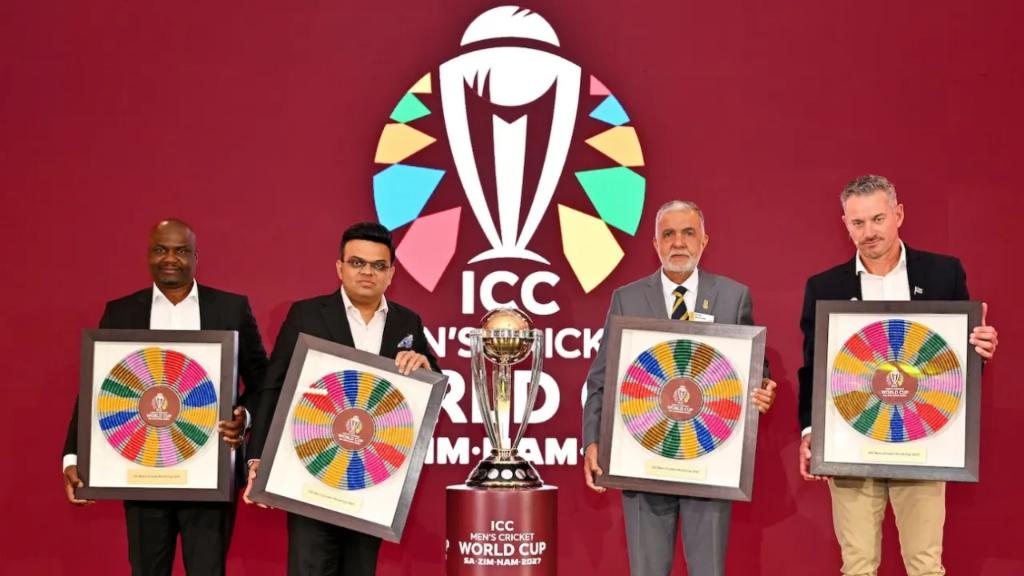
“Come for the cricket, stay for the culture,” is the catchphrase of the 2027 World Cup, which was officially launched on a night of song, and spoken word in Johannesburg. Former and current players were in attendance to begin their journeys as ambassadors of the event. Among them was Bavuma, who is due to lead South Africa, and appears to be embracing the role.
“From the point of view of the countries involved, it’s a proper opportunity for us to put on a spectacle and to showcase Africa in a beautiful way. There’s a lot of untapped beauty in our countries and we really want to get people to find joy and revel in what Africa is about,” Bavuma said. “The ball is in our courts. As South Africa, as Zimbabwe, and Namibia, we’ve always been wanting something like this. Now it’s on us to really produce and show that we can do good things.”
The expectation to do that will rest heavily on someone like Rabada, the continent’s most recognisable cricketing superstar who relishes the big occasion.”Yoh, I’m so excited,” Rabada said. “South Africa is my favourite place to play cricket. And to have such a huge event come to South Africa is brilliant. I can’t wait.”
With the excitement comes expectation, and Ntini knows first-hand the pressures of a home tournament. As a commentator now, his advice is mostly to himself when it comes to handling the inevitable questions of whether this will be the tournament where South Africa finally get their hands on a World Cup trophy. “The media of South Africa should not put pressure into South Africa. And I say even though I am part of the media, so I know. I get so excited in a way that everything else stops. I know for a fact that I’m not the only one,” he said, “But when that happens, then we all know that name is going to come out. And they choke again. That’s not a very nice thing to have said about you. Instead, we need to talk about the progress we have made. I am very proud of all that we’ve achieved since 2003.”
Winning a World Cup is not on that list but the transformation of the game is and players talk that up as the biggest difference between then and now. “There’s a wider audience. That’s the most obvious change,” Rabada said. “There’s more people, more variety of players and people from different ethnicities playing. We see that in the supporters as well.”
That is probably best reflected in Zimbabwe, whose fans have made global headlines for their passionate backing of the team which includes bespoke cheerleading. Hamilton Masakadza, their former captain and now a member of the LOC, has witnessed the change first-hand and sees a game that can now thrive, not just survive. “Cricket has come a long way in Zimbabwe. Finally, now it’s really starting to reflect the demographic of the country, and it’s a sign of the growth where a lot more of the masses are now involved. That’s been a key point for our growth,” he said.
Namibia has a small population of just four million people and they pack out their new 11,000 seater home ground in Windhoek. “We always dreamed about that stadium, and we used some of our hosting fees to build that stadium,” Rudi van Vuuren, former Namibia player who is now their board chair said. “Today we have a home for the national team, so we’re very proud of that stadium. If you have never watched a game of cricket before, come and do it there. It’s the most unique place in the world.”
Nestled between the Namib Desert and the icy Atlantic Ocean, Namibia has plenty to offer and, without sounding like a tourism brochure, so do all the other venues. Zimbabwe’s Fale Mosi-oa-Tunya International Cricket Stadium at Victoria Falls promises to be one of the most picturesque in the world and South Africa’s stadium experiences range from the grass banks at Centurion to the brass band at St George’s Park.
Crucially, spreading matches across these countries aims to send a message of unity, which comes at an important time, especially in South Africa. Currently, the country is experiencing waves of xenophobia, aimed primarily at migrants from neighbouring countries which have seen deportations, denial of work permits and downright violence. Trevor Manual, a former South African finance minister who is now part of the 2027 LOC, used the launch to address the issue directly, with a nod to both history and the present day.
“For generations, long before these areas were mapped, they belonged to all the peoples of this region. No borders, no passports, just people of southern Africa,” Manual said in an evocative speech. “We know the devastating cost of division, of drawing lines in the sand based on where someone was born, what language they speak or the colour of their skin. That is why it deeply pains us to address the ugly stains of xenophobia. Hatred, intolerance and violence erected against other people should have no place amongst us. I don’t want to be unequivocal. I hope that everybody supports this call against xenophobia and Afrophobia. When we see these acts on the streets of South Africa, it’s a betrayal of our hard won democracy, a rejection of our constitution and an insult to the very concept of our truth.”
Manual said those words in the presence of South Africa’s divisive sports minister Gayton McKenzie, who is part of a political party that has advocated against the presence of African immigrants in the country. In so doing, Manual made it clear the World Cup will play a role in the politics of the region and he hoped it would be a positive one. “We stand here tonight, together, shoulder to shoulder, South Africa, Zimbabwe and Namibia. We look at the horizon, not with doubt but with a quiet, unshakeable confidence in a region whose time has come.”
On cue, several administrators including Zimbabwe chair Tavengwa Mukhulani left the event early to board a flight to Tanzania, where they will inaugurate a new stadium. CSA CEO Pholetsi Moseki will follow them today. Next week, Cricket Namibia will announce a tri-series featuring Zimbabwe and South Africa to be played later in August. In the next two years, the Africa Cricket Association hopes to launch its inaugural T20 competition. The growth on this continent is not as commercially driven as it is in other parts of the world, does not rely on subcontinental expats and receives limited coverage but it’s softly saying: this time for Africa.