

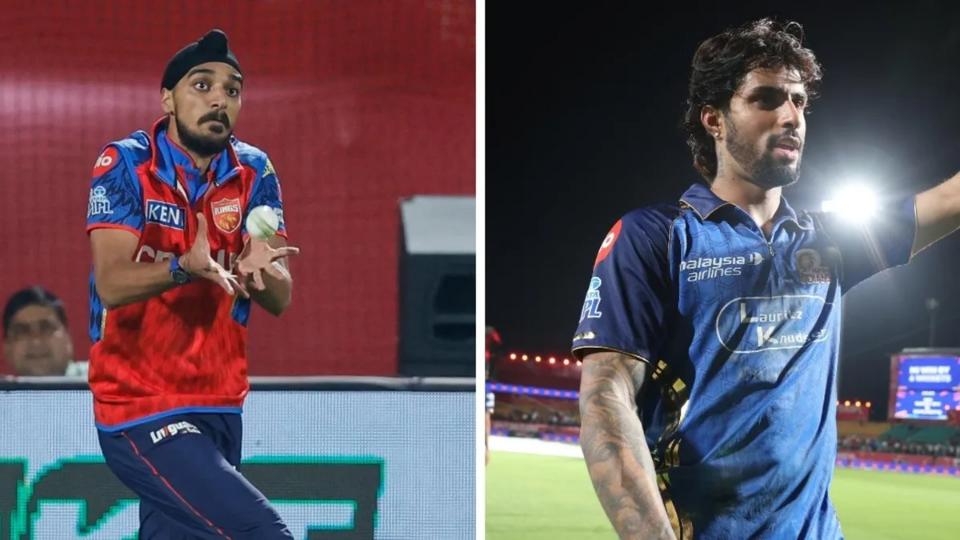
Before Punjab Kings’ match against Mumbai Indians, a Snapchat clip showed Arshdeep Singh stopping Tilak Varma as the MI batter walked past him. Arshdeep called out to his India teammate, “Oye andhere,” roughly translating to “dark one” or “darkness”, before asking Tilak why he does not apply sunscreen. Tilak appeared to laugh it off and replied that he did. Arshdeep then pointed towards Naman Dhir and called him the “noor” of Punjab, “noor” meaning light or radiance.
On the surface, it looked like a casual exchange between players who know each other. That is also what makes it more complicated. Colourist comments in India rarely arrive as formal insults. They are often made in the language of familiarity, humour and teasing, particularly among friends, teammates and families. Someone is called “dark”, someone else is praised as “fair” or “bright”. Another is called “mota” or “too fat”; someone else may be subject to jabs on their height, and everyone is expected to move on because the tone was not serious.
But the lack of seriousness is not proof of harmlessness.
Arshdeep is not just any private individual joking with a friend. He is an Indian cricketer with a large public platform, followed by young fans and players who may see such language as normal if it goes unchallenged. The problem is not whether Tilak personally took offence. He may not have. The problem is that a player’s skin colour was made the subject of a joke, and the joke leaned on one of the most common prejudices in Indian society: darkness as something to mock, fairness as something to praise.
This is not a new debate in Indian cricket. Darren Sammy has spoken in the past about being called “kaalu”, or “dark”, when he was playing for Sunrisers Hyderabad, initially unable to understand the true meaning of the word. Abhinav Mukund has previously spoken about years of comments and abuse over his “skin colour”. Laxman Sivaramakrishnan recently spoke publicly about facing colour-based discrimination throughout his life and in the Indian team. These are not one-off conversations. They come from within Indian society, where skin colour has long shaped beauty standards, matrimonial preferences, film casting, advertising and everyday nicknames.
Seen in that context, Arshdeep’s remark did not need to be malicious to be wrong. Intent matters, but it cannot be the only measure. Many forms of discrimination survive precisely because they are casual. They become normal through jokes, throwaway lines and dressing-room language that nobody is expected to examine.
Tilak’s response came in the best possible form. He made an unbeaten 75 off 33 balls against the Punjab Kings, guiding Mumbai Indians through a successful chase of 201 and winning multiple match awards. It was not just a good innings because of the controversy around him. It was a high-pressure T20 innings on its own terms: controlled, powerful and decisive to settle the game.
That should have been enough.
Instead, Mumbai Indians’ social media response returned the focus to the controversy. After Tilak’s match-winning performance, the franchise posted a reel using a popular song lyric, “Andhera tera maine le liya, mera ujla sitara”, which broadly translates to: “I have taken your darkness, my bright star”. Tilak, who had been called “dark” earlier, was now being framed as Mumbai’s shining star after beating Arshdeep’s team.
On the surface, it appeared to be a sharp, timely use of a popular Bollywood song. But given the context of the earlier remark, the lyric was difficult to separate from the issue that had made the original comment uncomfortable.