

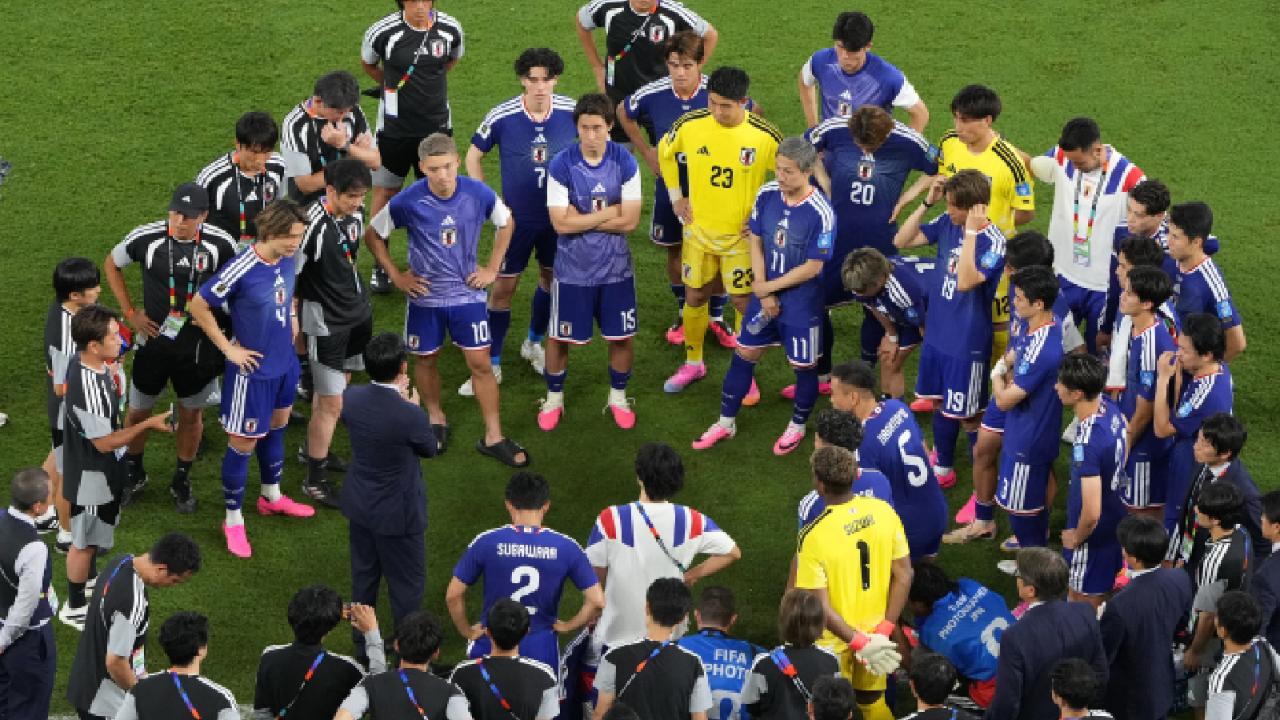
The move began with a simple 1-2 down the right wing between Kaishu Sano and Junya Ito. Sano shifted a little wide, receiving the pass under pressure, and curled a cross into the box. Ayase Ueda attacked the space between two defenders and powered a header into the net.
It was a simple goal. Which is precisely why it was beautiful.
For years, Japan’s football story has been told through its soft edges. The fans who stay back to clean stadiums after matches. The players who leave dressing rooms spotless.
The nation that fell in love with football through manga. Even now, mention Japanese football and most people instinctively reach for tales of discipline, humility and order.
They are wonderful stories. They are also a distraction. Because somewhere along the way, Japan became very good at football.
Good enough to draw with the Netherlands at this World Cup. Good enough to dismantle Tunisia 4-0.
Good enough that opponents now spend more time worrying about Japan than Japan spends worrying about them.
And yet, outside Asia, they remain curiously underrated.
“Many people underestimate Japan,” Netherlands coach Ronald Koeman said after their match last week. “But for the 100,000th time, if you underestimate them, that’s your problem. You think that Japan’s strength was overexaggerated before the match? Let’s wait until the end of the World Cup to see who’s right.”
It is perhaps understandable why Japan are not mentioned in the same breath as European and South American heavyweights. They have, after all, never gone beyond the Round of 16 at a World Cup. At Qatar 2022, they had another remarkable start that ended in a penalty shootout against Croatia. In 2018, they ran into Belgium’s golden generation.
They have produced memorable upsets and attractive teams, but have never been genuine contenders. Until they break through that ceiling, the traditional powers will not take them seriously.
The current squad, though, may be the strongest argument yet that Japan belongs in a different conversation.
The old stereotype was that Japan produced technically gifted midfielders but lacked the physicality, the depth and, above all, the centre-forward needed to compete consistently against elite opponents. Ueda’s emergence has begun to change that. The striker has provided a focal point that previous Japanese teams often lacked, giving all that possession and movement a decisive end product.
Around him is a squad built almost entirely in Europe’s top leagues. Not a handful of exports, but an entire generation raised in the Bundesliga, Premier League, Ligue 1 and Eredivisie.
Take Ao Tanaka. As a schoolboy, he and Kaoru Mitoma wrote that they wanted to become professional footballers and represent Japan together. They did. Mitoma is missing this World Cup through injury, but Tanaka remains part of the side carrying those ambitions forward.
Or Junya Ito, now 33 and still one of Japan’s most dangerous attacking players. He was never considered a prodigy. He came through university football, developed later than many of his peers and still found his way to the international stage. In many countries, that pathway barely exists. In Japan, it is part of the system. And that is the key word: system.