

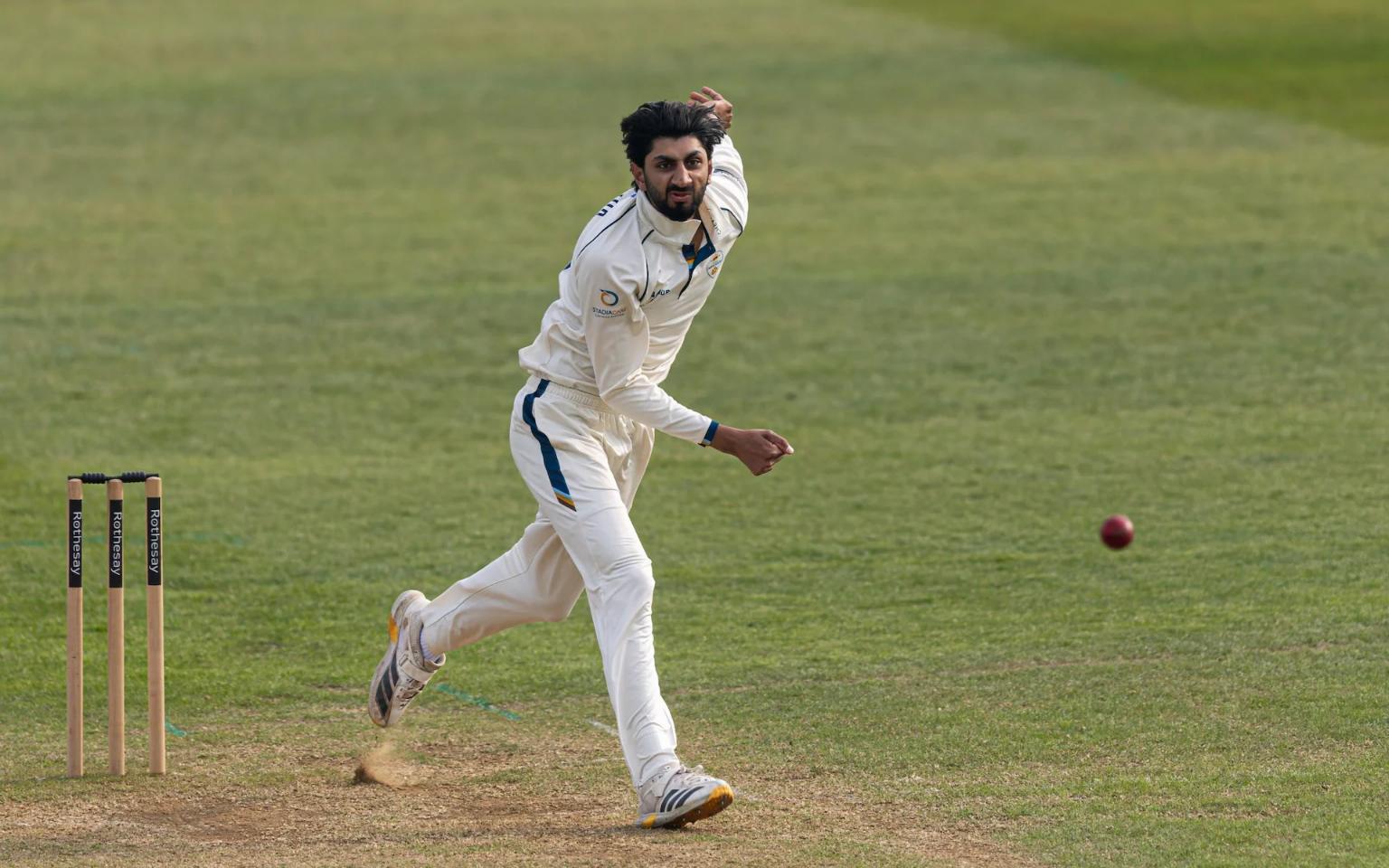
Forty years ago, when England won the Ashes in Australia, they triumphed through spin. John Emburey and Phil Edmonds shared 33 wickets; they were two of England’s top three wicket-takers. In 2010-2011, England’s only Ashes victory down under since, Graeme Swann took 15 wickets, including seven in the win in Adelaide.
In last winter’s Ashes, England didn’t even feign the belief that they could win through spin. Will Jacks, who had taken 22 wickets in 14 matches over the previous three County Championship seasons, was England’s sole slow bowler for the last four Tests.
Picking Jacks was a classic compromise: he was selected as much for his batting at No 8 as his off-spin. His presence illustrated both the paucity of spin in the English game, and the reluctance to trust the leading slow bowlers who are in the system.
“We all know why he was picked – we felt we did need that extra batting,” Jeetan Patel, England’s spin coach, admitted midway through the defeat in Adelaide, the Australian venue that now takes the most turn. “It’s not his front-line skill. He’s probably 50-50.
“Would we have liked to have Graeme Swann out there? Probably, but we don’t have him.”
The contrast in figures was damning. In Adelaide, Swann took 7-161 in the Test, bowling 70.1 overs and conceding just 2.29 an over. Jacks conceded 3-212 from 39 overs, leaking 5.43 an over.
“Will Jacks did as good a job as he could,” says Swann. “It’s just a shame that on a pitch that was crying out for a world-class spinner, we didn’t have one.”
It is tempting to indulge in grim fatalism: to think of spin bowling as something that, like learning foreign languages, English people simply do not do. Yet, for all the current travails of English spinners, England is also the country of Jim Laker and Tony Lock, Hedley Verity, Derek Underwood, Swann, Monty Panesar and Wilfred Rhodes.