

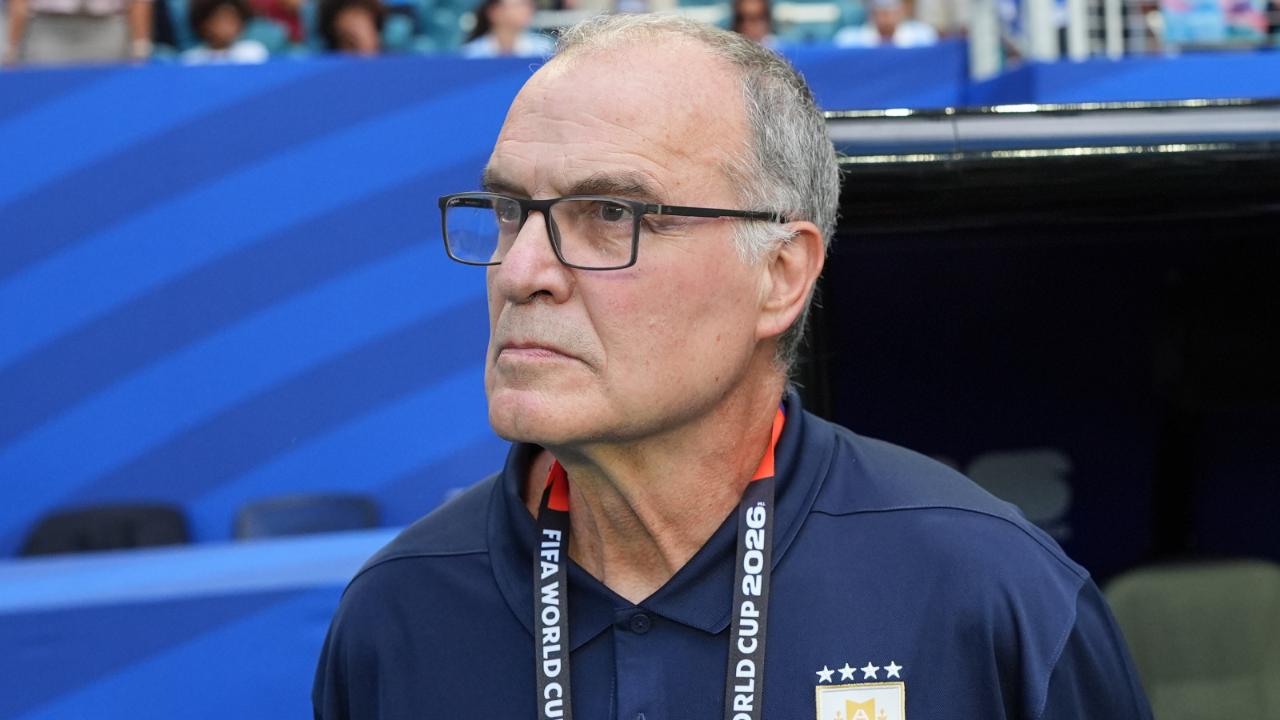
Bielsa has an obsession with football. Among his earliest jobs was to scout talented kids for the Old Boys. He scoured through the entire nation with his Fiat 517, hunting for talent in forgotten towns and overlooked fields. This is how Pochettino was discovered.
He also has a moral compass that remains untainted. Despite winning the league with Old Boys, he resigned because the club did not punish players when they broke curfew after attending a wedding. At the Athletic Club in Bilbao, he got into an argument with a construction worker. The disagreement was quickly forgotten by everyone involved. Everyone, except Bielsa. He showed up at the police station and demanded an arrest. Not the worker’s, but his. Iker Muniain, then playing for Athletic, was asked by a journalist: “Is Bielsa really as mad as we all think?” The winger replied: “No. He is even madder.”
In his own right, Bielsa is also a rebel. Following Chile’s impressive run at the 2010 World Cup, the squad was invited to La Moneda by President Sebastián Piñera. Players and staff queued to greet the country’s first democratically elected right-wing president since the end of military rule, but Bielsa chose not to. Until he was almost forced.
Bielsa has never voiced his political position, though his values paint a picture. At Leeds United, Bielsa once ordered his players to spend three hours picking up litter around the city. The intention was simple — players must know roughly how long working-class supporters had to work to afford a match ticket. At the World Cup, he is the only person who chose not to pose during the photoshoot. The reason was simple: “I’m not a model.” Rebellion, as opposed to subservience.
Rosario, after all, is famous not only as the birthplace of Lionel Messi, but also of Che Guevara.
Luis Suarez, who has been a vocal critic of the Argentine, had urged fans: “I ask people not to take it out on the players if something goes wrong. Bielsa has separated the whole group.”
Bielsa’s response could not have been more Bielsa: “I’m a generator of tension. When I arrive, the environment becomes tense. I’m toxic. To associate yourself with me makes you worse off.”
Who is Bielsa? To some, he is a prophet whose intellect and ideas shaped a generation of coaches. To some, he is the master of illusion, masquerading as a legend. Oscillating between a god and a fraud, Bielsa remains one of football’s greatest paradoxes.
At Leeds, a Bielsa mural reads: “A man with new ideas is a madman, until his ideas triumph.”