

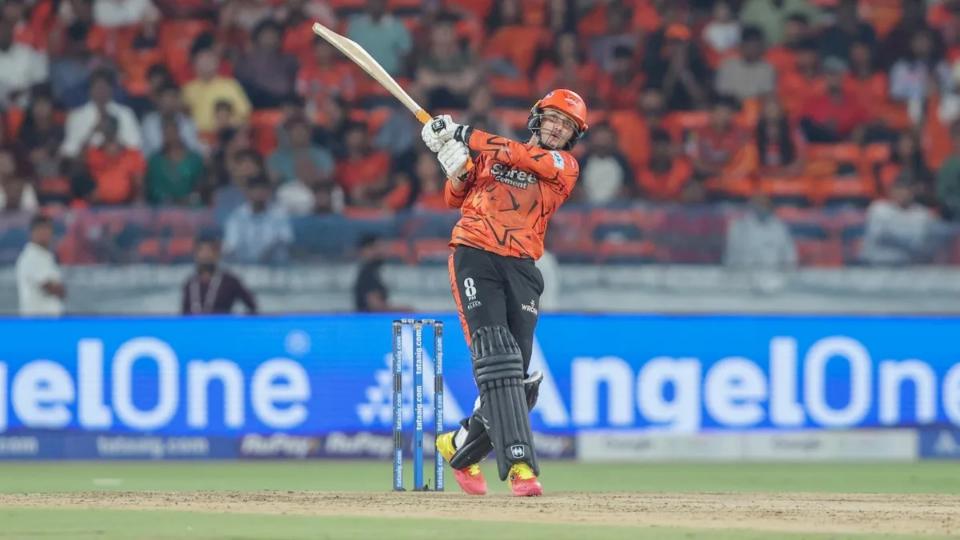
Runs have become the league’s answer to dopamine-inducing reels, and their ever-increasing, ever-consistent supply is slowly desensitising fans.
You tune into a random IPL game and, almost instantly, you’ll see something spectacular. Abhishek Sharma carving one inside-out over cover. A 15-year-old launching a length ball over mid-wicket. Tim David pulling one over the roof of Chinnaswamy. Shreyas Iyer sending one hurtling towards the commentary box.
It is a testament to how far batting has come. But it is also stripping away contrast. Every boundary begins to look like the last. Every match feels like a continuation of the previous one.
There are outliers on occasions, like Delhi Capitals being reduced to 8-6 by RCB, or the Super Over finish between LSG and KKR in a chase of 155. But they are far and few in between.
The IPL is still fun, but it’s somehow getting boring at the same time. There are structural reasons for this: the most significant being the standardisation of pitches across the country.
Dwindling identities and identical patterns
Through the 2010s, IPL venues carried distinct identities. Chennai Super Kings built an empire around the turning decks at Chepauk. They had an unmatched win/loss ratio of 2.666 at their home ground, losing only 15 out of 56 games in Chennai between IPL 2008-2019. The Sawai Mansingh Stadium in Jaipur used to be Rajasthan Royals’ fortress; they won each of their seven games there in 2008 and swept all eight games in 2013.
Mumbai Indians perfected their understanding of the Wankhede and won twice the number of matches they lost there between 2013 and 2020, their golden period. When teams visited the Eden Gardens, they expected low and slow tracks where the likes of Sunil Narine, Rajat Bhatia, and Piyush Chawla were difficult to negotiate.
That identity has largely blurred into one now. Almost every IPL pitch resembles a table top curated for maximising boundaries and runs. “I think if we give fair wickets, the spectators will say it’s become boring because the T20 followers want entertainment. They want to see fours and sixes. That’s why the tournament is built like that,” Muthiah Muralidaran, SRH spin-bowling coach, said recently.
This concern, whether real or overstated, has seen teams lose out on their home advantage. CSK’s win/loss ratio in Chennai has gone down from 2.666 before 2020 to 1.083 after. In fact, no team has a win/loss ratio of greater than 1.333 at home this decade. The quest for higher scores across the board has effectively killed the concept of home advantage in the IPL.