

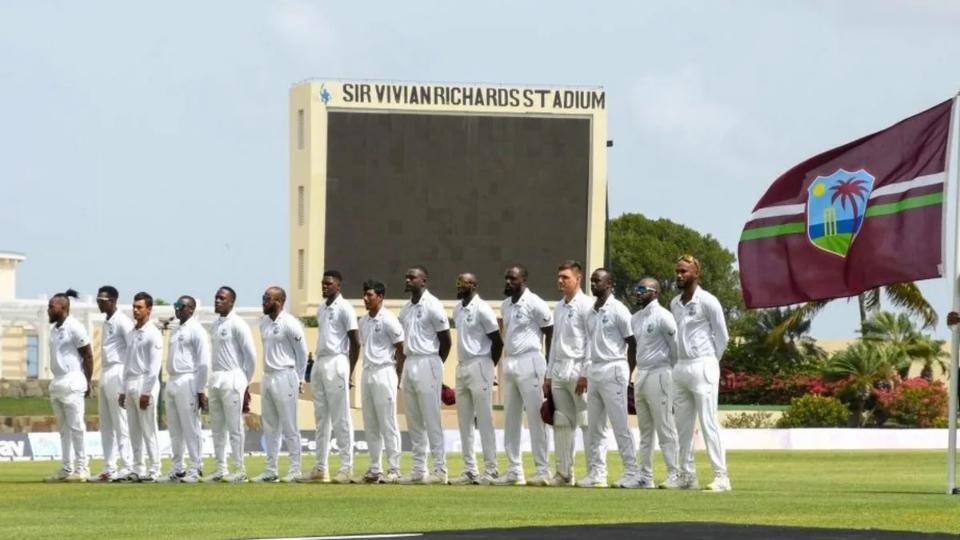
In a bid to “preserve relevance and competitive impact while managing operational costs”, Cricket West Indies (CWI) switched from a round-robin league stage between eight teams to three bilateral series of three matches each between six sides. The number of games dropped from 28 to 11, while the tournament window shrank from 72 days to 39. It marked a new low in the history of West Indies domestic cricket.
The core driver behind this shift was financial. Following the relative highs of 2024, CWI projected a US$26 million loss for the 2026 financial year after cash reserves reportedly fell sharply during a liquidity crisis. Domestic restructuring became, in effect, a cost-cutting exercise. The Combined Campuses and Colleges (CCC) and West Indies Academy teams were removed from the competition, while Antigua and Jamaica became the only two host venues to minimise travel costs between islands.
It is easy to look at this redesign and see decline, but domestic cricket in the West Indies has rarely stood still. Across nearly two centuries, its structure has continuously shifted, shaped by geography, colonial politics, economics, aviation, commercial sponsorship, player migration, and the changing demands of international cricket. The uniqueness of West Indies cricket lies in the fact that it is not one country attempting to organise a domestic system. It is many.
The West Indies remains the only ICC Full Member that is not a singular nation-state but a confederation of territories, making their domestic matches technically ‘inter-national’, and their international games not so. Fifteen countries and territories currently fall under CWI’s umbrella, spread across islands separated by seas, distinct political systems, and varying economic capacities. Domestic cricket here has always been an exercise in compromise.
The 19th century: Origins of cricket in the West Indies
Cricket itself arrived in the Caribbean long before regional unity existed. The earliest known record dates back to 1806 in Barbados, before British military officers began to spread the game through garrisons across the islands. By the mid-19th century, intercolonial cricket had emerged, though largely confined to white colonial elites. Barbados, Demerara (modern-day Guyana), and Trinidad became early centres of competition.
The challenge, however, was obvious. Sea travel between islands was expensive and slow. Jamaica, in particular, remained geographically isolated from the eastern Caribbean for decades. Cricket functioned in pockets rather than as a coherent regional ecosystem.
The first real attempt at structure came in 1891 with the Inter-Colonial Tournament involving Barbados, British Guiana, and Trinidad. It was an important step not just for competition but for identity. By 1886, a combined West Indies representative side had already toured Canada and the United States, planting the early seeds of what would eventually become a regional cricketing identity. That identity received a shot in the arm with the 1900 tour of England, where West Indies, led by Aucher Warner, played 17 matches and won five, albeit against second-string English sides.
Mid-20th century: Formalisation and growth of West Indies Cricket
Formalisation of cricket in the West Indies accelerated in the 1920s. The West Indies Cricket Board of Control (WICBC) was formed, bringing administrative cohesion to a fragmented landscape. They coordinated overseas tours and regional tournaments. In 1926, their admission into the Imperial Cricket Conference granted the West Indies Test status, beginning a new phase where domestic cricket increasingly became tied to international performance.
Yet even then, geography remained the defining problem. Regionalism, too, remained central to how West Indies cricket functioned. For much of the early 20th century, the so-called “Big Four” of Barbados, British Guiana, Jamaica, and Trinidad held disproportionate influence over cricket in the region, and ensuring balance between them became crucial. In the West Indies’ first-ever home Test series in 1930 against England, each of the four Tests was played in a different island, each had a different West Indies captain, and each had home umpires, while England’s Frank Chester remained the only constant. No other Test nation had begun international cricket quite like that. Representation was not merely political; it was structural.
Only after commercial aviation expanded in the 1940s did a truly integrated regional domestic competition become feasible. Jamaica could now participate more regularly, while administrators began thinking beyond fragmented inter-colonial contests. By the late 1950s and early 1960s, experimental knockout tournaments laid the groundwork for a more standardised championship. The inclusion of the Combined Islands, representing smaller territories from the Leeward and Windward Islands, was particularly significant. It offered players from smaller islands a pathway that would otherwise not have existed in a system long dominated by the Big Four.
Sponsored by Royal Dutch Shell, it became the West Indies’ first modern first-class domestic championship. Barbados, British Guiana, Jamaica, Trinidad & Tobago, and the Combined Islands competed in a round-robin league that gave regional cricket continuity and structure. This was also the period when the Caribbean nations became independent, one by one. For the first time, players were part of a coherent first-class ecosystem rather than sporadic regional contests. This period also coincided with the rise of the West Indies as a cricketing superpower.
Domestic cricket increasingly evolved to support international excellence. One-day competitions emerged in the 1970s, first experimentally through the Banks Trophy and later through the Gillette Cup. West Indies went on to win the first two men’s Cricket World Cups in this period.