

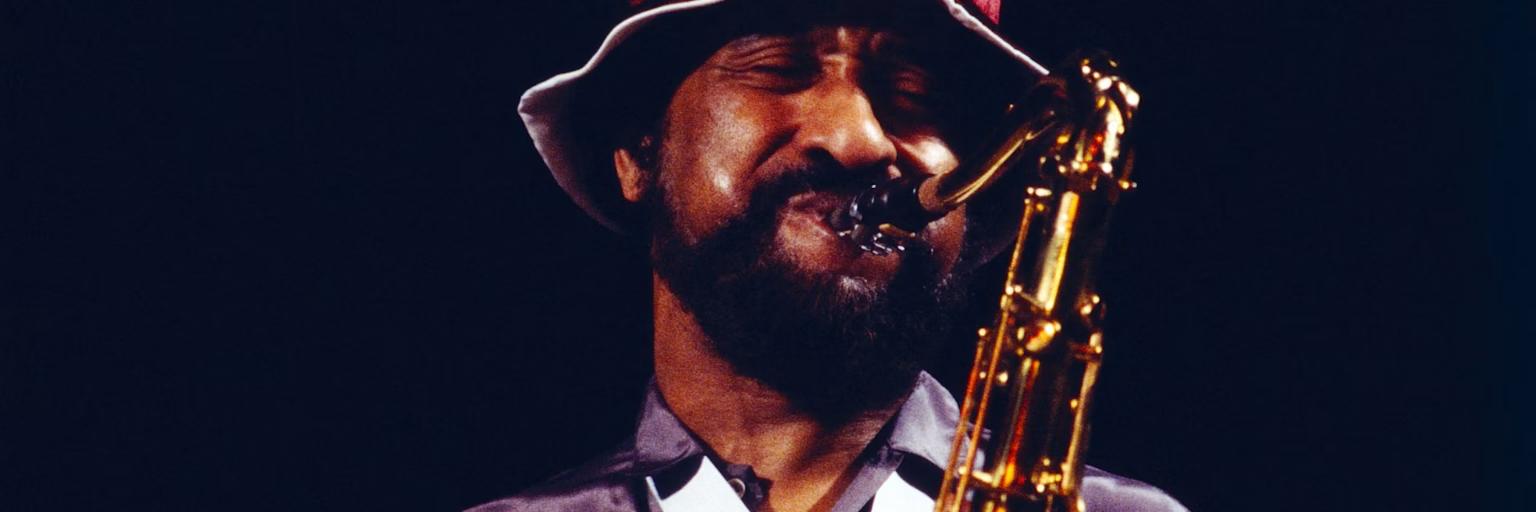
I once met the late jazz musician Walter Theodore “Sonny” Rollins (1930 to 2026). It was in the mid 90s on Manhattan’s 48th street at Rod Baltimore’s New York Woodwind and Brass Center. The shop had the best repair department so there were always some serious players around.
Consequently, as I was sitting on a step checking out my newly-repaired flute, no doubt playing through some “hip” patterns or something, I spotted some long, well-suited, legs passing me by. Then an instantly recognisable voice somewhere above said: “Sounds good man.” This was the same voice I had heard making effortlessly cool introductions on the live album A Night at the Village Vanguard (1957), (Sonny was no recalcitrant jazz microphone mumbler).
Six feet above me was the man, carrying a saxophone case, giving me a small seal of approval that ranks as one of my most treasured musical moments. Because, like the record title, he was The Saxophone Colossus. Rollins’s generosity of spirit and kindness are well known.
The poignancy of Rollins dying the day after Miles Davis’s 100th anniversary is amplified by the realisation he was the last living musician from the famous Great Day in Harlem photo from 1958. This picture brought together jazz’s leading lights for Esquire’s 1959 Golden Age of Jazz edition, including Dizzy Gillespie, Art Blakey, Thelonius Monk, Coleman Hawkins, Lester Young, Charles Mingus, Mary Lou Williams and Count Basie.
Without any hyperbole, Rollins’ death marks the end of an era. The obituaries will be itemising his greatness: his joyful and often humorous playing and ability to create endless newness out of every moment (improvising). And the self-discipline and rigorous hours of practice, despite which he always felt he could do better – no matter how many accolades he received.
Consequently in 1959, despite growing success and opportunities to make money, he took a two-year sabbatical, during which he famously practised on the walkway of The Williamsburg Bridge. He did this partly to avoid disturbing his neighbours – but also because this communion with the outdoors at all times of year fuelled a growing spirituality (he was to take second break in 1969 to study zen buddhism).