

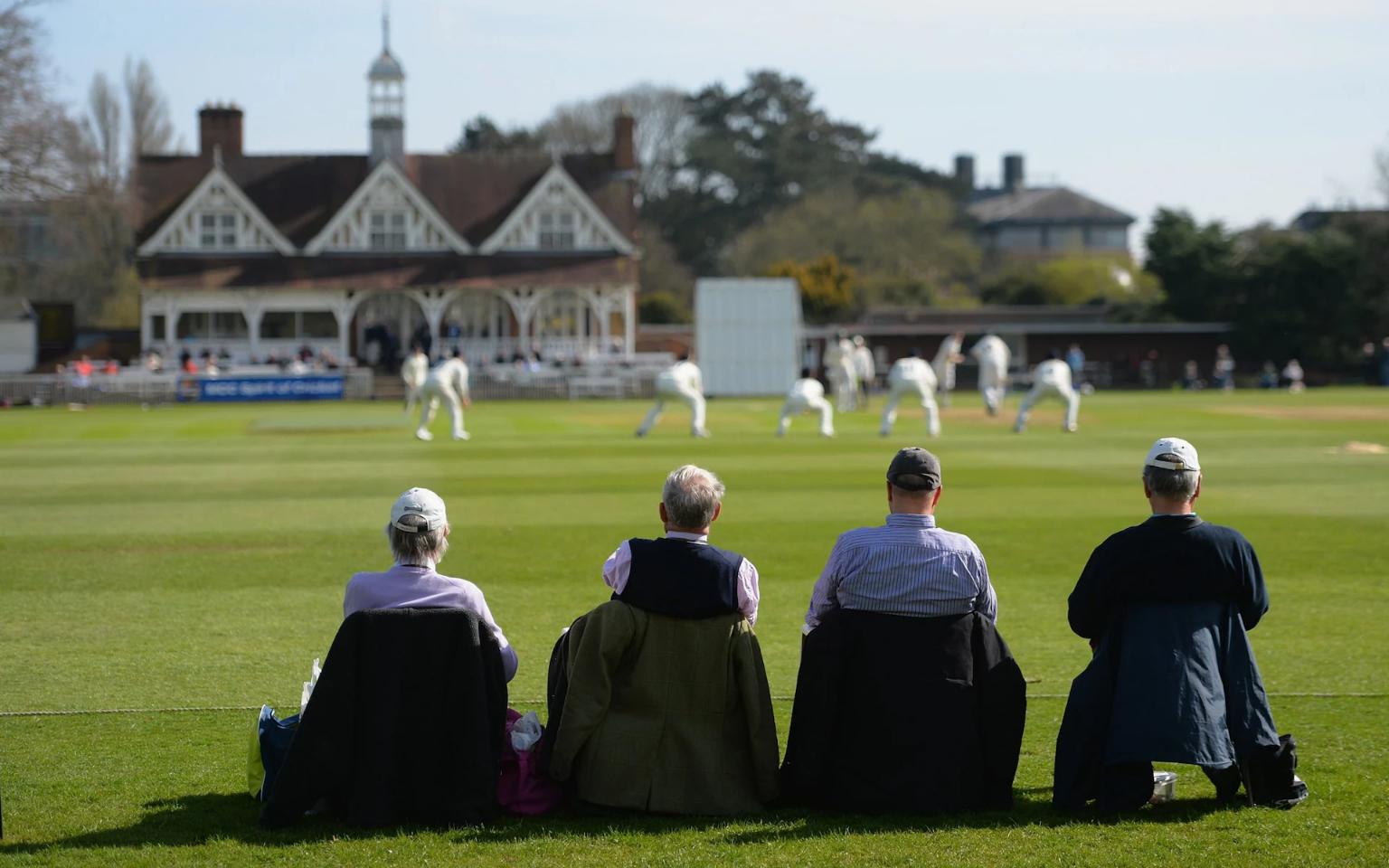
Children who grow up watching the Indian Premier League on television, and maybe the Hundred live, might be surprised to learn there is another way to play cricket. If they want to see how it used to be done, let them go to the Oxford Parks, where the best part of 1,000 first-class matches were played before the status of Oxbridge universities was abolished in 2020.
Not a floodlight in sight. Not a pom-pom girl, nor spider-cam, no stand for spectators, no charge for admission, no PA system, no music at all. Yet here and at Fenner’s, the first-class cricket season used to open every April. Amateurs would play against professionals – and Oxford beat every first-class county at some time or other except the latterday Durham – while many a future England captain cut his teeth.
Last week I sat on a bench in the Parks to watch the Oxford University team prepare for their 50-over game against Durham University. In their opening match Oxford had been defeated by Teddington CC comfortably by seven wickets. This is what happens if all subsidies, whether from MCC or the ECB, are withdrawn: Oxford and Cambridge cannot begin to compete with the 18 county academies, and as readers of Telegraph Sport were informed last year, the very future of Fenner’s is in jeopardy.
The old pavilion in the Parks has no indoor school – it has not changed in a hundred years. Inside on the walls hang wooden boards listing the Blues of every season back to 1827. Yes, 200 years ago some Oxford and Cambridge chaps were floating the idea of playing against each other at Lord’s, and so they did the following year. Oxford’s No 3 batsman was William Webb Ellis, who became renowned in another sport, rugby.
‘I remember Imran Khan running in, up the hill’
Before the First World War, every other England captain seemed to come from Oxford. That is the way it was: prime ministers and England cricket captains came from Oxford. (It would be risky to say they all graduated from there, because there have been splendid cricketers at Oxbridge who left without a degree.) Lord Harris and Plum Warner, Reggie Foster and Charles Fry, they were followed by the most authoritarian captain of all, Douglas Jardine. MCC’s selectors, of course, searched for a captain in its own image.
The boards of the Blues of the mid-1920s list George Abell. Soon afterwards he went to Punjab and scored the first double-century in the Ranji Trophy, for Northern India (Tom Abell, Somerset’s match-winning batsman in the last championship round, says he is no relation). He also designed a cricket ground in Lahore, in Lawrence Gardens, and looked no further than the pavilion in the Parks for a model. It is one gorgeous ground, surrounded by more trees than the original, a sub-tropical hint of paradise.
Oxford sides often used to be strengthened by players from overseas: sometimes Australian, or both Nawabs of Pataudi, father and son, while the 1931 team contained three South African Test players, current and future. Of all the golden moments, I think I would most have liked to see Pataudi jnr scoring a century in each innings against Yorkshire at the Parks in 1961, when they were reigning county champions. Less than two months later in a car accident he lost the sight of an eye, and cricket something precious.
I sat on a bench next to the one named after Martin Donnelly, who scored 2,287 first-class runs for the New Zealand tourists of 1949, including a double-century against England at Lord’s, after going to Oxford. And I remembered Imran Khan running in, up the slope, to bounce out seasoned pros (he also scored a century in each innings, against Nottinghamshire). Otherwise, Oxford had so few bowlers – fewer than Cambridge – that they won only one match in five.