

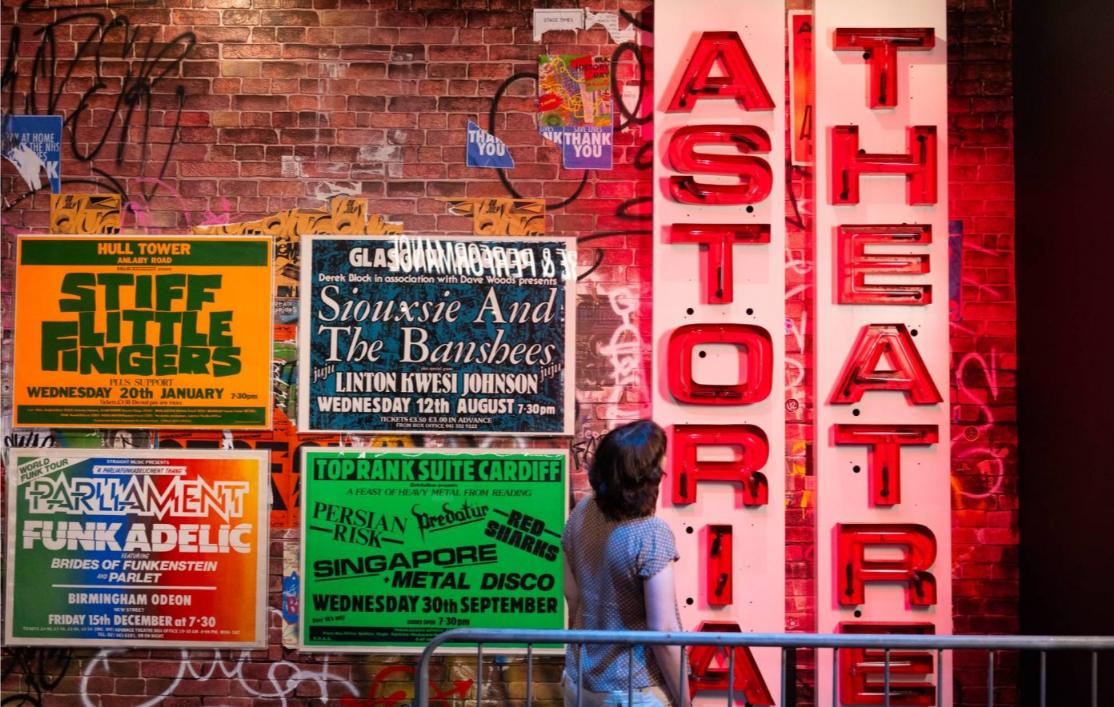
A new exhibition celebrating the UK’s lost music venues has opened at the V&A South Kensington.
After asking people to submit their “artefacts and music ephemera” to complete their collection last May, the exhibition, titled ‘Lost Music Venues’, has finally opened today (May 30).
With the support of Music Venue Trust, the V&A has collated posters, membership cards, club photography, band merchandise and subcultural fashion linked to around 50 now-closed clubs, concert halls and community spaces across the UK.
In total, more than 150 objects are included in the display, with a significant proportion coming from the aforementioned public call for memorabilia.
Together, the objects trace the history of grassroots and DIY music and culture in the UK, as well as campaigns launched to save threatened spaces from closure.
The exhibition is divided into four sections, with the first exploring how dance halls and cinemas evolved into purpose-built music venues in the 1980s. Featured items include artefacts linked to the iconic Manchester club The Haçienda, fashion artefacts from brands like Dr. Martens and Converse, and signs from London venues, including the original 1985 sign for the Astoria, which has been loaned by Damon Albarn.
A second part goes on to explore the rise of so-called ‘toilet circuit’ venues during the 1990s indie explosion, focusing on grassroots venues such as Moles in Bath, The Charlotte in Leicester, and Manchester’s Roadhouse.
The exhibition highlights the importance of touring for artists and audiences alike, giving musicians an opportunity to develop their craft and find fans. This display includes vintage Blur set lists, Oasis lyrics handwritten on a tour bus, and the briefcase of former Pulp tour manager Mark Webber.
There’s also a look into how social media in the mid-2000s transformed how bands such as Arctic Monkeys and Coldplay were discovered.
It then goes on to explore the challenges that continue to impact grassroots venues today – namely, neighbourhood noise complaints, licensing laws and the Covid-19 pandemic. Music Venue Trust, Northern Ireland’s Free The Night, Leeds-based No Place Left to Play, and the UK-wide Save Our Scene have all contributed artefacts.
Finally, the exhibition highlights the evolution of electronic club culture from the 1990s through to the present day, displaying HIV and AIDS awareness initiatives, early Banksy exhibitions at Glasgow’s The Arches, and London institutions Plastic People and The End.
“Music venues – be they gig spaces or nightclubs – are not only the lifeblood of the music industry but an integral part of the creative sector,” shared Harriet Reed, Curator of Contemporary Performance at V&A South Kensington. “As sites of experimentation, entrepreneurship and artistry they nurture talent and provide vital spaces for connection and community.”