

“I was with calm,” Rafael Nadal used to say after matches where he kept his nerves at bay.
The Spanish great may have been a little off with his syntax, but he put his finger on what so often separates champions from everyone else: The seemingly simple ability to avoid panicking when matches get tight and adversity strikes.
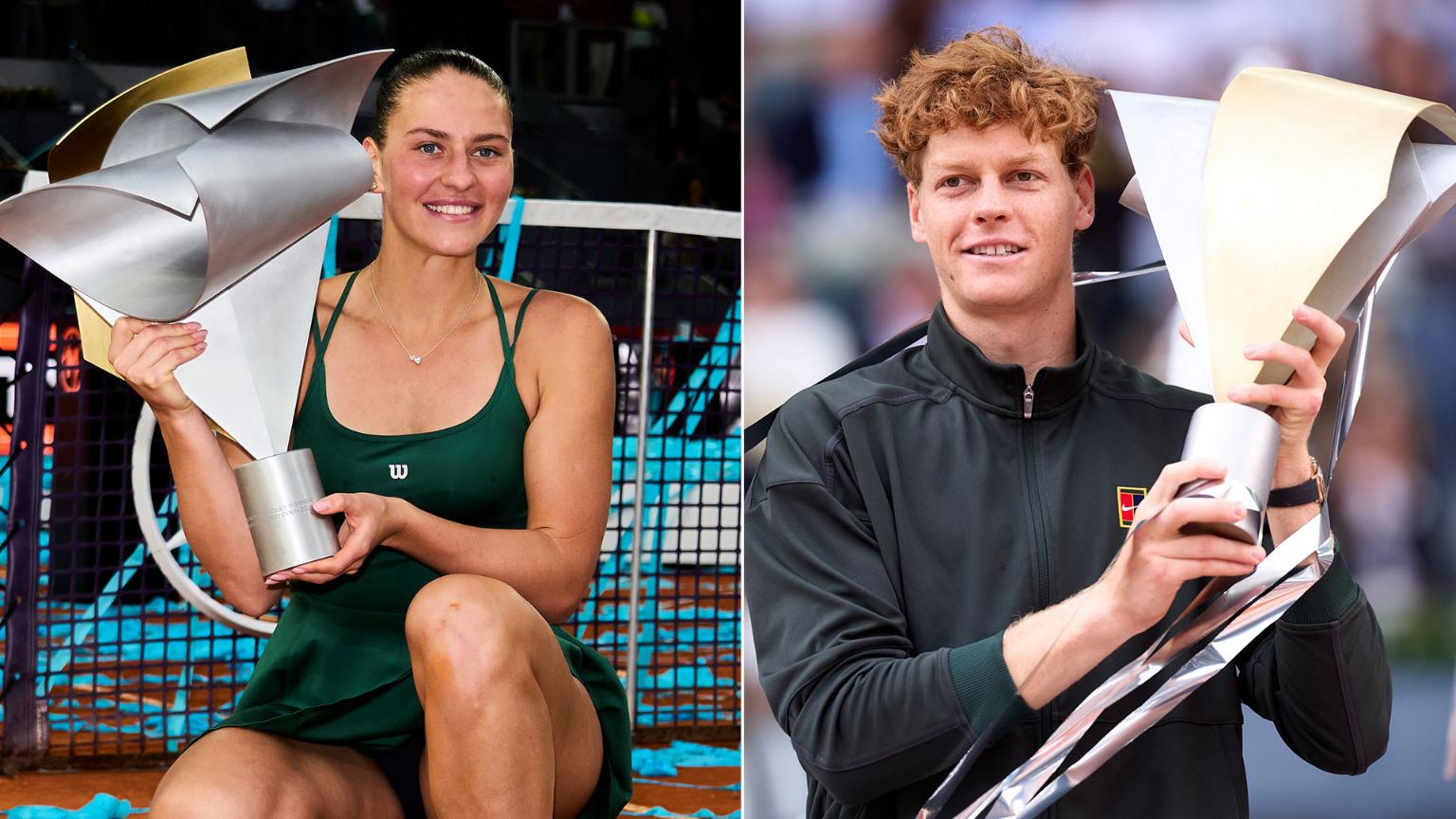
Rafa’s words were as relevant as ever over the past two weeks in his country’s capital. Jannik Sinner and Marta Kostyuk, who took home the winner’s trophies at the Mutua Madrid Open, were put under intense pressure at various moments during the tournament. They both responded, as Nadal would say, with calm.
For one of them, icy composure seems to come naturally. For the other, it’s a new and welcome and possibly career-changing development.
The latter, in case you couldn’t guess, is Kostyuk.
A prodigy from Kyiv, she was on tour by 13 and in the third round at the Australian Open—the adult version, not the juniors—by 15. But as speedy as she was around the court, and as skilled as she was with a racquet, she struggled with the final piece of the top-player puzzle: Her emotions. Even the most innocuous of errors could send her into a rage that led to many more damaging mistakes.
In 2026, though, the outbursts have been fewer and farther between. Kostyuk, now 23, spoke in Madrid about why.
“I’ve done therapy for many years now, and I’ve always wanted to change my overall perspective on tennis,” she said. “Because for me it was always very, very emotional, and I would spend just a lot of energy, and everything would matter so much to me.”
“Whether it was wins or losses, it was very just difficult to live in this constant emotional bombing from the inside,” she added. “It’s not an easy road, it’s a very ugly road, I would say. But I always knew how I wanted to be on the court, how I didn’t want to be.”
Using sports psychologists and therapists is the norm in pro tennis now, but it’s still rare to see someone have the level of success that Kostyuk has had in transforming her on-court mindset and demeanor. These days she takes her mistakes in stride.
“You just go out there, you do your job, you don’t have [an] emotional attachment to it,” she says. “Whether you win or lose, you just keep working and keep becoming a better person and a player, and that’s it.”
Kostyuk has begun to reap the benefits of that attitude adjustment during this clay season. While she lost early in Indian Wells and Miami, she says she wasn’t discouraged, because she knew she was practicing well. Her faith has since been rewarded with titles in Rouen and at her first WTA 1000 in Madrid. That’s 11 straight wins, including two straight-setters over Top 10 opponents, Jessica Pegula and Mirra Andreeva in Saturday’s final.
I was living for many years in that state of everyone expecting big results from me … I think when I freed myself from that, actually it’s incredible. Marta Kostyuk
Freed from the air raid in her head, Kostyuk could show off all of her athletic gifts in Madrid. She broke serve at a prodigious clip, controlled rallies with her forehand, and covered the court like few others can. She was four for four on break points against Andreeva, and won more than half of the points on her return.
Still, Kostyuk needed every bit of calm she could muster to close it out. With three championship points, she grew visibly tight. She caught a series of wayward service tosses, and made two quick backhand mistakes to go from 40-0 to 40-30. With one more chance, she took a risk and followed her forehand from the baseline to the net. The move paid off—just barely—when Andreeva’s backhand pass sailed a few inches long. Seeing it land, Kostyuk could do nothing but lay down in total relief that she didn’t have to take another swing.
“Very happy to finish this match in two sets,” she said.
With the win, Kostyuk moves from 23 to 15 in the rankings and injects herself into the clay-swing conversation.
Afterward, she talked about the difficult process of finally getting out from under her teen expectations.
“I was living for many years in that state of everyone expecting big results from me,” she said. “Like, almost winning, you know, having such good results being so young was almost like a curse.”
“I think when I freed myself from that, actually it’s incredible.”
Sinner, by contrast, didn’t need to fight through much in the way of nerves in his own final. He beat an off-form Alexander Zverev 6-1, 6-2 in under an hour. He broke serve early in each set, hit 19 winners and made just five errors, won 93 percent of his first-serve points, and held Zverev to 23 points total. It was so one-sided that Zverev told the crowd he was “super-sorry” afterward.
“I started very well the match, breaking straightaway, but he was not playing his best tennis today,” Sinner said. “So I just tried to get with the front foot ahead. Very happy about the level I’m playing, winning one more title like this means obviously a lot to me.”