

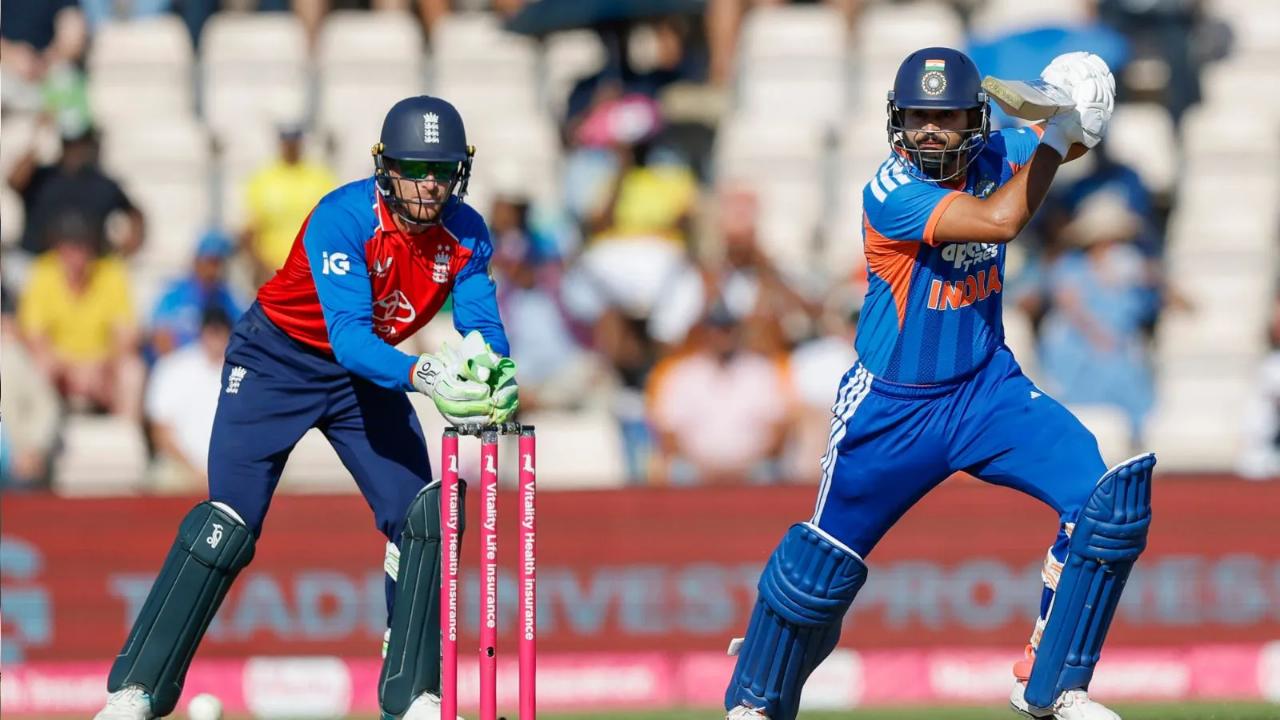
Six defeats and a washout across Shreyas Iyer’s first seven matches as captain. England put the last one beyond doubt in Southampton on Saturday, sweeping the series 4-0, Jos Buttler and Harry Brook adding 233 for the second wicket, the highest second-wicket partnership in T20I history, and taking with it the world No. 1 T20I ranking India had held since 2022. The series is over. What it was actually testing, is not.
Two weeks ago, before a ball was bowled at Durham, the argument was that India’s batting problem wasn’t personnel, it was method. Built entirely around bat speed and boundary hitting, it asks one thing of a batter: commit early, trust the ball to arrive where it’s supposed to. Extra bounce or seam movement punishes exactly that pre-determined committing. Four matches later, the claim holds up, confirmed by a coach who has taught power-hitting technique for years, and by India’s own captain, independently describing the same failure.
Julian Wood, who has worked with T20 batters across several franchise leagues, watched the collapse and diagnosed a refusal to adjust, not a lack of skill. “The key thing playing over here is the bounce. In the IPL, the wickets are very flat, the boundaries are small and the ball sort of sits up waist height. Whereas over here, it is higher than that. One thing the Indians are very good at, is they know how to use the pace, not fight the pace. The impression I got here was that they sort of tried to fight the pace.”