

New Delhi:
For a young fast bowler, T20 cricket can often become a battle of decisions. The margin for error is tiny, the batter is constantly looking to disrupt the bowler’s plans and there is rarely enough time to recover from a poor over. It’s relentless, particularly if you are bowling in the powerplay. So, how do players recover from a bad over or a match?
That’s when captains become vital. MS Dhoni became a legendary captain because of all the communication he had with his bowlers. In the 2007 T20 World Cup final, after Joginder Sharma bowled a wide on the first ball of the final over, the Ranchi-born captain immediately rushed to have a chat with the medium pacer. He did it again after Misbah-ul-Haq hit Joginder for a six in the same over.
The conversation eventually led to Joginder picking up Pakistan’s final wicket and helping India lift their maiden T20 World title. Over the years, Dhoni has built his reputation as a captain not only on tactical decisions but also on the way he communicates with players, particularly bowlers who are still finding their feet at the highest level.
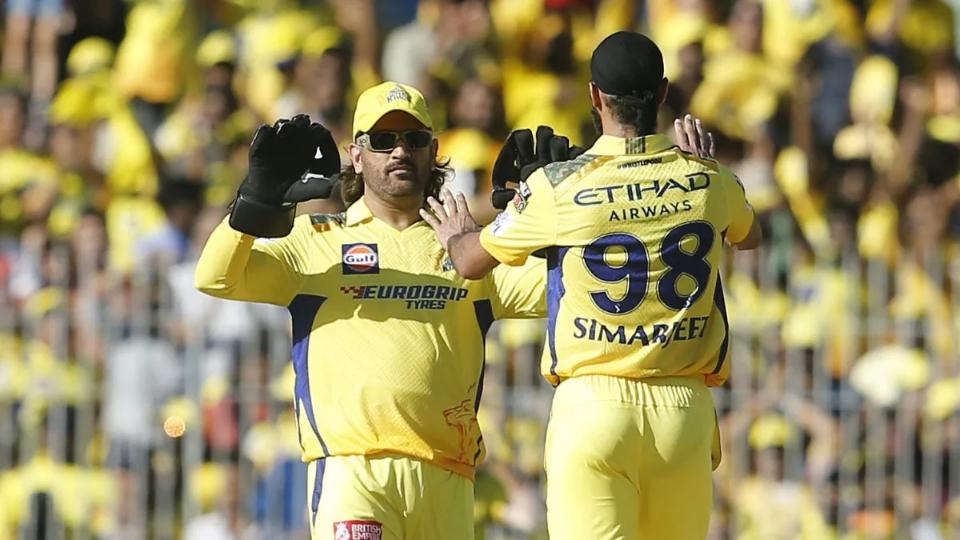
Even as Chennai Super Kings captain, Dhoni’s modus operandi never changed. Over the years, he guided young cricketers and it resulted in CSK winning five IPL titles. Simarjeet Singh, who shared the dressing room with Dhoni for two seasons, explained how the mechanism exactly works. He stated that the keeper-batter does not necessarily walk up to a bowler with a fixed solution. Instead, he discusses the conditions, offers a possible plan and crucially, makes sure the bowler is comfortable executing it.
“Mahi bhai shares his plans with us. He tells us about the ideas we can implement on a certain wicket or ground. He gives us the best option possible and makes sure that the bowler is comfortable with that option. If the bowler is not comfortable with the option, he will think of something else,” Simarjeet said in an exclusive interview with India TV.
No need to think about fielding with Mahi bhai: Simarjeet
Now, that distinction is important. Dhoni’s role, as described by Simarjeet, is not simply to dictate what happens in the next over. It is to help the bowler arrive at a plan that he believes he can execute. It can boost the confidence of a bowler and the eventual plan becomes a shared decision rather than something imposed from the outside.
“Apart from that, he allows us to bowl accordingly. In that case, we can discuss our plans with him and he helps us sharpen that idea. He sets up the fielding; he’s very good at it and we don’t have to think much about that,” Simarjeet said.
Simarjeet is currently representing East Delhi Riders in the Delhi Premier League. He has claimed 12 wickets in nine matches, at an economy rate of 8.93. The surface at the Arun Jaitley Stadium hasn’t been kind to the bowlers, particularly in monsoon season, when the ground attracts a lot of dew.
Reflecting upon that, Simarjeet stated that it’s difficult to build a reputation in Delhi cricket, particularly in T20 cricket, but if one backs their skill set and learns constantly, it is possible.
“In T20 cricket, it’s very difficult (to buld a reputation on flat flats of Delhi). There’s a lot of dew, even at this point. The ground isn’t big either. One of the end is usually smaller. It’s difficult, given that you don’t have laser-guided yorkers or flowers. If you have pace, then you need to think about capitalising it. If all these things go in your favour, then you can build a reputation in Delhi cricket. You can prove yourself with those skill sets. You also have to consistently learn how to get better,” Simarjeet said.