

Kagiso Rabada runs in with the new ball, seam held upright, presenting it at an angle that belongs in a Test match. The length is fuller than T20 batsmen expect, the line tighter, and when the ball pitches it moves either way off the surface. The bounce arrives chest-high. Modern T20 batting is built for pace and yorkers. Rabada offers seam and length. Seventeen of his twenty-four wickets this season have come in the first six overs. The batsmen cannot find rhythm against something they were not prepared to face.
In IPL 2026, the powerplay scoring rate has reached 10.47 runs per over. Teams chase sixes. Gujarat Titans chose something else. Shubman Gill and B Sai Sudharsan open together but don’t slog and do not provide high-flying starts. Gill was dropped from India’s T20 World Cup squad at the eleventh hour because his approach did not fit the current era. Sudharsan, a bright batting prospect in Tests, has not replicated that form in the shortest format. Most T20 outfits would not pair such openers together. Gujarat’s think-tank, led by Ashish Nehra, did exactly that.
“We knew what we had in the middle order,” Nehra says. “It wasn’t going to give us fireworks. So the top three had to do the work. But we weren’t going to ask them to be something they’re not.”
What Gill and Sudharsan are is solid. In the powerplay, they average 58 runs, the best among all teams and the only partnership above 50. Their strike rate is 151.09, seventh-highest in the league. They have hit 31 sixes in the phase, second-lowest. Vaibhav Suryavanshi alone has hit 37. The numbers describe a choice: establish the base, then expand. Gill has made 616 runs this season. Sudharsan leads the tournament with 638. The work gets done without announcement.
Gujarat’s middle-order strike rate in the death overs is 158.41, the lowest among all teams. It is a reflection of what they do not have. The top order does not hand over momentum. It carries the innings through. When opposition bowlers come hard at Gill and Sudharsan, expecting them to crack under pressure, they absorb it. Calculated aggression, not recklessness.
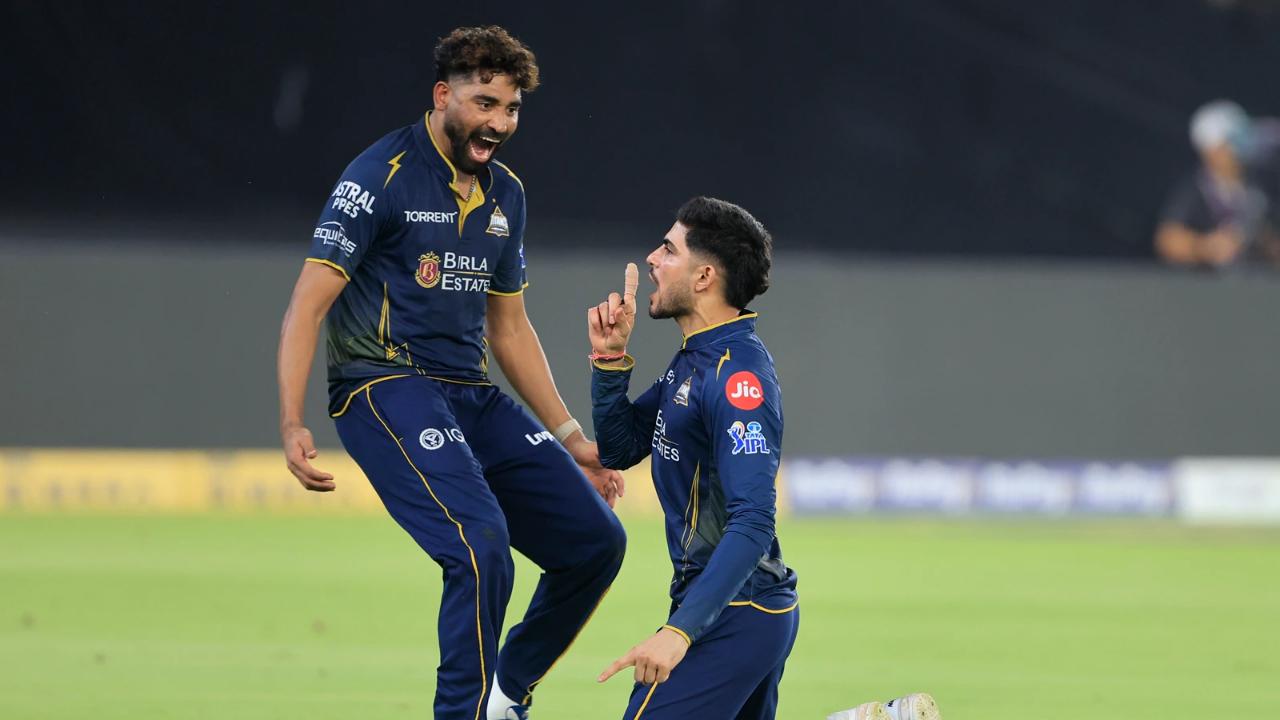
The bowling follows the same philosophy. Since 2024, Gujarat have used a seamer who bowls Test-match lengths and probes batsmen with movement. Mohammed Shami did it in the past. This season, Rabada has taken up the role. With Mohammed Siraj and Prasidh Krishna as second and third seam options, the plan is simple: unleash Rabada when the ball is hard and new.
The hard ball generates bounce. The seam moves it either way. Rabada’s pace means batsmen cannot settle into a rhythm. When they try to go hard at him, his response is predictable but effective: the short ball, throat-high. Virat Kohli fell to it. So did Urvil Patel. Gujarat have not hesitated to use three of Rabada’s overs in the powerplay itself.
Mohammed Siraj complements him from the other end. Thirteen powerplay wickets. Pressure from both sides means T20 batsmen, built for aggression, have no space to attack. They cannot find the boundary. They cannot rotate strike. The rhythm never arrives.