

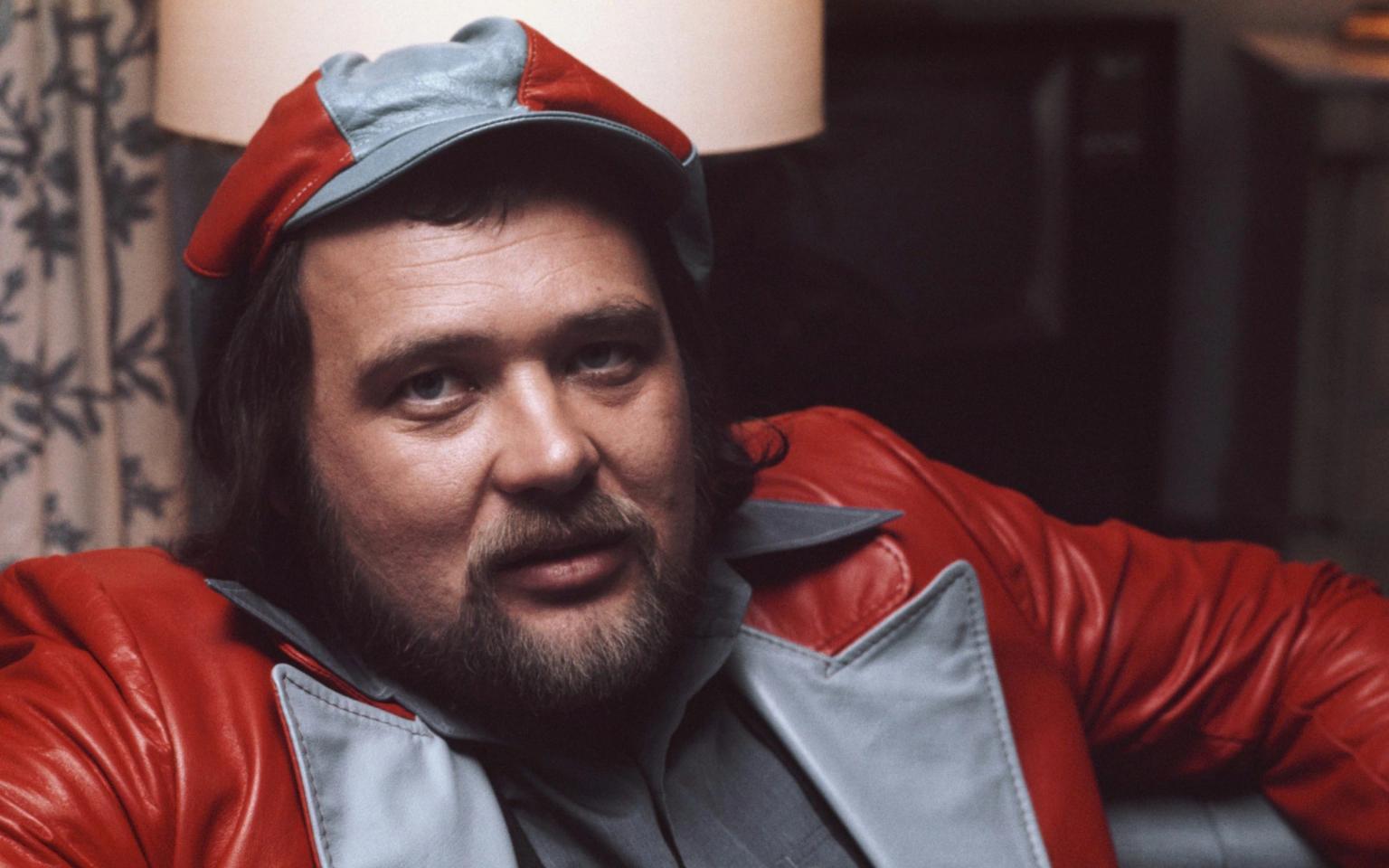
David Clayton-Thomas, who has died aged 84, was the bear-like, rough-voiced singer and lyricist of Blood, Sweat and Tears, the jazz-rock pioneers who augmented the standard guitar-bass-keyboards-drums line-up with a storming brass section, delivering a succession of hits like Spinning Wheel and You’ve Made Me So Very Happy.
His BS&T colleague Lou Pomanti recalled Clayton-Thomas’s swaggering charisma. “When you saw him in his prime, dressed from head to toe in black leather with fringes on his jacket sleeves, he was the definition of a badass. Don’t mess with him – on stage or off.”
He was born David Henry Thomsett on September 13 1941 in Kingston upon Thames, the son of a lineman serving in the Canadian army, Fred Thomsett, and Freda, née Smith, a pianist; they had met when she was entertaining the troops.
The family moved to Toronto after the war; young David was regularly beaten by his alcoholic, abusive father, and left home in his early teens, sleeping in parked cars and empty buildings and stealing to survive; a reputation for brawling would linger throughout his life. Almost inevitably he spent several years snarled up in the youth justice system, but in one institution he found a guitar and taught himself to play.
Released in 1962, and changing his name to David Clayton-Thomas to put the bad years behind him, he entered Toronto’s R’n’B scene and, encouraged by the great rock’n’roller Ronnie Hawkins, he started a band, David Clayton-Thomas and the Fabulous Shays. They made a couple of albums and appeared on the NBC pop show Hullabaloo at the invitation of its host, Paul Anka.
His next band, David Clayton-Thomas and the Bossmen, was one of the first rock bands to incorporate a brass section. Their 1966 single Brain Washed, co-written by Clayton-Thomas – “60 million people reading all about Viet Nam / 85 per cent of them don’t give a damn” – and described by him as “an anti-war primal scream of refusal and outrage”, was a big hit in Canada.
He moved to New York, where Judy Collins heard him in a club and recommended him to her friend, the Blood, Sweat and Tears drummer Bobby Colomby.
The band – brainchild of the keyboard player Al Kooper, who may be best known for his contribution on organ to Bob Dylan’s 1965 classic Like a Rolling Stone – had broken up after their debut album, The Child Is Father to the Man. But with Clayton-Thomas up front they re-formed (minus Kooper) with instant success, their self-titled 1968 second album going quadruple platinum.
In 1968 The New York Times declared them “one of the best rock bands in the country… David Clayton-Thomas… lumbers around the stage happily screaming into the microphone.”
For the next three years BS&T, with their strong songs, muscular arrangements and Clayton-Thomas’s husky, full-throated roar, filled stadia around the world, and were one of the highlights at Woodstock. In 1970 they were coerced into undertaking a cultural-exchange tour behind the Iron Curtain by Richard Nixon’s US State Department, who threatened to deport Clayton-Thomas back to Canada on account of his teenage criminal convictions.
The reaction from their fans was savage, with demos outside gigs and dog excrement hurled on stage. “I don’t think we realised how it would bounce up and bite us,” the singer recalled.