

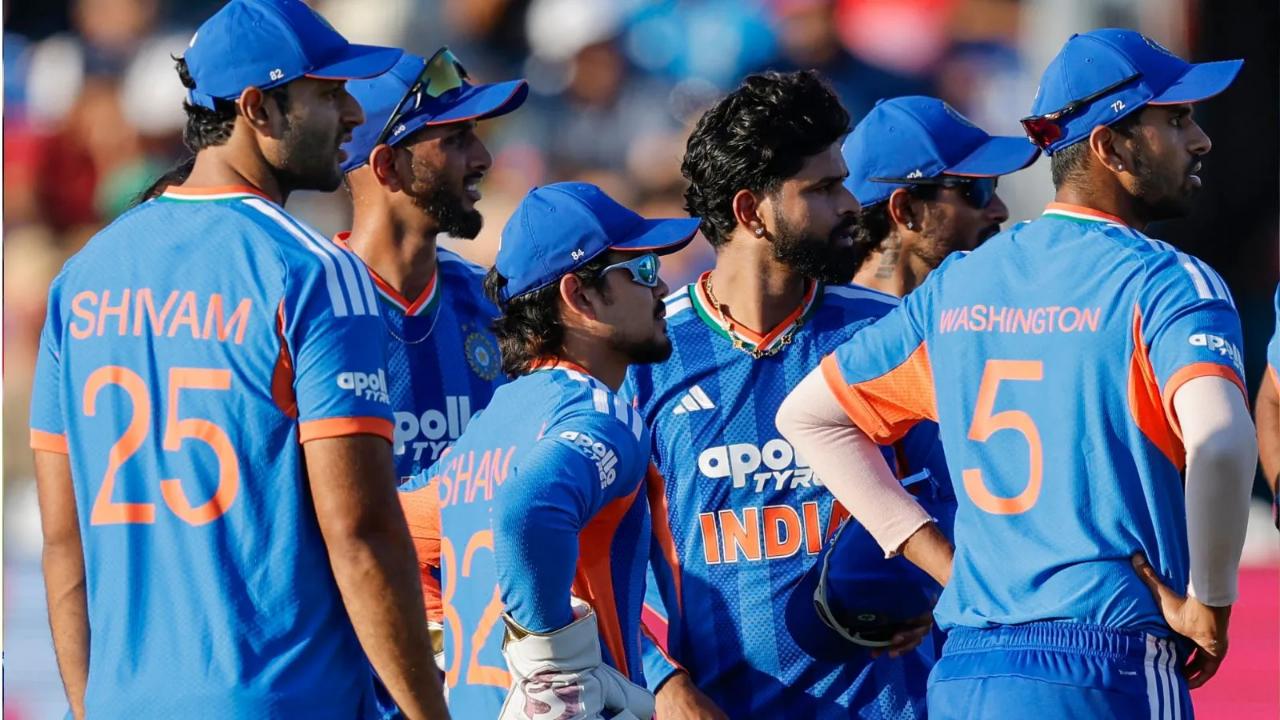
Four months ago, Suryakumar Yadav lifted a T20 World Cup trophy in Ahmedabad. On Saturday, he will watch from outside the XI as India try to salvage pride at Southampton, having already lost this series, their second straight defeat in a fortnight after a three-year run without one ended in a shock whitewash to Ireland. A loss here also costs India the world No. 1 T20I ranking they’ve held since 2022. In between, he lost the captaincy, then his place in the team altogether. Nothing about his batting changed. What changed is that India, having won a tournament playing one way, discovered it does not know how to play any other way, and needed someone to blame for that first.
The clearest proof came at Trent Bridge, where India folded for 76, their second-lowest total in T20I history. Five wickets went down inside the powerplay alone, 54 for 5, the earliest India have ever lost five in a men’s T20I. Abhishek Sharma mistimed a top edge to point. Vaibhav Sooryavanshi gloved an Archer bouncer behind. Ishan Kishan and Shreyas Iyer both picked out the same fielder at deep backward square leg in successive balls. Axar Patel edged behind trying to counter-attack. Five different shots, five different ways of failing, but the same instinct behind all of them: commit to the attack and trust the pace and bounce not to punish it. “When you’re chasing 200, you need to pace up your innings, have a set pattern for how you’re going to go about it,” Shreyas Iyer said afterward. “We fell a bit short in terms of that. Execution was awful.”
For years, India batted cautiously in T20Is despite being home to the IPL, T20’s most aggressive league. Only from the 2023 ODI World Cup was that caution shed for good, and two T20 World Cups followed. It still works against attacks that let the ball come on. It stops working the moment the pitch fights back, because the method leaves no room for a batter to slow down mid-innings without the whole thing stalling.