

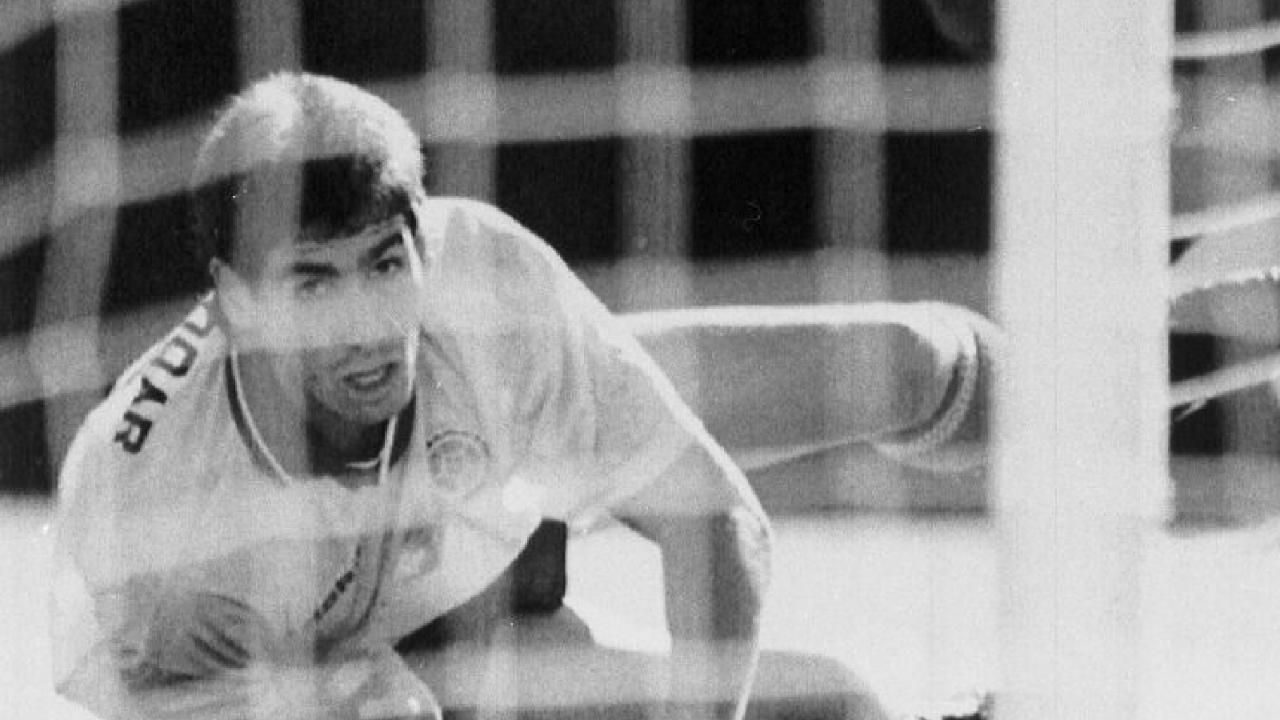
Andrés Escobar once told a Colombian journalist named Gonzalo Medina why he loved football. “This sport illustrates the close relationship between life and the game,” he said. “In football, unlike bullfighting, there is no death. In football no one dies; no one gets killed. It’s more about the fun of it, about enjoying.”
He was killed for football. He was 27 years old.
In the days after Colombia’s elimination from the 1994 World Cup, Escobar sat down and wrote a column for El País. A journalist friend had suggested it. He had been offered broadcasting work in America for the rest of the tournament. He had been offered the chance to stay with his brother’s family in Miami. He declined both. “I want to go to Colombia and show my face,” he told his sister, María Ester.
The column was titled “Life Doesn’t End Here.” He wrote the phrase four times. “Life doesn’t end here. We have to go on. Life cannot end here. No matter how difficult, we must stand back up.” He asked for respect. He sent a hug to everyone. He signed off: “See you soon, because life doesn’t end here.”
The column ran. He was dead days later.
***
The own goal itself was unremarkable in the way that accidents are. June 22. The Rose Bowl, Pasadena. A John Harkes cross flew into the Colombian box. Escobar stretched a leg to intercept. The ball rolled off his heel and into the net. He lay face down on the grass for a moment.
In Medellín, watching on television, his nine-year-old nephew turned to his mother. “In that moment,” María Ester would say later, “he said to me, ‘Mommy, they’re going to kill Andrés.’” She replied: “No sweetheart, people aren’t killed for mistakes. Everyone in Colombia loves Andrés.”
Colombia lost 2-1.
Colombia had arrived at the 1994 World Cup as one of Pelé’s tips to reach the semifinals. They had beaten Argentina 5-0 in Buenos Aires in qualifying. Valderrama in midfield, Asprilla up front, Escobar at the heart of the defence.