

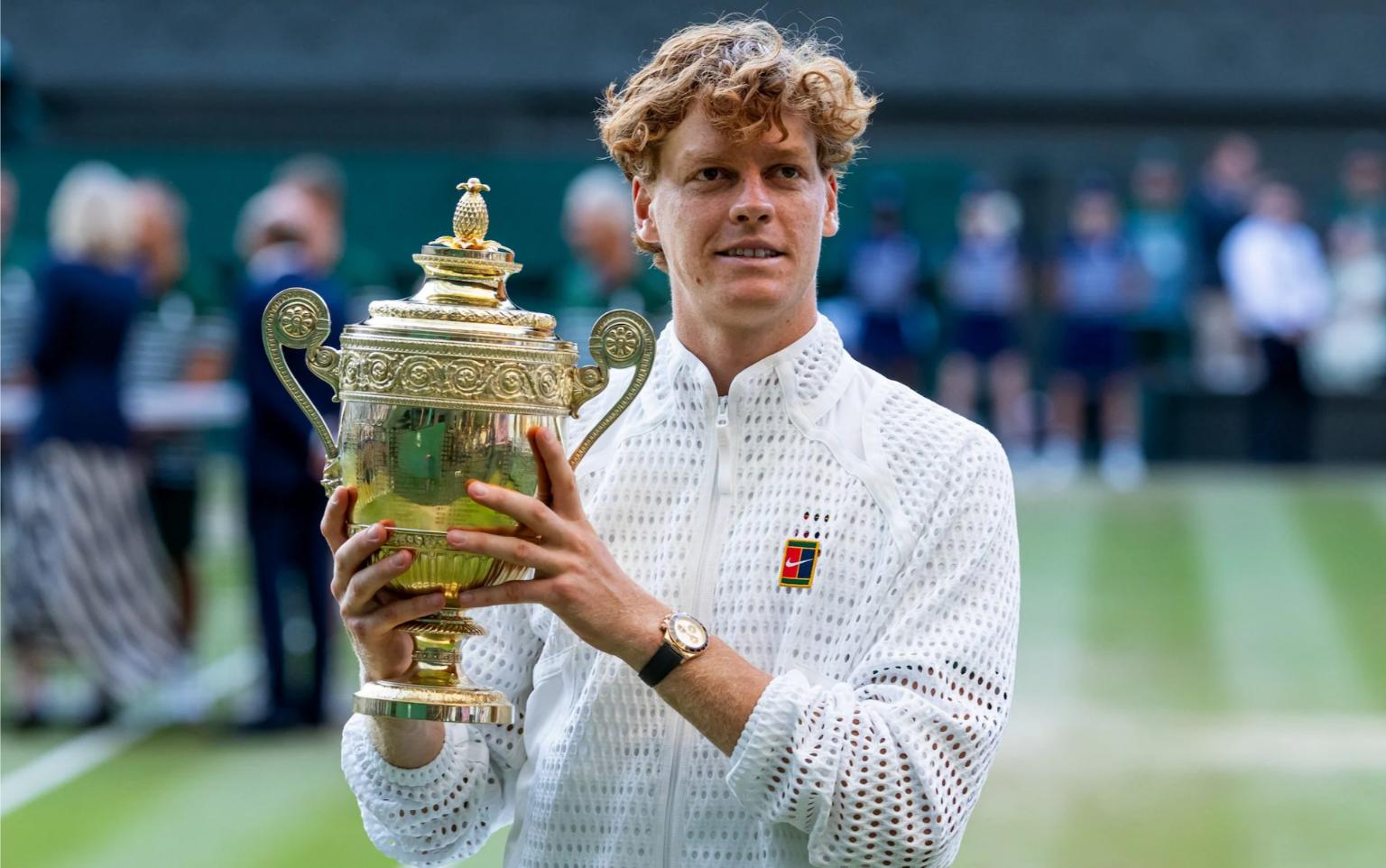
The historical significance of Jannik Sinner’s second Wimbledon title must be saluted. He is only the eighth man in half a century to defend a singles title at SW19. The unerring quality of the serving throughout this final must also be acknowledged. Rarely have two men together given a receiver so few opportunities as the first two sets when there was just a single (saved) break point. But it was easy still to depart Centre Court on Sunday night with one nagging thought: Carlos Alcaraz cannot return from injury quickly enough.
Yes, Alexander Zverev has performed admirably these past six weeks in both winning his first grand slam at the French Open and then going toe-to-toe with Sinner across two-and-a-half sets of power tennis.
Staying in the match, however, ultimately depended upon the 6ft 6in German remaining almost flawless in booming down un-returnable serves because, just as in his previous nine defeats against Sinner, there was scant chance of challenging the world No 1 when he was receiving. Zverev would summon just one unconverted break point here in almost four hours of competition.
For the neutral, it added up to a match of few moments of actual jeopardy compared with the three recent men’s singles finals that were so touched whether in victory or defeat by the charisma and shot-making of Alcaraz.
In front of a who’s who of acting greats this year, the actual drama and theatre out on the court was limited. Tim Henman, then, might have been correct to score the match 9/10 for technical quality, especially with regard to the serving, but it was an occasion that would ultimately have moved few neutrals in the way that Alcaraz or indeed Novak Djokovic still can.
Again, that is not to particularly criticise either player. Sinner is a magnificently efficient all-round tennis player and a worthy champion. This victory puts him with only Alcaraz, Djokovic, Roger Federer, Pete Sampras, Boris Becker, John McEnroe and Bjorn Bjorg in the past 50 years to win this title in consecutive years. That is some company and some achievement.
The cloud that hung over Sinner’s career following a positive drugs test – which he successfully argued was caused by contamination – also continues to lift and, at 24, he is headed for tennis greatness. For Zverev, who has himself been followed by allegations of domestic abuse (which he denies and was not convicted for), the past two months have also represented the realisation of a great talent. Now 29, he won his first major title at Roland Garros last month and the way that he went for his shots here, while losing only a set en route to the final, suggests that he could be ready to turn the recent “big two” of men’s tennis into a “big three”.
“I think we both played to an extremely high level, especially in the first two sets,” said Zverev, who pinpointed the added aggression as the explanation for his improvement this year. Sinner told Zverev after his 6-7, 7-6, 6-3, 6-4 victory that he was now “very, very close” to toppling him at the summit of the world rankings.
Also, the crowd took well to both players and tried to get behind Zverev after he won the first set. What was a relatively subdued atmosphere until the fourth set was the inevitable reaction to a match of 32 aces, no breaks of serve for almost three hours, 30C heat and relatively few match-defining moments.
Few sports also benefit more than tennis from a showdown between players with two differing gifts. Opposites attract and the basic issue here was that Sinner and Zverev, for all the unrelenting weight of shot, were too similar to serve up a classic. That is what makes Alcaraz, with his guile and exuberant celebrations, such a perfect added ingredient.