

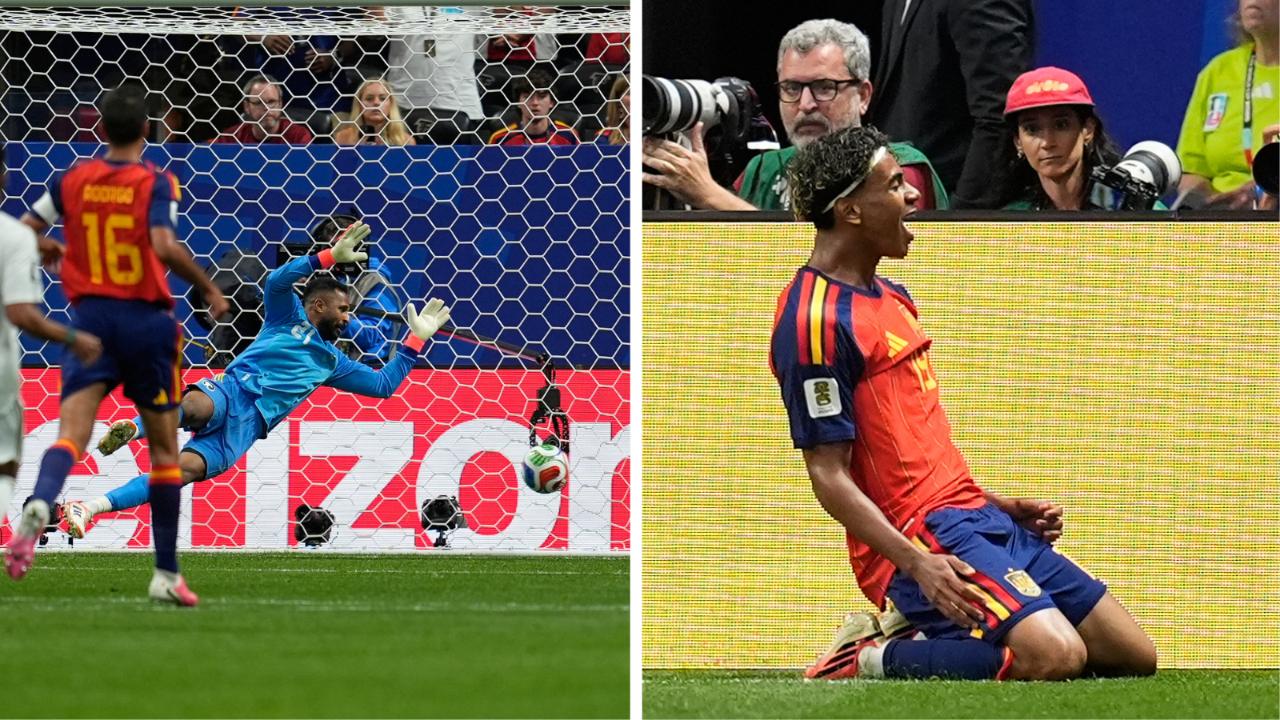
Lamine Yamal’s goal against Saudi Arabia looked simple. That was exactly the point.
The move began with Spain breaking down the left before Mikel Oyarzabal whipped a low pass across the six-yard box. Yamal arrived at the far post and tapped in. No complicated build-up, just a hard ball across goal and a runner arriving at the right moment.
Yet that goal may have captured one of the defining attacking trends of this World Cup.
For all the talk about spectacular long-range strikes, teams are increasingly finding success with football’s most ruthless weapon: the low ball flashed across the face of goal. Coaches often talk about the ‘corridor of uncertainty’ – the space between the goalkeeper and the defensive line. Low crosses target exactly that zone.
Rather than lofting crosses into crowded penalty areas, teams are driving passes hard along the ground into the six-yard box. The idea is simple. Force defenders to turn towards their own goal, make goalkeepers hesitate, and create chaos.
Defenders’ dilemma
Modern defences are trained to drop quickly and protect the centre of the goal. But when a winger reaches the byline and fires a low ball across goal, defenders have only a split second to react. Any touch can send the ball into the net.
Spain’s opener against Saudi Arabia was a perfect example. Oyarzabal’s delivery travelled through the most dangerous area in front of goal, and Yamal arrived unnoticed at the back post.
The United States benefited from the same pattern against Australia. Folarin Balogun drilled a low cross across goal and defender Cameron Burgess, racing back towards his own net, could only divert it into the goal.