

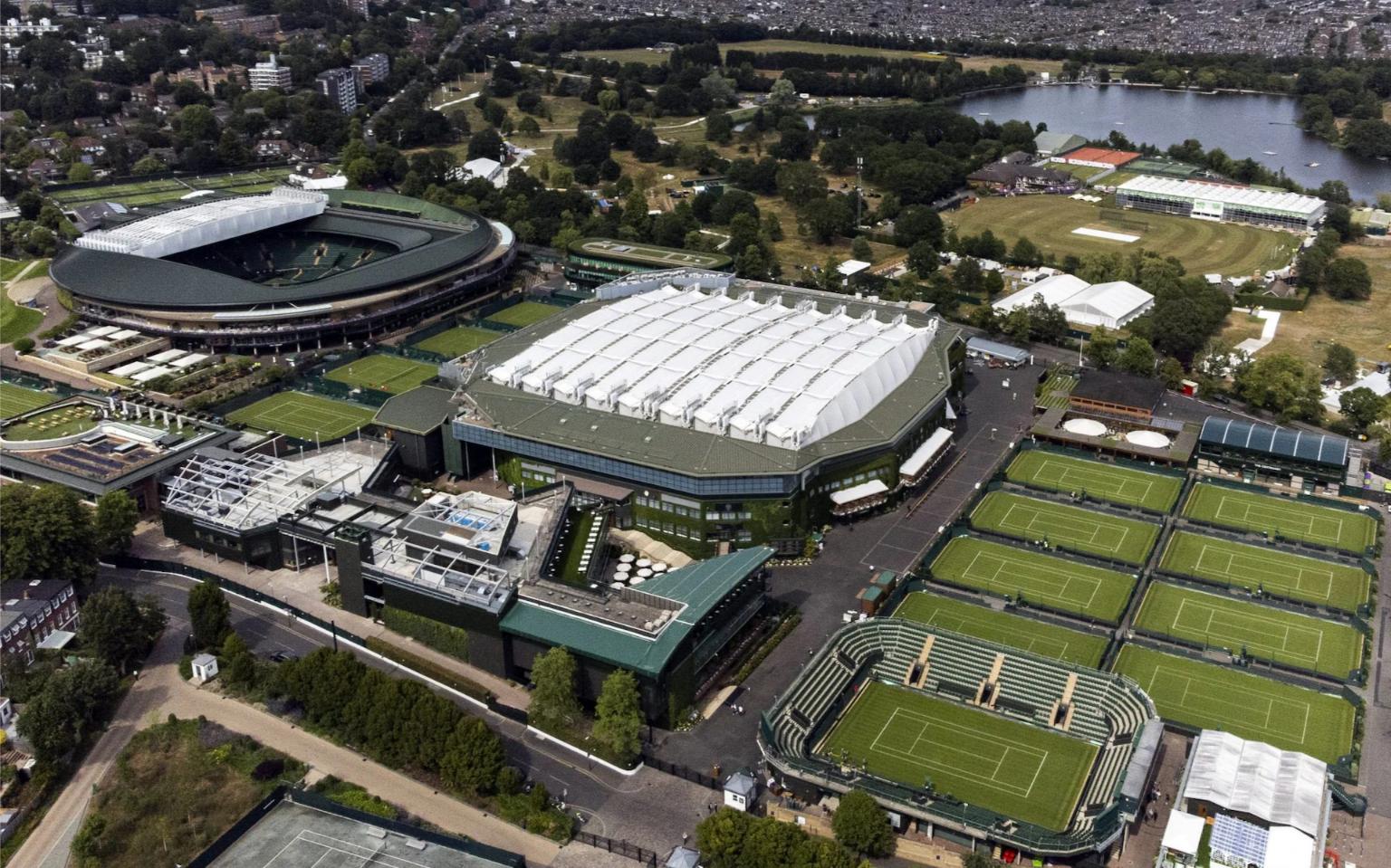
The All England Club is moving with the tennis times by bringing in a video review option at Wimbledon this summer. The decision continues the tournament’s march towards technology, which took a major step with last year’s introduction of Electronic Line Calling.
Admittedly, the Hawk-Eye Live system we saw in 2025 was far from infallible. Not only did an operator accidentally turn Centre Court’s line-calling off for more than six minutes during a fourth-round match, but British players Jack Draper and Emma Raducanu were among those who cast doubt on some of the decisions.
Still, video review has been extensively trialled around the tours, and has generally found favour with the workforce. It will be available on six show courts at this year’s Championships, from Centre to Court 18, even if the outside courts will have to do without for the immediate future.
In another refinement of new technology, the scoreboards will this summer show a visual indication when a ball has been called out by the ELC system. This is designed to solve one of the problems with last year’s automated system: namely, the fact that the “out” call tended to be drowned out by crowd noise on the most important points. In January, we saw the Australian Open bring in flashing lights on the net-posts for the same reason.
How will a player use the video review system?
As with the old Hawk-Eye reviews – which are no longer used, now that human line judges have been eliminated – players must make their request for a video review immediately after the suspected infraction of the rules has taken place. They can only wait until the end of the point if they are pleading “hindrance” – which is tennis-speak for a player being distracted by his or her opponent.
What are the typical decisions that tend to be referred to a video review?
The most common cases tend to revolve around double-bounces, or “not-up” calls as they are known in the game. These are notoriously difficult to judge in real time, but are generally resolved by slow-motion replays. Other possible reasons for a review involve a faint, almost invisible touch by the ball on the racket as it flies past, or perhaps a double-touch on the same shot. (These are often legal, but only if it is part of a single movement by the player.)
Is there a limit on the number of reviews that can be made?
No. By contrast with the old Hawk-Eye system, in which a player was limited to three unsuccessful challenges per set (and one extra one if there was a tie-break), they can now theoretically ask for as many video reviews as they want. However, these tend to be unusual requests, and it would be rare for a spectator to see more than a single review across a whole day of Wimbledon. If a player did start to make frivolous reviews – perhaps as a time-wasting tactic – the chair umpire could potentially decline to go ahead with them.
Will video review head of all future officiating controversies?
As the introduction of VAR in football demonstrates, there is always the potential for debate and disagreement around sporting decisions, whether they are made by humans or machines. A good example occurred in Indian Wells a week ago, when eventual runner-up Daniil Medvedev claimed “hindrance” against Draper in the quarter-finals. Draper had thrown up his arms after disagreeing with an electronic line-call, and Medvedev claimed that the gesture had caught his eye and put him off his stroke. Tellingly, however, he did not complain until the point had continued for another half-dozen shots and ended in Draper’s favour. As Draper put it afterwards, “I don’t think he was distracted enough”.