

Slow over-rates. A topic frequently discussed but that never goes away.
Only 72.3 overs were bowled on day two of the third Test at Lord’s.
That means, including the necessary time taken for a change of innings, 15 overs were lost from the match not because of rain or bad light but because of the slowness of play.
A further 19 overs were lost over days three and four.
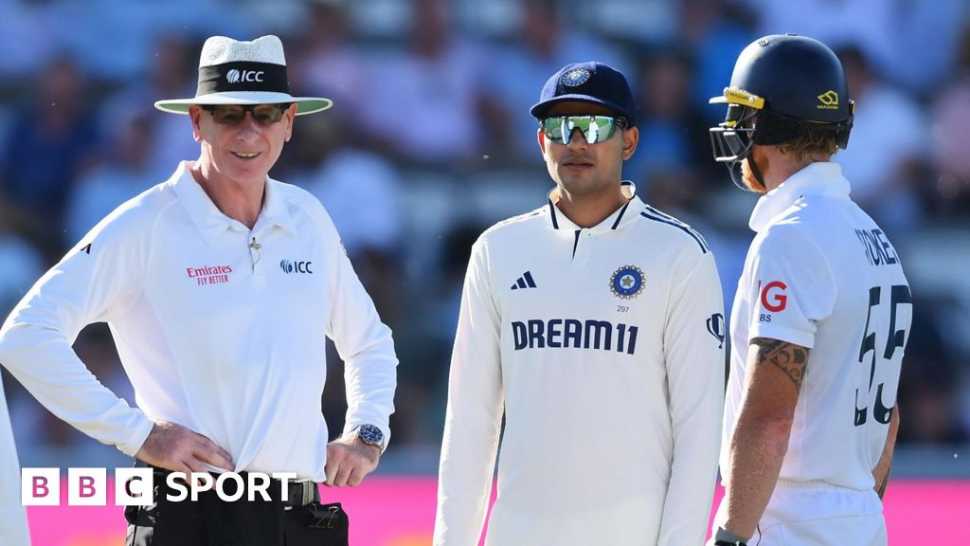
There was Indian frustration at the end of day three as England opener Zak Crawley used delaying tactics, meaning one over took seven minutes.
England have subsequently been docked two points in the World Test Championship (WTC) and fined 10% of their match fee for a slow over-rate.
They were deemed to be below the required rate despite mitigating circumstances, including India captain Shubman Gill having an eight-minute massage on the outfield and Ravindra Jadeja taking a toilet break while batting on day five.
The stoppages are a poor look for the sport, but what are the rules, do over-rates matter and what can be done?
What are the rules?
In a five-day Test, 90 overs are scheduled for each day.
To prevent teams tactically wasting time to ensure a draw, all of the overs must be bowled on the fifth day, barring interruptions for the weather.
On the previous days, the overs must be fitted into the six hours of play, with an extra half hour made available at the end of the day.
While time can be made up for overs lost to the weather, there is no such provision when the reason is simply slow play. If overs are not bowled in that time they are lost from the match.
There are some penalties already in place in the International Cricket Council’s playing conditions but they have limited impact.
An umpire can, after an initial warning, award five penalty runs to an opposition if one team are deemed to be wasting time. This rule has never been enforced in Test cricket.
A stop clock was also introduced last month where a timer counts down from 60 seconds between overs. Again, five penalty runs can be awarded but, despite warnings during the first two Tests, neither captain was punished.
More common are fines against captains and, in the WTC league phase, points deductions.
At the end of a WTC match various caveats are taken into accounts, such as injuries and umpire reviews, and a calculation is made as to how far behind the required over-rate a team was.
The regulations state: “A team will have one point deducted from its points total for each penalty over it incurs.”
England were docked 22 points during the 2023-25 cycle. Captain Ben Stokes has pointed out his team are at a disadvantage because pace bowlers, with their longer run-ups, bowl more overs in the UK than other countries where spin plays a greater part.