

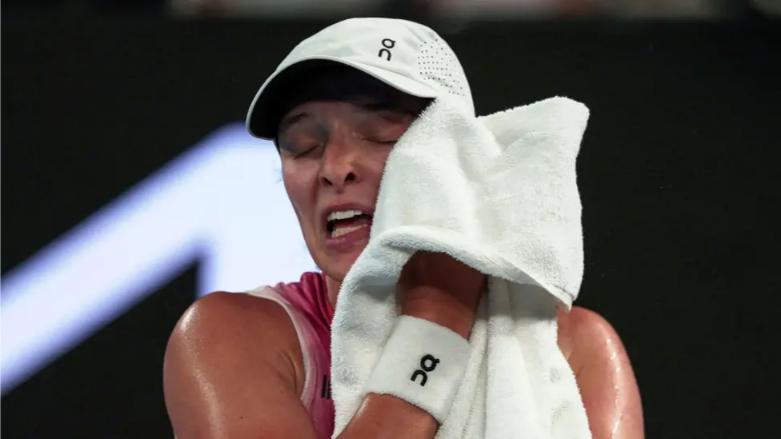
When Daria Kasatkina cut her 2025 season short in October, the former world number eight described how she had “hit a wall”.
“The schedule is too much. Mentally and emotionally I’m at breaking point and, sadly, I’m not alone,” she wrote.
Ukraine’s Elina Svitolina, a two-time Wimbledon semi-finalist, had already announced she was not in “the mental space” to continue, while reigning Grand Slam champions Iga Swiatek and Carlos Alcaraz believe the calendar is too long.
The topic continues to be debated as the world’s leading tennis players reconvene in Australia for the start of the 2026 season.
A slightly longer off-season than 2025 has been welcomed. Nevertheless, several weeks is not seen as enough time for proper recuperation before preparations begin for an 11-month campaign regarded as among the most onerous in professional sport.
“The demands of tennis are harder than ever before,” Dr Robby Sikka, medical director at the Professional Tennis Players’ Association (PTPA) co-founded by Novak Djokovic, told BBC Sport.
“Matches and rallies are longer, players are faster, they’re hitting the ball harder.
“We owe it to our players to protect them and give them a more sustainable sport.”
So what is being done and what further steps could be taken?
Shortening the season
The 2025 season spanned 47 weeks for many men, beginning with the United Cup team event on 27 December 2024 and ending with the Davis Cup final on 23 November.
The women’s season finished two weeks earlier when the WTA Tour Finals concluded on 8 November. The ITF moved the Billie Jean King Cup Finals forward to September to help combat scheduling concerns.
The ATP Tour says it does not take the concerns of the players “lightly”, while the WTA Tour says player welfare will “always remain a top priority”.
That did not appease the PTPA, which began legal action against the men’s and women’s tours in March, citing “anti-competitive practices and a blatant disregard for player welfare”.
Set up in 2020 by Djokovic and former Wimbledon doubles champion Vasek Pospisil with a mission of protecting players’ interests, the PTPA says the length, physicality and scheduling of matches is taking its toll.
Revamping the calendar is an obvious solution but cannot be achieved easily given the complex nature of tennis governance, where the four Grand Slams, ATP, WTA and ITF each have controlling interests.
“We need to think about whether we can buy back time at the end of the year for an extended off season, or can we buy time during the season so there is a mini-break,” said Dr Sikka, who is also a team physician for the New York Yankees.
Former world number one Andy Roddick, who has long advocated for change, says the season should not go past 1 November.
The ATP Tour has cut the number of events which count towards the rankings from 19 to 18 for 2026, which it believes will reduce “overall demands” on the players.
The WTA rankings are also based on 18 tournaments, but the leading players are expected to play at least 20 mandatory events – four Grand Slams, 10 WTA 1000s and six 500s.
“One point that often gets overlooked: players choose their own schedules,” ATP chairman Andrea Gaudenzi said.
“That freedom is rare in professional sport. But with that comes responsibility – knowing when to push and when to recover.”
Stretching several ATP and WTA mandatory tournaments across a fortnight – creating so-called ‘mini Slams’ – has also been criticised.
“I think players are more mentally tired and more fatigued because they’re spending more days away and more days on the road,” Andy Murray, Britain’s former men’s world number one, told The Tennis Podcast., external
As well as mental burnout, there are concerns about the increased physical demands.
Players suffer more severe upper-body injuries in April, August and October, according to PTPA data.
The organisation says these “predictable clusters” are down to the structure of the calendar and the turnarounds between court surfaces.