

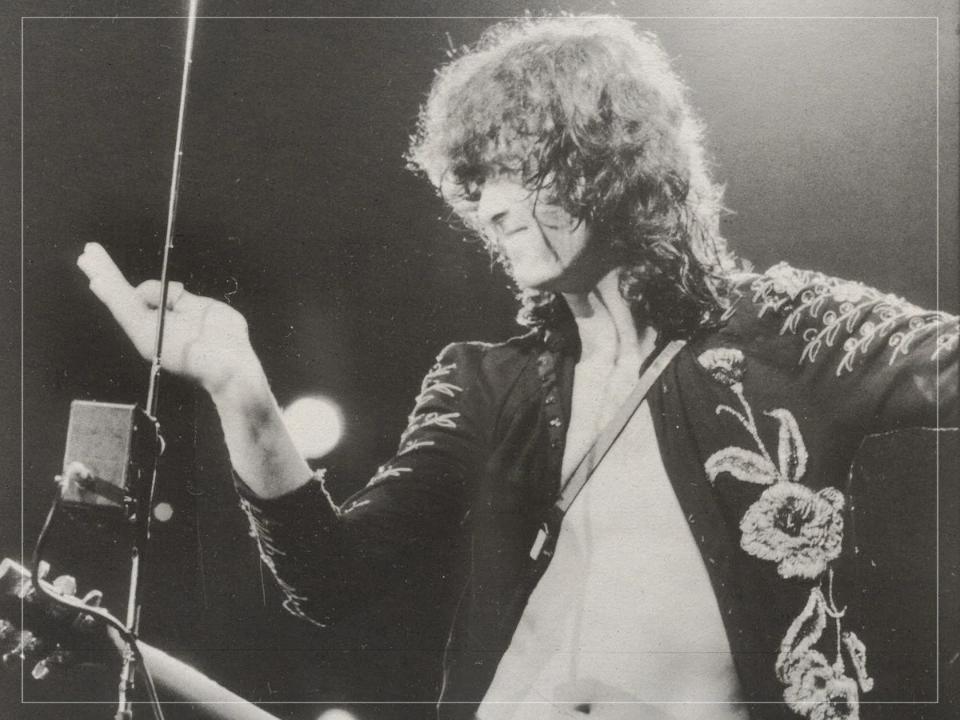
It is the duty of every older, more established figure within the music industry to cast scorn upon emerging movements and niche scenes taking over the rock and roll landscape, and Jimmy Page, along with many of the world’s greatest rock stars, did just that back in the mid-1970s, when punk began to rear its abrasive, glue-sniffing head.
Punk at its core was, among other things, a reaction against the realm of mainstream rock; with the likes of Led Zeppelin representing an untouchable, unattainable upper-class within the music world, which didn’t give the disenfranchised youth of Britain much to relate to.
Instead, the groups that emerged with spiked hair and safety pins from the seedy underground of The Roxy Club prioritised grassroots, DIY music-making, often with a total lack of musical skill, in stark comparison to the intrinsic craft of Jimmy Page and the gang.
To his credit, Page has encountered a vast wealth of different musical styles over the course of his long and illustrious career. During the pre-Zeppelin days of the 1960s, for instance, the guitarist worked tirelessly as a session guitarist, lending his skills to everything from Petula Clark’s pop smashes to obscure muzak records. As a result, he cultivated one of the most diverse, expansive repertoires in the entirety of British rock.
Along the way, in fact, Page had his own impact on punk, thanks to recording with the likes of The Who and The Rolling Stones, who had a not insignificant impact on establishing the fast living sensibilities of punk. Even still, the Led Zeppelin guitarist wasn’t overly convinced by the revolutionary potential of the DIY movement.
During a 2001 interview with Steve Zuckerman, the guitar hero declared, “The new wave of rock seems to be something a lot more sexual and violent innuendoes rather than the dope and peace of years ago.” Linking the apparently violent rock of the early 2000s with the punk rock that he had to reckon with back in the 1970s.
“That always seems to spring up when things are sort of mellow or there’s no real sense of direction happening,” he theorised. “It will happen every time at that stagnant stage, you’ll get the people that are bored and really uptight, but you get the innovators as well.”
Seemingly, punk’s poster boy, John Lydon, is not among those innovators, at least not in the mind of Jimmy Page. “I think that someone like Johnny Rotten is just full of criticism,” he shared.
Expanding upon that dismissal, Page continued, “He’s not giving society anything to replace what he’s trying to know down, you know, something to tie up the loose ends.”
Adding, “I think that it’s more important to be able to become involved with the system to the point where they can actually change it.” Lydon’s anarchic message of ‘destroy’, therefore, didn’t do much to endear itself to Page.
In the end, it is only natural that Page wouldn’t be a disciple of punk’s cultural revolution. He was, after all, living the hedonistic lifestyle of rock and roll excess during the mid-1970s, at the peak of Led Zeppelin’s stardom, playing stadiums across the globe. It wasn’t exactly aligned with the destructive, revolutionary message of the Sex Pistols. Indeed, Lydon’s message wasn’t aimed at relating to the likes of Page.