

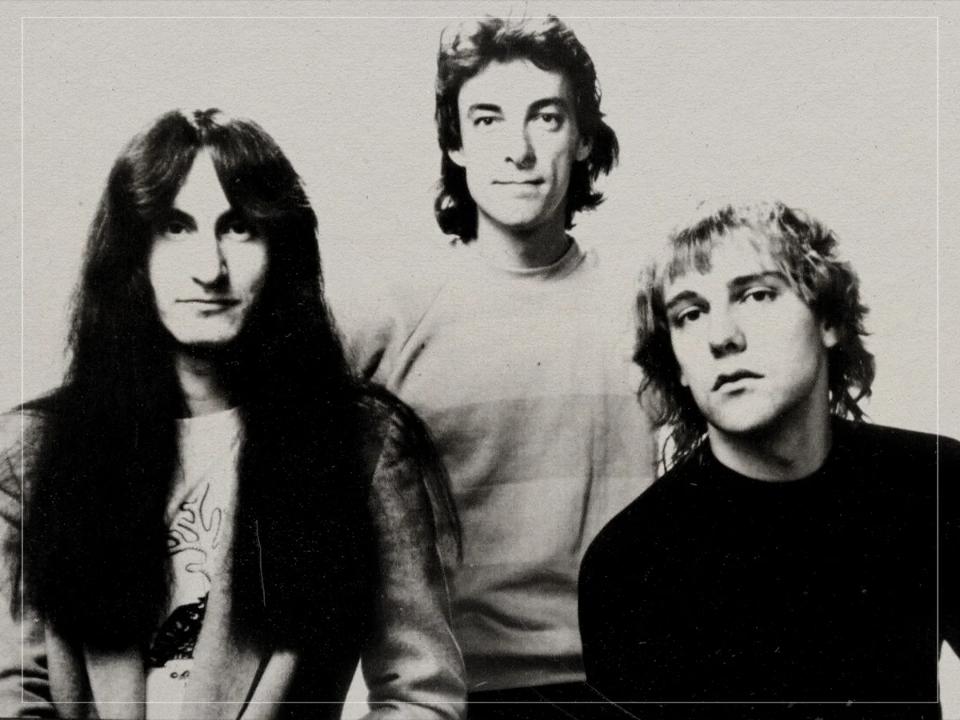
What happens when you’re the guitarist in a band that suddenly shifts its focus to synths? In the early 1980s, Alex Lifeson of Rush had to find out the hard way.
When Rush first formed in 1968, they were like countless other bands at the time: a rock and roll outfit. It was the genre’s golden age, and the Canadian group joined the wave of musicians energised by rock’s domination of the mainstream. Guitars and drums filled the airwaves, and the loudest acts in the world were leading the charge.
In the 1970s, that energy didn’t just continue, it grew. In the following decade, rock only got broader as offshoots of the genre began to spring up. Experimentation seemed to be birthing newer and newer ideas constantly, from hair metal and heavy rock to woozy, cinematic progressive rock, and by melding with all genres from blues to pop to folk to jazz, the lines between musical worlds were blurrier than ever, and it was only making things more exciting.
Rush were a band who openly welcomed that into their rehearsal rooms. While their launch was with a more straightforward sound, by the 1970s, they were well beyond that, as the lineup’s multi-instrumental abilities meant they could stretch far. Their inspirations ensured they did too, as each member seemed to bring a new passion into the mix, leading to a sound that threw pure rock and roll into a melting pot with things like blues or even classical music to see what would come out.
However, something seemed to happen in the 1980s, and it didn’t just happen to Rush. Whereas the ‘70s felt more or less like an extension of the ‘60s, the ‘80s were strange, as suddenly the rock bands all seemed to panic as if they were behind the times. When the era’s pop music changed to a more electronic, synth-laden sound, partly due to advancements in technology, it seemed to send the bands into a panic.
So many people were affected, just look at Mick Jagger’s 1985 solo album, She’s The Boss, where the ultimate rock and roll frontman is suddenly trying to do a strange, pop-fused, somewhat synth rock, danceable thing, as if he thought that doing just plain old rock and roll would be boring now. All at once, it was as if the leading bands seemed to believe that if they stuck to what they knew, everyone would be tired of them, leading to a pretty rough musical period.
Rush were hit too. In the early 1980s, the band’s leader, Geddy Lee, forged a complete obsession with the synths and with keys, and switched it all up. From 1982’s Signals, the band were suddenly keys-first as Lee took up post on a synthesiser and so started writing songs for his new instrument.
For Lifeson, as the band’s lead guitarist, it meant that quickly, he almost felt like he was out of a job as the riffs were traded in for something electronic. “I guess I just fought for my guitar rights for years after Signals,” he admitted as his own instrument, which had always been the fuel and fire of their rock music, was now kind of an afterthought, and so he felt like one too.
Causing tensions in the band as Lifeson was left battling to feel involved in the new sound, Signals has forever stood out as a low point in his eyes, mostly because it simply doesn’t feel like an album he got to be all that involved in.
Luckily, the phase eventually loosened. By 1984, the guitars were back and with more room to be heard, which led to the creation of one of Lifeson’s favourite albums, saying of Grace Under Pressure, “There’s something about the sound and the power and the songwriting quality that really strikes me,” says Lifeson. “I really love that record.”