

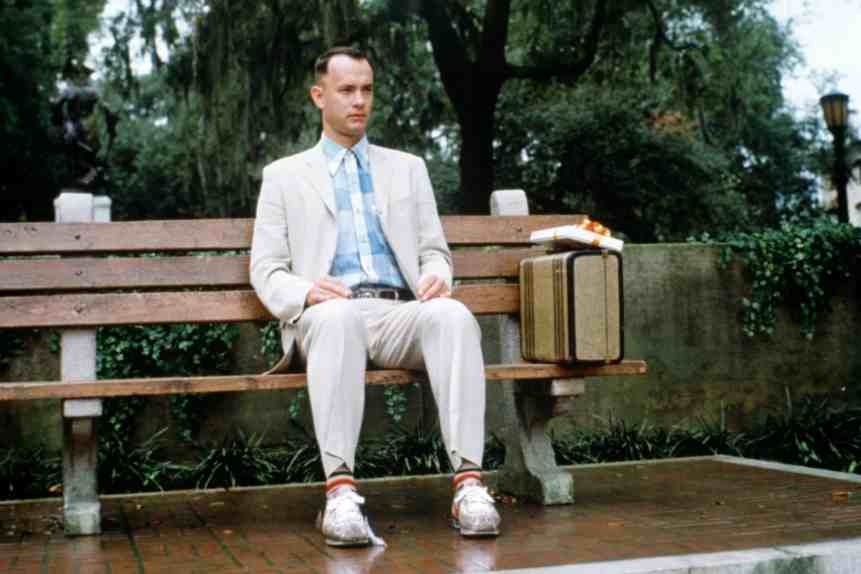
Tom Hanks does more than anchor Forrest Gump. As Aude Mackau reveals, he also slips into the robes of Nathan Bedford Forrest in a fleeting flashback, a nod to the Confederate general and early Ku Klux Klan leader who later broke with the group. That hidden turn reframes a film beloved by audiences and strong enough to top Pulp Fiction at the 1995 Oscars. Time for a rewatch on Netflix or Paramount+ with that detail in mind
An iconic film with a hidden layer
Among cinema’s most beloved masterpieces, Forrest Gump reigns supreme with a stellar 4.6 out of 5 rating, heralded as the greatest film by countless viewers. But how often do we look beyond the obvious and notice a subtle detail that changes everything? This is the case with Tom Hanks’ remarkable dual performance, an element that has gone unnoticed by many for nearly 30 years.
A timeless success story
Forrest Gump swept audiences off their feet upon its release, taking home the Best Picture Oscar in 1995. This triumph, even over cultural phenomenon Pulp Fiction, owes much to Hanks’ unforgettable portrayal of Forrest Gump, a pure-hearted man experiencing life’s extraordinary coincidences. But while his delightful charm captured hearts, the film’s layered storytelling hides an unexpected second role, also played by Hanks, a role steeped in historical complexity.
Tom Hanks’ overlooked second role
Within Forrest Gump, Hanks embodies not only the titular, beloved Forrest but also Nathan Bedford Forrest, the historical figure after whom the character is named. A Confederate general, slave trader, and an early leader of the Ku Klux Klan, Nathan Bedford Forrest’s legacy is highly divisive. Interestingly, the film briefly alludes to this lineage in a flashback scene but veers away from exploring it further. Hanks’ performance in this duality, innocent Forrest and the controversial namesake ancestor, adds depth for those who notice.
Historically, Nathan Bedford Forrest would later renounce his affiliation with the Klan and support African American rights post-Civil War. By including this fraught connection, Forrest Gump lightly scratches the surface of a moral irony, the association between the protagonist’s name and an ancestor’s troubling past, leaving viewers to reflect, without forcing the theme into its central narrative.