

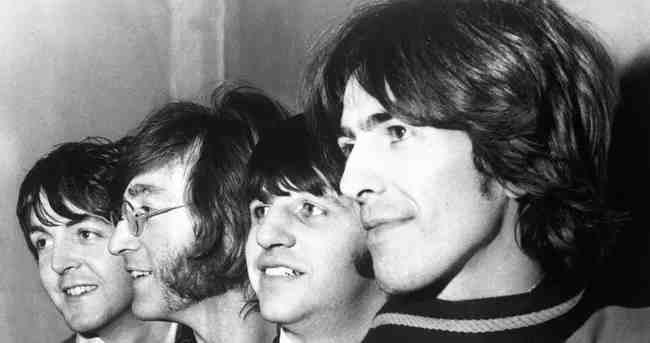
Bursting with some of the most audacious – and at times challenging – songs the Beatles ever recorded, the eponymous 1968 double-album (aka, the White Album) demonstrated just how far John Lennon, Paul McCartney, George Harrison and Ringo Starr had expanded the boundaries of contemporary pop.
It was also the album which most markedly revealed the now clearly distinct individuals the Beatles had become. Essentially creating music for the album as four (arguably three… with a floating Ringo – sorry Ringo) solo artists, the group still needed each other as vital competitors, casting their new outpourings into a contentious marketplace of potential Beatle songs.
The ‘let’s record everything you’ve got in one day’- production ethos that had been relied upon to track the bulk of the Beatles’ debut (amazingly, just five years prior in 1963) wad dead.
It had been replaced by a new notion. By 1968, albums weren’t just documents of a beat combo’s usual live set. They were now culturally significant statements.
In-keeping with the era’s spirit of invention and disruption, the Beatles’ new material needed to push and challenge conventions, as its trailblazing predecessor, Sgt Pepper’s Lonely Hearts Club Band had established.
Although this double-album revealed an ever-widening gulf between these four men, it also underlined how fundamentally massive the Beatles had made their musical playground, by dent of their pioneering approach to songwriting and production.
The White Album contained tracks which draped themselves in the trappings of heavy blues rock, vaudeville, reggae, pastoral folk, brain-taxing avant-garde experimentation and even drunken saloon bar-piano. Pigeon-hole it if you dare.
In our opinion, the album’s greatest moment was an understated acoustic song, written and performed entirely by Paul McCartney.
It was called, simply, Blackbird.
In an album surrounded by themes that alluded to the fierce social divisions, fiery revolutions and looming dangers of the late 1960s, this tender assurance from singer to listener carried the torch of the Beatles’ essentially positive spirit.