

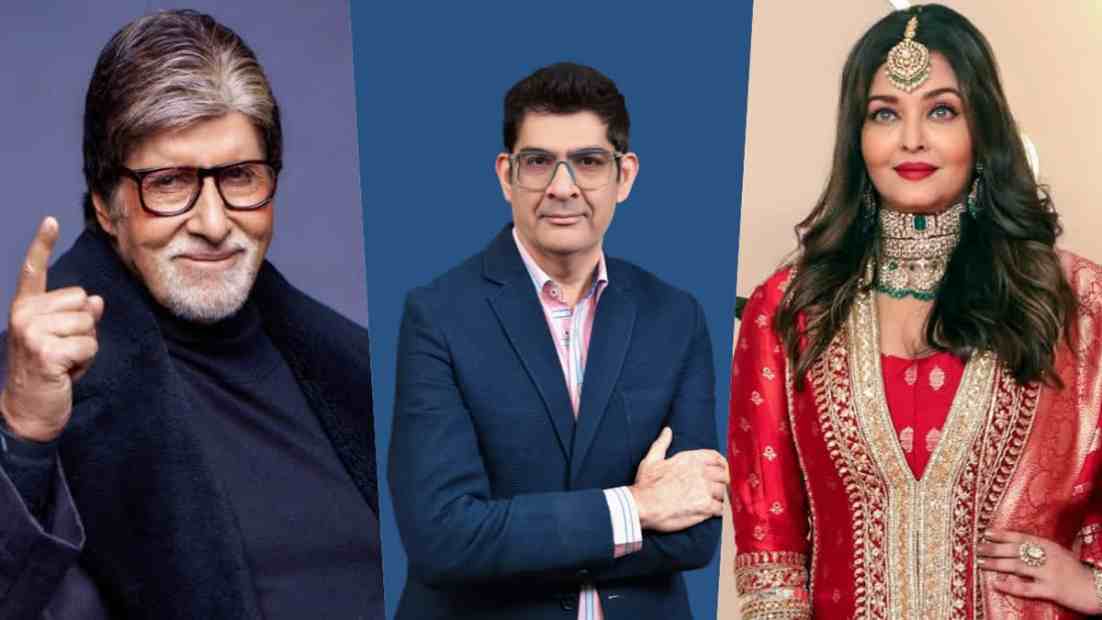
In the last few years, a host of celebrities have moved to court over personality rights. Bollywood stars are approaching courts to curb deepfake videos, AI-generated content, and unauthorised use of their images and voices over digital impersonation concerns. After Amitabh Bachchan, Anil Kapoor, Jacky Shroff, Hrithik Roshan, Karan Johar, Asha Bhosle, and Aishwarya Rai Bachchan, Akshay Kumar filed a petition in the Bombay High Court last month, seeking urgent protection against unauthorised use of his image, voice, and persona. And Safir Anand, India’s foremost Intellectual Property Rights (IPR) lawyer and advisor, guards these bigwigs of the creative industry against misuse of their personas and secures their creative legacies. He is the legal mind ensuring that Bollywood’s most recognisable identities including Anil Kapoor’s signature dialogue “Jhakaas” remain protected in the digital, AI-driven world. His clientele also includes who’s who of glamour and luxury, such as fashion houses Sabyasachi, Manish Malhotra, and Anita Dongre, among many others.
A commerce graduate from Shri Ram College of Commerce, Delhi, Safir talks to ETV Bharat in this exclusive interview about helping creators, celebrities, and brands understand that their greatest assets often can’t be seen, but must always be protected. Excerpts:
You have built a reputation as one of India’s leading IPR lawyers. How did your journey into intellectual property law begin?
I realised that Intellectual Property aligned perfectly with my interests as it involved brands, risk management, growth, market expansion, brand value differentiation, finance, and maximising intangible asset returns, often with board-level oversight. What excited me further was its inclusivity. Since IP grants opportunities not only to large corporations but also to individuals and startups alike, and even regardless of education. It is only a matter of who can bring an idea to life with the right guidance. Seeing this intersection of law, commerce, and economics inspired me to pursue a career in law. While studying, I continued working in the office, engaging with clients from diverse backgrounds who were innovating with ideas, brands, personas, products, and services.
When you started out, IPR wasn’t a buzzword. What motivated you to specialise in a field that few understood then, but everyone relies on today?
Intellectual Property Rights is a confluence of innovation, branding, and business strategy. It is both dynamic and creative. I had recognised the potential of intangible assets very early on, and I think that is what drew me to IPR. My journey began with a strong desire to help businesses not only protect their assets but also leverage them in an ever-changing global market. I soon realised that IPR was not just about legal protection of assets but maximising its potential and reaping its benefits. My approach extends beyond legal counsel to include storytelling, marketing strategies, and fostering business innovation. This comprehensive understanding of brands has yet not been understood by many.
You have worked with some of the biggest names in Bollywood, from Amitabh Bachchan and Anil Kapoor to Jackie Shroff and Aishwarya Rai. How different is protecting a celebrity’s personality from protecting a corporate brand?
From my perspective, the ambit of traditional brand protection falls short when protecting a celebrity’s personality because it involves safeguarding aspects that are deeply personal, their names, voices, images, and overall identities. These elements are intimately connected to who they are, so the offence is not limited to infringement but can have an everlasting impact on their reputation and privacy. In contrast, protecting a corporate brand mainly centres around trademarks, logos, and symbols that identify a company’s products or services and build consumer trust.
Celebrity personality rights also bring challenges, including balancing the individual’s privacy with their commercial rights, especially in the age of digital media and AI. The legal approach has to be more nuanced, as it covers both personal dignity and commercial exploitation. While both celebrities and corporations need strong protection to prevent misuse, celebrity rights require specialised handling because they involve a person’s identity and legacy. Thus, the human element makes the work exciting and very different from traditional brand protection.
Could you walk us through the process of trademarking something as unique as Amitabh Bachchan’s voice or Anil Kapoor’s “Jhakaas”?
When it comes to availing trade mark protection for unique elements of a celebrity’s personality, we file trademarks for stage names, nicknames, dialogues, poses, and other tangible aspects based on their distinctiveness. Even sound marks can be utilised for this purpose. For other elements of a celebrity’s persona, the wider umbrella of personality rights is used. For example, in Amitabh Bachchan’s case, the Delhi High Court recognised his exclusive control over the commercial use of his distinctive voice and personality traits. The court has granted injunctions preventing unauthorized use of his voice for advertisements or commercial purposes, ensuring that no one can exploit his identity without permission. This involves formal legal actions, including court approvals and coordination with government agencies to remove unauthorized content.
How do you strike a balance between safeguarding a public figure’s rights and respecting the public’s fascination or fandom?
It is important to realise that commercial exploitation of a celebrity’s persona is only possible because of the public’s fascination with them. Therefore, there is a thin line, and the balancing act must be done very meticulously. While we need to respect the fans and rely on their fandom to ensure the success of the artists, it is also important to proactively protect them against any undue commercial exploitation, defamation, or invasion of privacy. In the Anil Kapoor case, the High Court of Delhi observed the need to secure free speech and held that free speech in respect of a well-known person is protected in the form of the right to information, news, satire, parody that is authentic, and genuine criticism. The judgement highlights that such actions are illegal when they result in tarnishment or blackening, or jeopardises the individual’s personality, or associated attributes.
Another aspect of personality rights to also protect the fans from any misleading endorsements associated with the celebrity. Remarkably, the Consumer Protection Act, 2019, talks in preview of false endorsements in the name of celebrities, being considered as misleading advertisements.
What are the most common misconceptions celebrities have about their personality rights or brand protection?
Many celebrities underestimate the challenges that the digital age, laced with AI, has in store. It is not easy to fathom for a conventional artist/ celebrity how much of their work, as well as persona, is available to be exploited by AI. Therefore, we try to create awareness about such issues while promoting ethical use of AI.
You are known for being the legal guardian of India’s most prestigious luxury labels and designer houses. How do you help creative minds translate their artistry into legal protection
We have many success stories in protecting fashion brands like Manish Malhotra, Sabyasachi Mukherjee, and Anita Dongre. For Manish Malhotra, we take action against infringements across the globe. In Sabyasachi’s cases, based on registered design rights, we successfully enforced those rights and got infringers legally restrained. Anita Dongre has also pursued damages through the courts. We’ve dealt with cases where photographs of fashion shows or garments were used without authorisation, leading us to demand that social media platforms and intermediaries remove violating images, even when design law wasn’t directly involved. We have also handled cases where former employees were prevented from using confidential information and trade secrets from their previous employers, thus violating contractual agreements. Another common issue involves counterfeit or online sales of fake products that damage brand value due to a lack of after-sales service or brand experience, which legitimate sales provide. Additionally, we have worked on cases involving customs confiscations of illegal or counterfeit imports and raids on shops selling fake jeans, jewelry, bags, and watches, including initiating criminal proceedings with arrests and fines.
Many designers feel that legal protection is expensive or complicated. What would you tell a young creator who thinks IPR is only for big brands?
My advice for all would be to build a strong, innovation-driven intellectual property ecosystem within the company. This mindset must trickle down from the top to the bottom and throughout all teams for optimal results. Designers need to understand the true value of their work and should leverage it to its maximum capacity. They need to understand that big brands became big only when they shifted their perspective and embraced adaptability. They should organise internal workshops to familiarise everyone with IP terminology, actively protect their creations, watermark images, and implement comprehensive IP policies. It’s crucial to ensure that agreements with employees, tailors, graphic designers, and collaborators are airtight to prevent leaks of creative ideas. Additionally, designers must enforce their rights against intermediaries who host infringing content or fail to follow proper take-down procedures promptly.
With social media creating instant virality, how do you handle cases where a brand’s identity is copied or diluted online?
Our primary goal is to maintain exclusivity. Leveraging is possible only when a designer’s art or a celebrity’s persona is exclusive. Therefore, we have a strict system that ensures that there is no unauthorised or undue use of a brand’s identity to protect against online dilution. This is achieved by tailored strategies that combine multiple pre-emptive as well as enforcement actions.
How is artificial intelligence changing the landscape of intellectual property rights, especially when AI can “create” art, music, or even mimic voices?
Artificial Intelligence has altered many aspects of our lives, including the creation of original art, music, literature, and other creative works. With AI becoming more widespread, it can now produce content that closely mimics human creations, making it difficult to distinguish between human and machine authorship. However, this advancement has raised complex legal and ethical issues, especially concerning who owns the rights to AI-generated content. This situation significantly impacts copyright law.
Copyright, a key legal concept protecting intellectual property, grants exclusive rights to creators to encourage innovation and creativity. Traditionally, copyright ownership was straightforward because it involved human creators. But with AI-generated content, the lines between authorship and ownership have become unclear. The question arises: who should own AI-generated work—the AI creator, the AI system itself, or the user who operates the AI?
What kind of legal frameworks do you think India needs to put in place to deal with deep fakes, digital clones, and AI-generated content?
Policymakers are actively collaborating with legal experts and industry stakeholders to dwell upon these new challenges and develop a framework that can robustly adapt to the newer times and offers flexibility and room for further development. Only this collaboration will help in identifying the key reforms needed to take these new age crimes.
Do you see a future where virtual influencers, metaverse avatars, or even digital twins will require legal protection similar to real-world celebrities?
Undeniably, these also require legal protection as personalities are attached to them too. However, who would have the exclusive right to exploit such a persona is the more pertinent question here. Aitana Lopez is a prime example. She was created by a Spanish AI agency and is a digital construct trained on human faces. She ended up on Vogue’s cover. So, such questions are not abstract concerns for the future, instead they need answers at this point of time. This even highlights the stark delay in the legal reforms and the urgency to develop a newer and more compatible framework.