

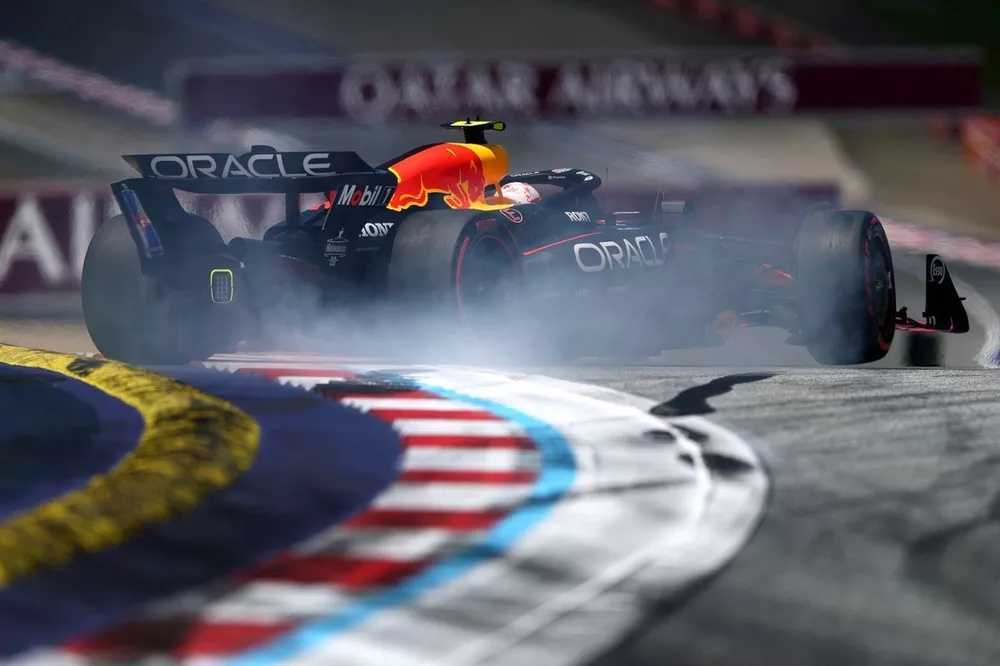
Yuki Tsunoda now has nine grands prix under his belt with Red Bull, after taking over Liam Lawson’s Formula 1 seat from the Japanese Grand Prix.
The impact has been negligible so far. Tsunoda has scored just seven points in that time, while team-mate Max Verstappen has racked up 119. Tsunoda’s recent qualifying results don’t paint a better picture either. Including penalties, the Japanese driver has started the past five races from grid positions of 20th, 12th, 19th, 18th, and again 18th.
Normally, such results would ramp up the pressure, but this time the situation at Red Bull is different. If the past six months have shown anything, it’s that the core issue doesn’t lie with the drivers. Sergio Perez couldn’t deliver last year (and now claims the team regrets letting him go), Liam Lawson failed to make an impact in the limited time he was given, and Tsunoda is now in the same boat. The problem is structural — hence team advisor Helmut Marko’s repeated insistence that the Japanese driver will finish the season at Red Bull.
One might even cynically say that Tsunoda’s performance barely matters — as long as he avoids expensive crashes. With the cost cap in place and 2026 looming, damage repairs eat into the development budget. But, from a sporting perspective, Red Bull seems headed for P4 in the constructors’ championship no matter who occupies the second seat.
There are no obvious alternatives either: Isack Hadjar has admitted that he doesn’t yet feel ready, and it would be unwise for Red Bull to once again prematurely derail the career of a young talent. Lawson has already had a shot, and Arvid Lindblad is a longer-term project, with Racing Bulls intended to be the natural stepping stone. Realistically, there are no immediate substitutes.
That’s why Red Bull’s team leaders are responding with more measured language this time, even after Tsunoda finished last of the classified drivers in the Austrian GP. With one Red Bull, one Mercedes, and both Williams cars out of the race, failing to score even a single point was extremely painful, yet Horner stuck to a factual breakdown in his post-race media session: “Yuki had a horrible race, again it started to go wrong for him in Q1. His first run in Q1 was fine, but in the second run he made a mistake at Turn 1, then qualified badly, then was running in traffic, unable to pass, picks up a penalty, and it just compounds things.”
“We’ll look to see how we can support him, but there’s a big delta between the two cars, and of course internally we ask all of those questions,” Horner added in Red Bull’s hospitality area. “Obviously the car has evolved over years in a specific direction, but we’ll see if we can help Yuki and rebuild his confidence in Silverstone.” It’s different from the pressure campaigns Red Bull and Marko have used in the past, but given the lack of alternatives, it makes sense.