

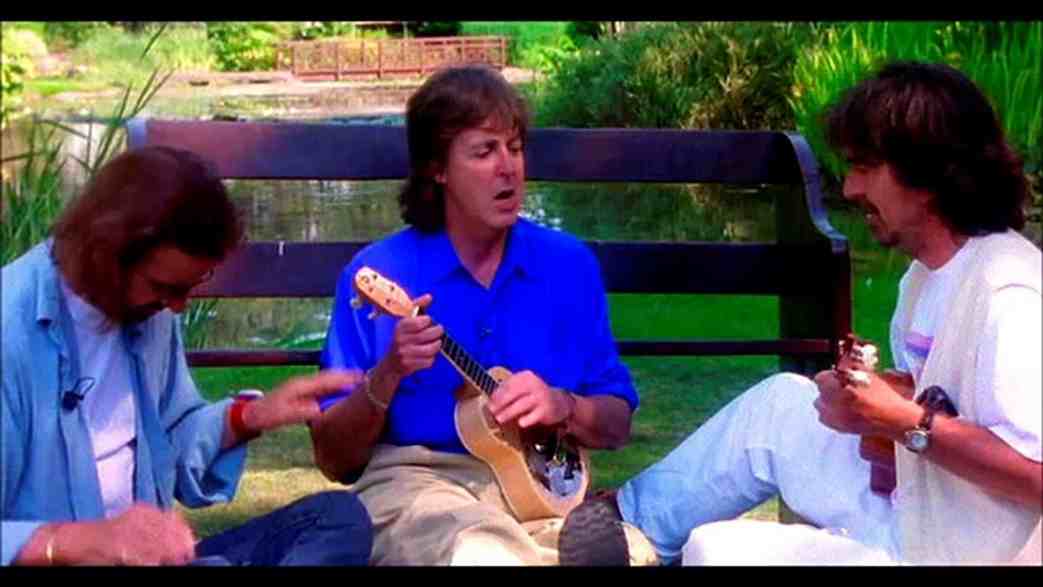
After John Lennon’s assassination, The Beatles’ cultural stock remained high, but their reputation began to falter through the 1980s and early 1990s. With the ‘cool one’ gone, the public was left to judge the band by Paul McCartney’s creative misfires (‘Give My Regards to Broad Street’, ‘The Frog Chorus’), Ringo Starr’s struggles with alcoholism, and George Harrison’s embrace of middle-of-the-road rock with The Traveling Wilburys.
Still, the uneven output of the surviving members couldn’t tarnish The Beatles’ unquestionable legacy, even as they began to be taken for granted. In 1992, Apple Corps revived an abandoned 1971 documentary project, ‘The Long and Winding Road’. Originally a 90-minute film compiled by Apple manager and longtime friend Neil Aspinall, it featured interviews, concert clips, and television footage, albeit without direct participation from any of the Beatles.
In 1980, just days before his death, Lennon had reportedly expressed renewed enthusiasm for the project, envisioning a reunion concert as the film’s grand finale. His murder by Mark Chapman tragically ended those plans, and the project was shelved.
A decade later, McCartney, Harrison, Starr, press officer Derek Taylor, and producer George Martin agreed to resurrect it, with Jools Holland conducting new interviews alongside archive footage of Lennon. Retitled ‘The Beatles Anthology’ (a name Harrison resisted, believing a McCartney song should not reflect the entire Beatles career), the project marked a major reappraisal of the band’s legacy.
By the mid-1990s, The Beatles’ influence had soared once more. Britpop was in full swing, and artists like Oasis, Blur, and a revitalised Paul Weller eagerly paid tribute to their Liverpool heroes.
The Anthology project evolved into a full multimedia event: three double albums accompanied the documentary between late 1995 and early 1996, with a companion book following four years later. Across six CDs, fans discovered alternate takes, unreleased tracks, and snippets of studio chatter spanning the band’s entire recording career.
The centrepiece was the release of two ‘new’ songs: ‘Free as a Bird’ and ‘Real Love’, created by McCartney, Harrison, and Starr using Lennon’s 1977 home demos. Neither single reached No. 1, but both charted strongly, as did the albums, cementing a moment when, a quarter of a century after their breakup, The Beatles were once again the biggest band in the world.
The box sets were a treasure trove, tracing the band’s evolution from the earliest recording, from McCartney’s 1958 composition ‘In Spite of All the Danger’, to late ‘60s tracks that became solo material, such as ‘Teddy Boy’ and ‘All Things Must Pass’.
As with much of their career, The Beatles set a new precedent: ‘Anthology’ pioneered the now-familiar format of archival ‘deluxe editions’ that revisit classic albums with alternate takes, outtakes, and live performances. The project not only opened a lucrative new market for legacy artists but also reinforced the group’s mythos, paving the way for later projects like Get Back, Peter Jackson’s landmark 2021 documentary.
Now, 30 years later, ‘Anthology Part 4’ arrives, with 36 more tracks spanning their career, including updated versions of ‘Free As A Bird’ and ‘Real Love’, with modern technology bringing Lennon’s voice into sharper focus, as on ‘Now and Then’. Yet, its cultural impact will inevitably fall short of the original edition’s, a moment when The Beatles didn’t just celebrate their past but reasserted their dominance over modern music. A perch they’ve never been toppled from since.