

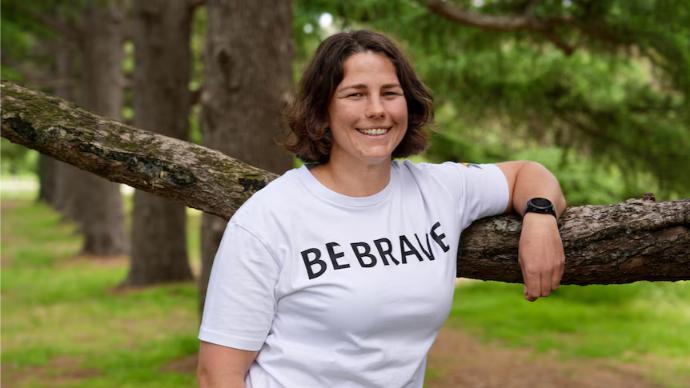
At her debut Games in Paris, Nikki Ayers rowed herself into the record books, alongside Jed Altschwager, as the first Australians to win a gold medal in Para rowing.
Despite this success, the now 35-year-old, initially decided to take a break from rowing after the Games due to a difficult relationship with a member of her support team.
“[They] made me feel like I had less value, made me feel like I wasn’t good enough,” Ayers told ABC Sport.
“At times I felt objectified, that I wasn’t worthy of being anything more than someone who could win a gold medal.”
Ayers, who was nervous to disclose her experiences, spent several months talking to ABC Sport before coming to a decision to retire from rowing completely.
Ayers is a partial leg amputee, is queer, and has experienced sexism and homophobia, alongside ableism.
“[I want] people to realise the impact that it has so we can create change to stop it from happening,” she said.
“So, we can recognise women as the amazing [people] that we are and that we can contribute to society equally as well.”
The bravery and strength Ayers has shown is immense.
“There just hasn’t been the psychological safety for me at a level where I feel safe to pursue more within that sport,” she said.
“It’s not an easy decision, especially as an athlete.”
It is a strength that she shares with one of Australia’s veteran Paralympians, Danni Di Toro.
Also, a proudly queer athlete, Di Toro has won 10 Australian Opens and competed in eight Paralympic Games across two sports.
But that strength comes not from a specific event, but from a sporting landscape dominated by male athletes, coaches and managers.
“It took me dealing with a lot of pretty average attitudes, that forced me to kind of be really firm,” she told ABC Sport.
“If you’re a female and you’re going up against men in positions of power and you don’t feel confident, then that is a very scary environment.”