

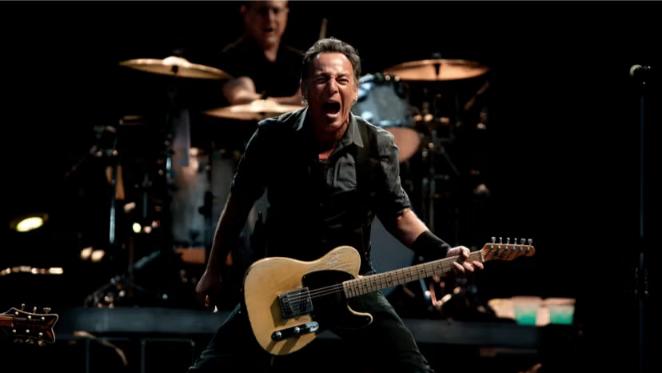
Twenty-four years ago today, Bruce Springsteen returned to the studio with the full E Street Band for the first time in nearly two decades. The album they made, The Rising, became one of the most acclaimed comebacks in rock history, and it remains one of popular music’s defining responses to September 11.
The Album a Stranger Asked Him to Make
The spark for it was a single sentence. In the days after the attacks, Springsteen pulled out of a beach club parking lot near his New Jersey home when a stranger drove past, rolled down the window, and called out, “Bruce, we need you.” He took it to heart.
Springsteen wrote all but two of the record’s fifteen songs in the months after 9/11, finishing the whole album in about eight weeks with new producer Brendan O’Brien of Pearl Jam. He described the writing as something that was shaped by the mood of the country rather than any single event.
“The songs I wrote sort of occur in that context,” he told the Associated Press. “It’s more of an emotional feeling that I felt, and that I felt was in the air at that time.”
He also visited Ground Zero before the album came out, an experience he later described in Rolling Stone. “What’s very moving down there are the photographs and memorials. All the smiling faces. Pictures of people with their families on a sunny afternoon in the yard,” he said. “They’re a reminder of the life that’s gone. I found that sight to be deeply, deeply moving.”
A Comeback 18 Years in the Making
Springsteen had split from the E Street Band in the late 1980s, and the albums he released alone through the 1990s were among the least well-received of his career. The Rising ended the drought and reunited the band for their first new studio record since 1984’s Born in the U.S.A.
The response was immediate. The album entered the Billboard 200 at No. 1, powering through 525,000 copies in its first week and making Springsteen, then 52, the oldest artist at the time to post a half-million first-week sales in the United States. It earned five stars from Rolling Stone, making it one of only two albums the magazine rated that highly all year, and took home the 2003 Grammy for Best Rock Album, winning against the other nominees in the category.
Two decades on, it holds up as an album that chose healing over vengeance. The title track follows a firefighter climbing the stairs of a burning tower, with its meaning split between the long ascent and the rise of the dead toward heaven. It still opens Springsteen shows to this day.