

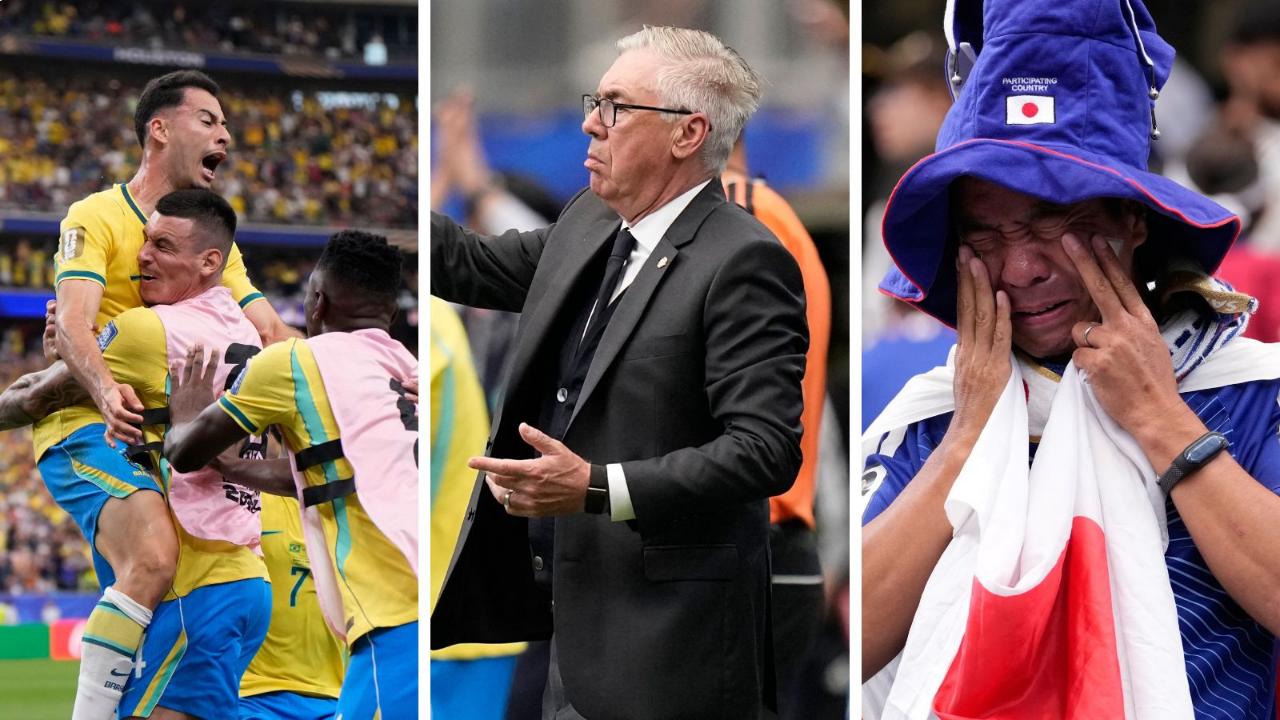
Nearly 70,000 people filled the stadium in Houston. Most were in euphoric delirium, some distraught. The moment demanded it. Brazil had scored the latest goal in regulation time of a World Cup knockout game, and the seemingly inevitable embarrassment of an early exit had been averted. Gabriel Martinelli, the substitute who had scored it, was mobbed. Players. Coaches. Support staff. Photographers. Amid all of them, Carlo Ancelotti. Stoic. Impassive. Calm.
Around him, football dissolved into chaos. Carlo Ancelotti, as ever, refused to join it.
Behind the stolid facade, though, lay relief. It had worked again, as it so often does. Substitutes Martinelli and Endrick both played decisive roles in the 95th-minute winner as Brazil overturned a first-half deficit to beat Japan 2-1. The second-half performance contrasted as sharply with the first as Ancelotti’s reaction did with those around him after the final whistle, and the difference came down to one thing: Ancelotti admitting a mistake, mid-tournament, in public, and reverting to default before it cost his team the World Cup.
Kaishu Sano had put Japan ahead in the 29th minute, ghosting past Casemiro after a loose Danilo pass and driving a low finish past Alisson from 20 yards. Brazil had not won a World Cup knockout game after trailing since they lifted the trophy in 2002. Despite enjoying 68 per cent possession in the first half, Brazil tested goalkeeper Zion Suzuki only twice, both from distance. Three hundred and thirty-three passes yielded just 0.35 expected goals. Something had to give.
The mistake was Vinicius Junior. Brazil’s leading goal-scorer had an underwhelming campaign opener, deployed against one of the best right-backs currently active, Achraf Hakimi, and rendered anonymous save for one moment of brilliance. Before the match against Haiti, Ancelotti had asked him to play centrally. Vinicius resisted initially before relenting. A goal and an assist followed, along with an admission. “I need to listen to him more. He will tell me now that he knows a lot about football.”