

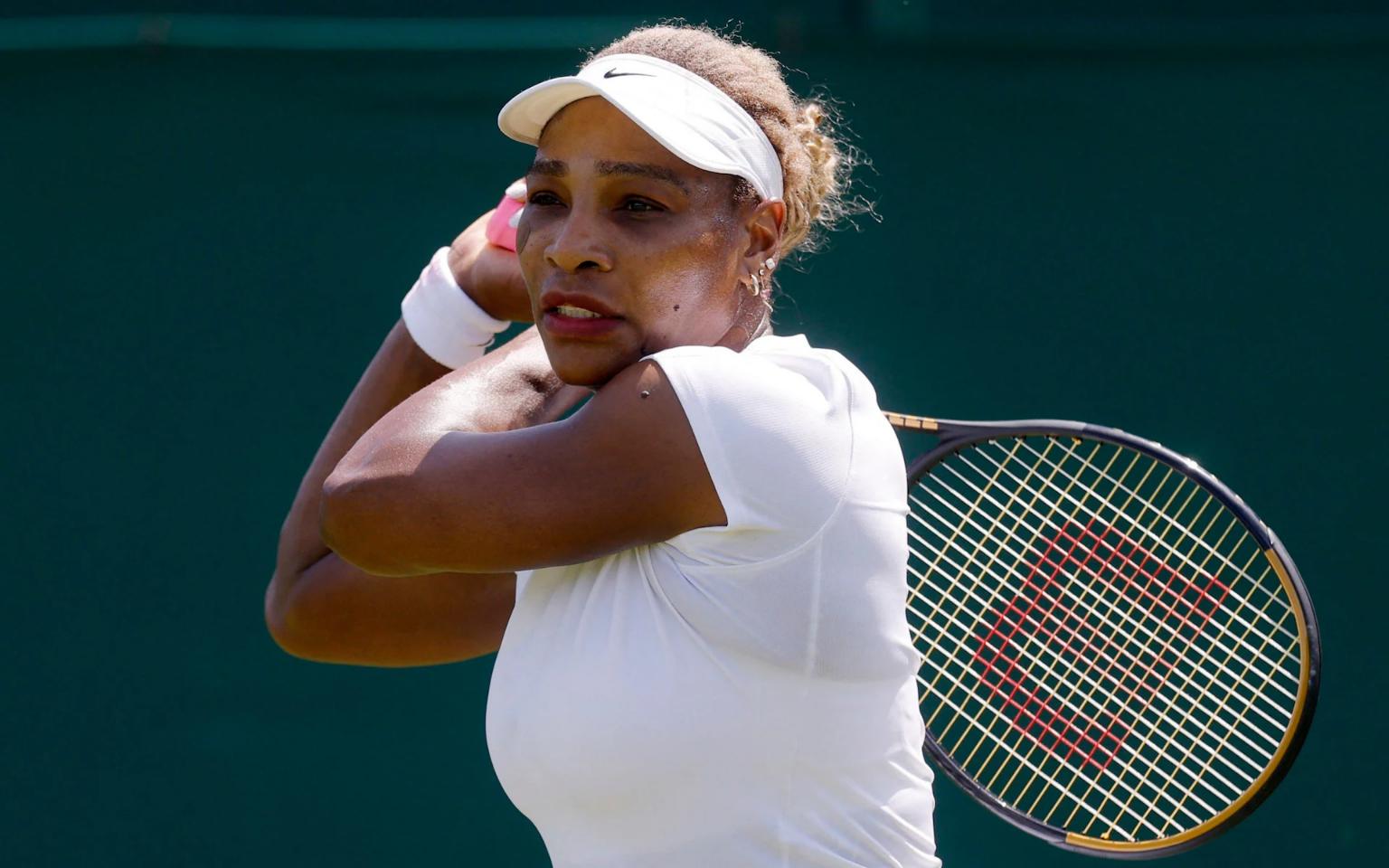
It is such good news for tennis that Serena Williams is playing another Wimbledon.
As soon as she signed up for the anti-doping Whereabouts programme last year, we all started to feel excited. She was itching to swing a racket again, and I suspected right away that she would not be content with doubles alone.
I had also heard, from a few contacts of mine, that Serena had been unhappy with her parting appearance at Wimbledon four years ago. In what we thought was her final match here, she ran into Harmony Tan, a French slice-and-dice merchant who dinked the ball around and made her look heavy-footed.
That is not the way Serena wanted to go out on Centre Court: the same Centre Court where she won seven singles titles, another seven doubles titles and an Olympic gold medal to boot.
Few would challenge Serena’s claim to be the GOAT – greatest of all time – of women’s tennis. Being German, I obviously love Steffi Graf, but you have to go by the numbers in this business, and Serena won 23 majors to Steffi’s 22. I know Margaret Court collected 24, but 11 of those were Australian Opens at a time when few overseas players travelled Down Under.
When Serena was well conditioned and well prepared, she used to put the fear of God into people. Her serve was the best I have ever seen from a right-hander, even if Martina Navratilova’s lefty delivery ran her close. From the baseline, Serena’s sheer power was both her strength and her weakness. When you are so muscular, the subtle movements that tennis requires can be an issue. She had to be very fit to play at her best.
The question now is how well can she move? For all her extraordinary qualities, she is also 44 years old. When I watched her play doubles at Queen’s, she looked fit, but you can only tell so much from outward appearances.
We will see how close she really is to match fitness when she plays Maya Joint, the 20-year-old Australian, in her first-round match on Tuesday. This is a promising draw for Serena. Joint is known to be a quiet and reserved person, and there must be questions about whether she can handle the attention, and the pressure, of taking on a living legend on such a big stage.
Wimbledon’s Centre Court is unlike any other court in the world. The crowd feels like it is right on top of you. Winning matches here is not about having the better forehand; it is about being comfortable with the occasion. You either thrive on Centre Court or you disappear, because it brings out the best or the worst in people. Serena’s record shows that she was in the first camp.