

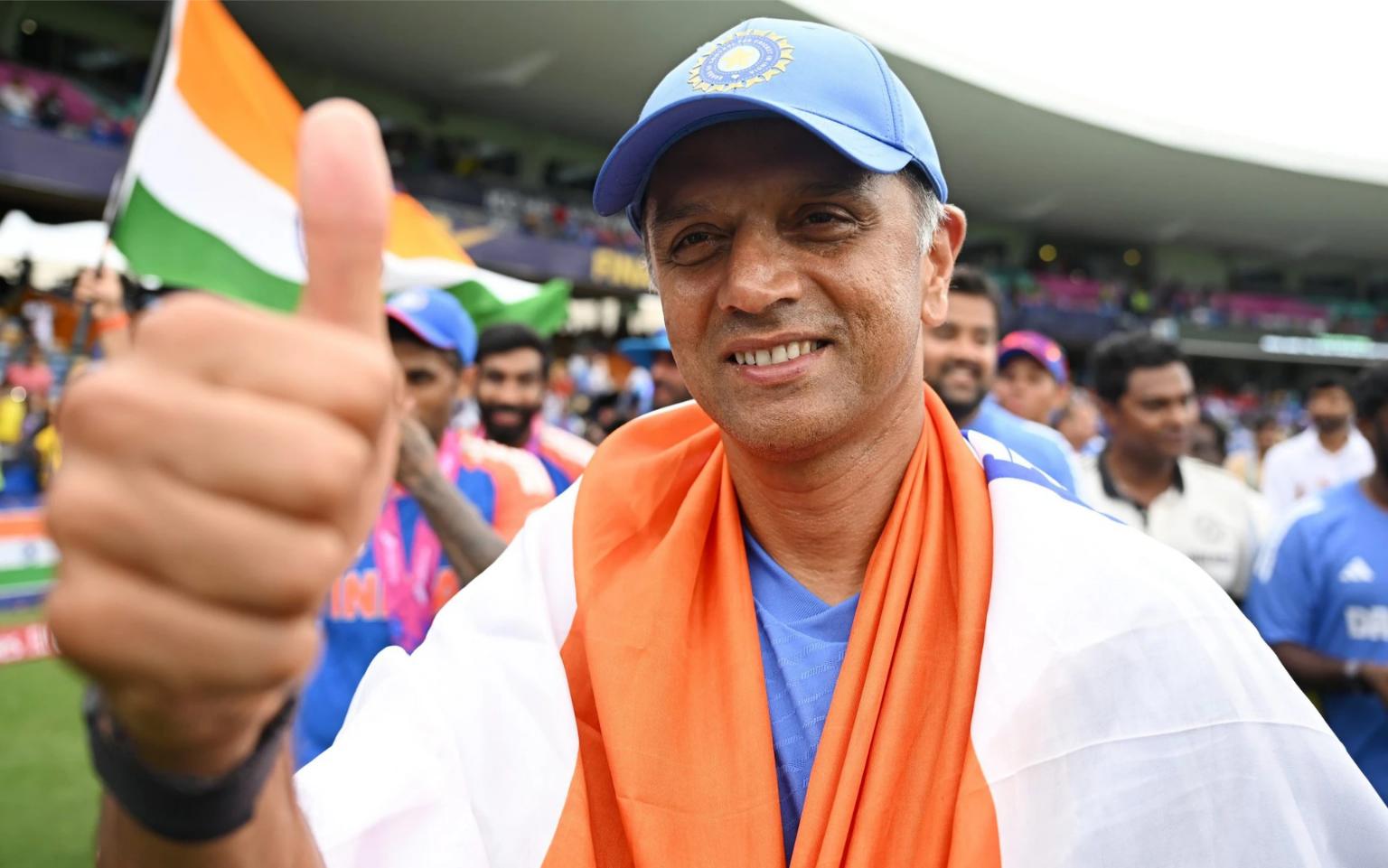
“Probably not,” Rahul Dravid says, with a chuckle. The batsman who has faced more deliveries than anyone else in Test cricket history – The Wall – is not sure whether he would be picked for England under Brendon McCullum and Ben Stokes.
“It’s hard for me to answer that one,” Dravid reflects. “I don’t know. Sometimes I feel a little bit for McCullum because – in my little bit of interaction and conversation with him – I don’t think he really likes the term ‘Bazball’.”
Dravid has a unique perspective on Bazball. As well as batting at a pace that is the antithesis of England’s approach since 2022, he also coached India to their 4-1 victory over England in early 2024. This was the first major indication, with hindsight, of the limits of England’s style; the margin foreshadowed that which England suffered in the Ashes.
“I think the way England play the game is really exciting, there’s no doubt that the game is going in that direction,” Dravid says. “As a tactic, I have no problem with people being aggressive and taking the game on, because I think the young players want to play in that fashion.”
The question is one of nuance. Each of the four winless Test series against Australia and India in the Bazball years have been marked by passages of England frittering away their advantage with the bat. Think of the Oval Test last summer, when England lost seven for 66 to tumble to a six-run defeat; or the second innings at Perth last winter, when England collapsed from 65 for one to 104 for seven.
“The only thing is to have a balance as to recognise that in certain conditions against certain opposition, after you’ve gone ahead, maybe you might need to control the game a little bit better and control the tempo of the game a little bit better,” Dravid says.
“England, including when I coached against them, have shown flashes of absolute brilliance, and they played some absolutely superb cricket for periods of time. But they haven’t been able to sustain it long enough against some of the best teams, right? Against India or Australia.
“There were periods in the Test series in India where I think they played some really good cricket, and had us on the back foot. But maybe they’re not able to sustain that for long enough.
“If you’re ahead against good teams, you can’t leave the door open. If it gives them a chance to come back, then they can eventually hurt you. And they just haven’t been able to take the game completely away from good sides. If you don’t do that good teams can come back – and then they don’t give you a chance when they’re ahead.”
Still, Dravid sees more aggressive Test cricket as a logical response to the demands faced by modern players. On his first tour to England, in 1996, India played eight first-class matches alongside their three Tests: rigorous preparation unimaginable for today’s players.
“People have slightly less time to prepare for red-ball series than they had because of the amount of white-ball cricket that is being played,” he says. “When I was starting out, there were only two formats.