

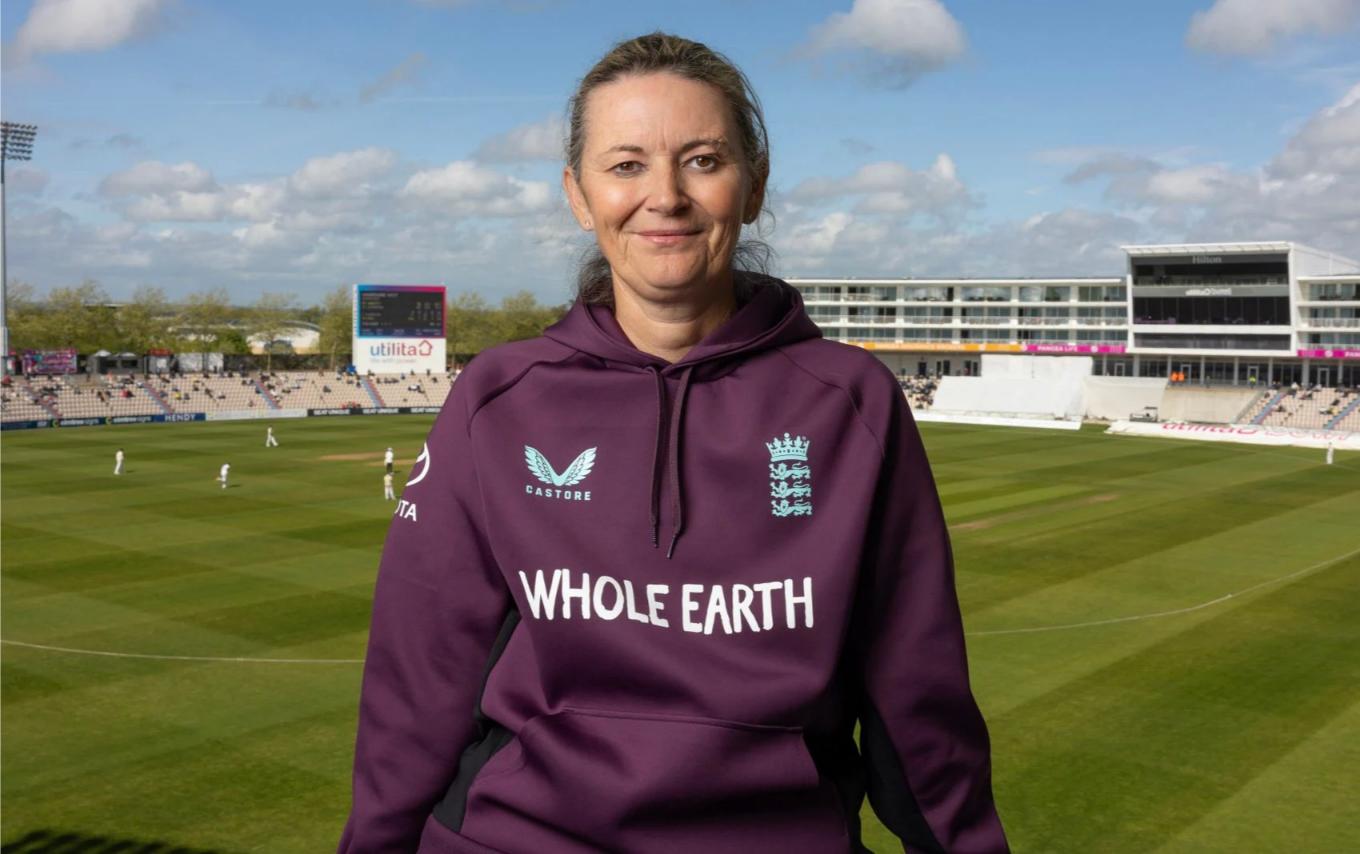
It is a little over a year since Charlotte Edwards took charge of the England Women’s cricket team, when fitness was still the “F-word” in camp and the team were reeling after a humiliating Ashes whitewash. The scrutiny of the team had never been higher, nor the public perception lower. Turning it around would be no mean feat.
“The team weren’t in as bad a place as they were being portrayed,” Edwards tells Telegraph Sport. “But we’ve seen massive improvements within 12 months, which I’ve been really happy with and the players have worked extremely hard.”
Less than two months into her new role last year, Edwards claimed there were no standards in place from the previous regime, which was first criticised as “not fit enough” by Alex Hartley during the Twenty20 World Cup in the autumn of 2024.
Discussing what she has changed since being appointed, Edwards points to “what comes with professionalism… That’s your physical stuff”.
Now the team’s programme has been overhauled, based on 10 years’ worth of data from across women’s sports. Instead of a focus on a simple 2km time trial, the team are now “profiled” across a variety of metrics: yo-yo runs, 30m run-tos, counter-movement jumps (CMJ) and max velocity.
“There are loads of aspects to fitness and I think the players were getting quite [stuck] thinking it was all about how quickly we run the 2k,” Edwards explains.
“Because we’ve put in these benchmarks, which we’ve called the ‘big five’, they know what their scores are, and some might be good in one area, [or not] but good in the rest of the four.
“What the players have seen is that they’re actually in a really good place. I think it’s given them a lot of confidence. So we’ve tried to just present it in a slightly different way to the players, but equally showing them what we expect, and we want to see improvements across the board.”
Simply focusing on running can lead to talented players being left out of squads, as Dane van Niekerk found in 2023. Edwards, though, is aware of the need to take a careful approach to changes, especially when it comes to conversations around weight, given how common disordered eating is among female athletes.
“People knew I wasn’t the fittest in the group [when I was a player],” she says. “But I worked really hard, so I always had that element of sympathy with players that maybe aren’t as athletic as others but they really do work hard.”
During last year’s Ashes series, when the spotlight was on the women’s team in a way it had not been before, conversations over athleticism – as Edwards’s predecessor, Jon Lewis, termed it to avoid using the “F-word” – became the spectre the team could not shake. It affected the players’ relationships with fans and media alike as the results compounded into a damaging narrative.
During the Test match at the Melbourne Cricket Ground, when England dropped eight catches in a single day, it became obvious the scrutiny was affecting the players. But Edwards believes they are better prepared now for the attention they will receive this summer.
“The perception of the group wasn’t great off the back of a really poor winter and we needed to change that as a group, that we really do care about playing cricket for England,” Edwards says.
“We’ve got to basically shut out that noise because sometimes it’s just not helpful. We’ve got to create our own noise around our group that’s really positive and we know how much we’ve improved.
“It’s been tough for the players but I think they’re more accepting of it now and I think that’s the most important thing; you’re going to get criticised, like I’m going to get criticised in my role.”
As Edwards talks in a suite overlooking a men’s county match between Hampshire and Somerset, what comes across more than anything is her passion for English women’s cricket.
Since making her international debut in 1996, when skirts were still the uniform, players still had to buy their own blazers and women were not allowed to be Marylebone Cricket Club members, England cricket has been a part of Edwards’ life. When Clare Connor retired in 2006, she took over the captaincy and went on to lead the side to back-to-back Ashes victories, a World Cup and a T20 World Cup.
“I think there’s no one who cares more about English cricket than me and I wanted that really to come across to the fans and I really wanted to get the fans back onside with the players and with the team,” she says.
Edwards was England captain when the first central contracts were awarded to women in 2014, but that is now a far cry from the hundreds of thousands of pounds that players can earn between central contracts and the lucrative deals offered in franchise leagues across the world.
“From my point of view in the role I’m in, I want England cricket to be the most important thing [for the players],” Edwards says. “Obviously these players are really well looked after now but you want playing for England to still be the pinnacle, which it absolutely is for those players.”
The franchise circuit is a world that Edwards is more than familiar with. Before taking over the England role she had a plethora of jobs across the women’s game, including Southern Brave, Sydney Sixers, Southern Vipers and Mumbai Indians. She was so evidently the right person for the role, in the minds of the England and Wales Cricket Board, that they did not advertise or interview anyone else.
Yet, as she mentioned when discussing the focus on players’ performances, she knows that scrutiny comes with the job.
“You see it in the men’s game and at some point it’s going to filter into the women’s game,” she says. “You see the criticism the men got in the winter for not preparing well enough. Now we’re trying to prepare really, really well.”
That preparation, however, includes not having an international match for the 193 days between the semi-final defeat by South Africa on October 29 and a one-day international in Durham against New Zealand on May 10.
Instead of a winter series abroad, Edwards has held a series of intra-squad camps in Oman, Pretoria and Stellenbosch, with the side focused on a home T20 World Cup this summer and an ideal opportunity to transform the narrative and give English cricket its own Lionesses or Red Roses moment.