Saudi Arabia’s “sportswashing” project has been thrown into doubt after LIV Golf executives were summoned to “an emergency summit” amid mounting fears over its future.
The kingdom has spent billions on sport since the de facto ruler, Mohammed bin Salman, seized power almost a decade ago in a move critics accuse of deflecting attention away from human rights abuses.
But all that could be about to change after those behind its $1tn sovereign wealth fund announced its 2026-30 strategy on Wednesday, which included “a new phase of achieving sustainable value, maximising impact and increasing investment efficiency”.
The news comes amid the ongoing war in Iran, which has plunged the Middle East into crisis and has already forced the cancellation of this year’s Bahrain and Saudi Arabian Grands Prix.
Saudi’s Public Investment Fund (PIF) also has stakes in several of the world’s other biggest sports, along with the state-sponsored General Entertainment Authority (GEA).
Football
The biggest casualty of PIF’s cost-cutting drive could be the 2034 World Cup. It currently plans to stage the tournament across 15 venues, 11 of them brand new, including some of the most ambitious – and no-doubt expensive – ever built.
But there has been widespread speculation within the construction industry that it may be forced to reduce the number of stadia amid reports architects had been asked to resubmit designs after their original proposals had been deemed too pricey.
PIF is also the majority owner of Newcastle United, but despite being richer even than Manchester City’s Sheikh Mansour and the Qataris behind Paris St-Germain, it has not spent anywhere near the same level on the club amid financial rules stopping it doing so. Indeed, as recently chronicled by Telegraph Sport, Eddie Howe’s side could face a multi-million-pound fine from Uefa this summer over a “likely” breach of its regulations on overspending.
Until Thursday, PIF controlled four clubs in the Saudi Pro League, including Cristiano Ronaldo’s Al-Nassr. But it announced it had signed a deal to sell 70 per per cent of Al-Hilal to another entity. Its other clubs could follow. Mo Salah, who will leave Liverpool this summer, has long been a target for competition organisers.
Saudi Arabia’s “sportswashing” project has been thrown into doubt after LIV Golf executives were summoned to “an emergency summit” amid mounting fears over its future.
The kingdom has spent billions on sport since the de facto ruler, Mohammed bin Salman, seized power almost a decade ago in a move critics accuse of deflecting attention away from human rights abuses.
But all that could be about to change after those behind its $1tn sovereign wealth fund announced its 2026-30 strategy on Wednesday, which included “a new phase of achieving sustainable value, maximising impact and increasing investment efficiency”.
The news comes amid the ongoing war in Iran, which has plunged the Middle East into crisis and has already forced the cancellation of this year’s Bahrain and Saudi Arabian Grands Prix.
Saudi’s Public Investment Fund (PIF) also has stakes in several of the world’s other biggest sports, along with the state-sponsored General Entertainment Authority (GEA).
Football
The biggest casualty of PIF’s cost-cutting drive could be the 2034 World Cup. It currently plans to stage the tournament across 15 venues, 11 of them brand new, including some of the most ambitious – and no-doubt expensive – ever built.
But there has been widespread speculation within the construction industry that it may be forced to reduce the number of stadia amid reports architects had been asked to resubmit designs after their original proposals had been deemed too pricey.
PIF is also the majority owner of Newcastle United, but despite being richer even than Manchester City’s Sheikh Mansour and the Qataris behind Paris St-Germain, it has not spent anywhere near the same level on the club amid financial rules stopping it doing so. Indeed, as recently chronicled by Telegraph Sport, Eddie Howe’s side could face a multi-million-pound fine from Uefa this summer over a “likely” breach of its regulations on overspending.
Until Thursday, PIF controlled four clubs in the Saudi Pro League, including Cristiano Ronaldo’s Al-Nassr. But it announced it had signed a deal to sell 70 per per cent of Al-Hilal to another entity. Its other clubs could follow. Mo Salah, who will leave Liverpool this summer, has long been a target for competition organisers.
Yasir Al-Rumayyan with Newcastle United after their League Cup win
Yasir Al-Rumayyan is Newcastle United’s chairman and has attended matches Credit: Dylan Martinez/Reuters
Golf
Golf found itself the main battleground for Saudi investment in sport after PIF set up the rebel LIV tour, sparking a bitter civil war. It has since invested up to $6bn in LIV, after signing Jon Rahm in a £400m deal in 2023 and handing out huge signing-on bonuses to Bryson DeChambeau, Phil Mickelson and Dustin Johnson. While its total losses are not known, its United Kingdom-based entity, LIV Golf Ltd – which manages activities outside the United States – posted a £461.8m loss in 2024.
After rumours of its potential demise emerged on Wednesday, Scott O’Neil, the LIV chief executive, sent an email to staff assuring them the current season would continue “exactly as planned”. He made no commitment beyond that.
Since O’Neil replaced Greg Norman last year, LIV has announced a “multi-year” deal with FOX TV in America, as well as TNT Sports in the UK. Alongside signing contracts with venues all over the world, LIV has also confirmed lucrative sponsorships, including HSBC, Rolex, Salesforce and Qualcomm. Only last week, it unveiled a new deal with Novig, a sports prediction platform. However, television audiences continue to disappoint and with Brooks Koepka and Patrick Reed both leaving to return to the main tours in the close season, there have been negative murmurings.
Combat sports
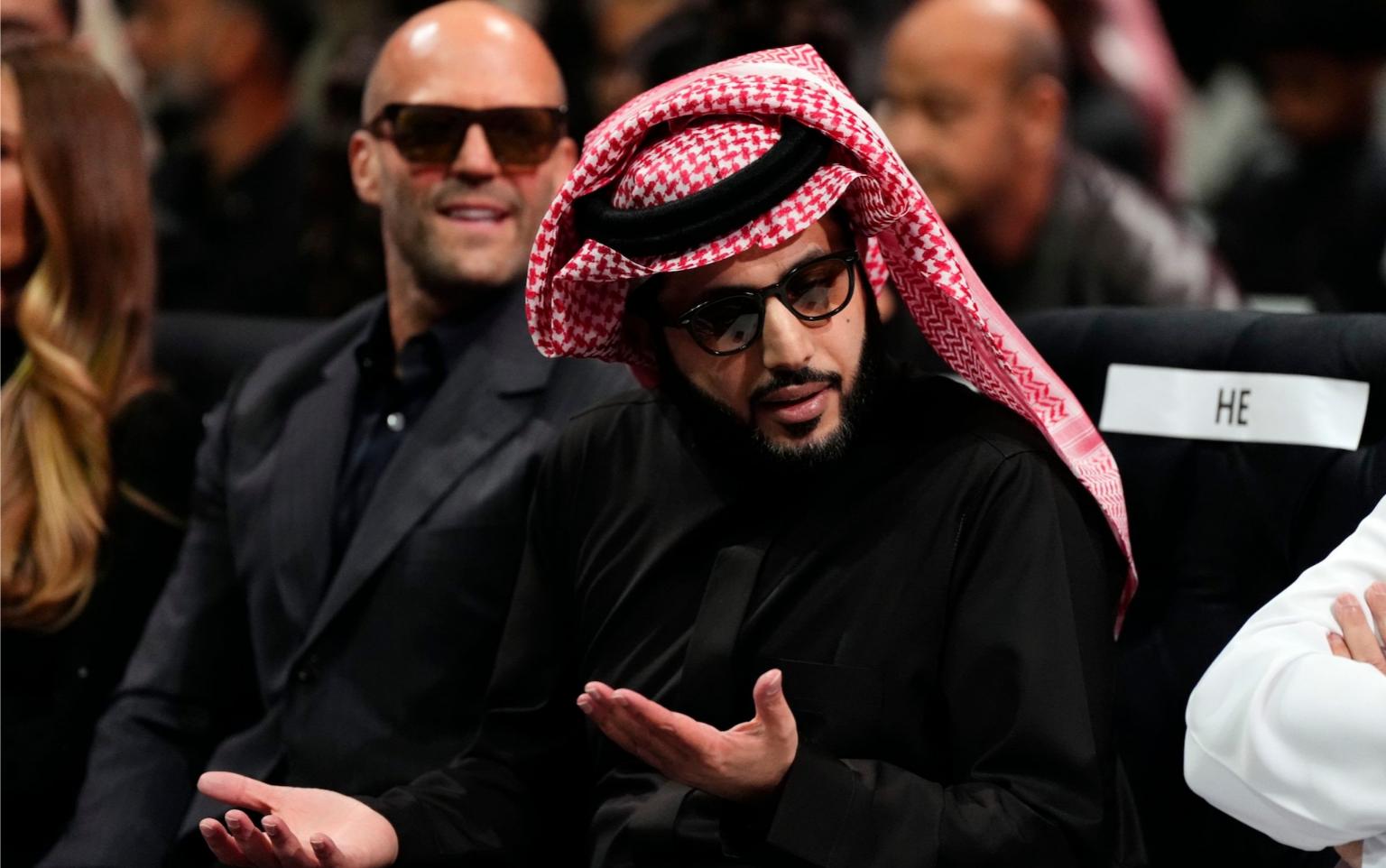
Unsurprisingly, boxing was the first major sport to be lured by Saudi’s “sportswashing” project when Anthony Joshua’s world heavyweight title rematch against Andy Ruiz took place there back in 2019. Since then, the kingdom has staged or bankrolled many of the sport’s biggest shows as part of the GEA’s Riyadh Season series of cultural events. The GEA is chaired by Turki Alalshikh, who last year announced plans to take over boxing entirely, a move which Telegraph Sport revealed in February sparked legal action from leading promoter Frank Warren.
Boxing has aligned itself with Alalshikh so closely that critics of Saudi’s human rights record have been banned from attending Riyadh Season events. That included Telegraph Sport Chief Sports Writer Oliver Brown, who was denied entry to Wembley in 2024 for Joshua’s defeat against Daniel Dubois.
Alalshikh is also behind Saudi involvement in the Ultimate Fighting Championship and World Wrestling Entertainment.
Motor racing
Last month’s cancellation of the Saudi Arabian GP was a major blow to the kingdom, for which the race has become its highest-profile annual sporting event since first being staged in 2021. PIF has also previously invested in the McLaren Formula One team and is currently a minority shareholder in Aston Martin.
In 2024, PIF signed a multi-year partnership with Formula E, Extreme E and E1 powerboat racing. It already held a five per cent stake in Formula E and close to half of the off-road Extreme E series.
Tennis
Tennis was threatened with a LIV-style battle for its future when PIF announced multi-year partnerships with both the ATP and WTA in 2024.
The latter deal sparked a particular backlash led by Martina Navratilova and Chris Evert after it included staging the season-ending WTA Tour Finals in a country notorious for the oppression of women.
Alalshikh, meanwhile, created the so-called Six Kings Slam, an annual exhibition event for men in Riyadh which features a record $6m (£4.7m) in prize money for the winner. Its first two editions saw Jannik Sinner beat Carlos Alcaraz in the final. On the ATP Tour, an agreement was recently reached to give Riyadh a Masters 1000 event – the tenth in an already crowded calendar – with a likely start date of 2028.
But it has been difficult to find a space in the itinerary where the new tournament might fit. Indeed, it now seems plausible that the whole project could be paused, after news emerged that the Saudis will not be renewing the WTA Finals deal once that tournament finishes its initial three-year lease in November.
Snooker
Snooker’s lucrative Saudi tie-up has also been plagued by low attendances, helping The Crucible remain the home of its World Championship in a decades-long new deal announced last month. Alalshikh had threatened to snatch the tournament from Britain from 2027 after offering the biggest prize in the sport’s history, $1m (£800,000), at the Riyadh Season Snooker Championship. That was for potting a new “golden ball” – worth 20 points – immediately after completing a maximum 147 break.
Darts
The sport that must feel the most alien to everyday Saudis is darts, given the country’s anti-alcohol laws. This was laid bare in January when Nathan Aspinall said it had felt as if the crowd at the inaugural Saudi Arabia Darts Masters “weren’t all there of their own accord”.
The opening day of the Alalshikh-led tournament appeared to be well attended. But there was little sign of the singing and chanting that have become a hallmark of most Professional Darts Corporation events.
In a statement to Telegraph Sport, the PDC said at the time: “Nathan was reflecting on the fact that this was a first-of-its-kind darts event in the region, with many attendees experiencing live darts for the first time.”
Regardless of Saudi’s commitment to the sport, do not expect the PDC World Championship to move there any time soon.