

The first two rounds of the County Championship have produced some terrific cricket and enthralling finishes. Both divisions are already bubbling beautifully and, despite the earliest start in its 136-year history, the signs are that this could be a vintage summer.
But it has also provided a reminder that it is fiendishly difficult for England to judge who will be adequately prepared to make the step up from the Championship to Test cricket – and not just because they do not currently have a national selector and seem unlikely to have appointed one until long after they name a squad to face New Zealand on June 4.
For many, being an England selector would be a dream job, fantasy cricket brought to life. But bridging the gap between the county averages and the Test team is no simple task. Both games are great, but they are different, in pace, intensity and scrutiny.
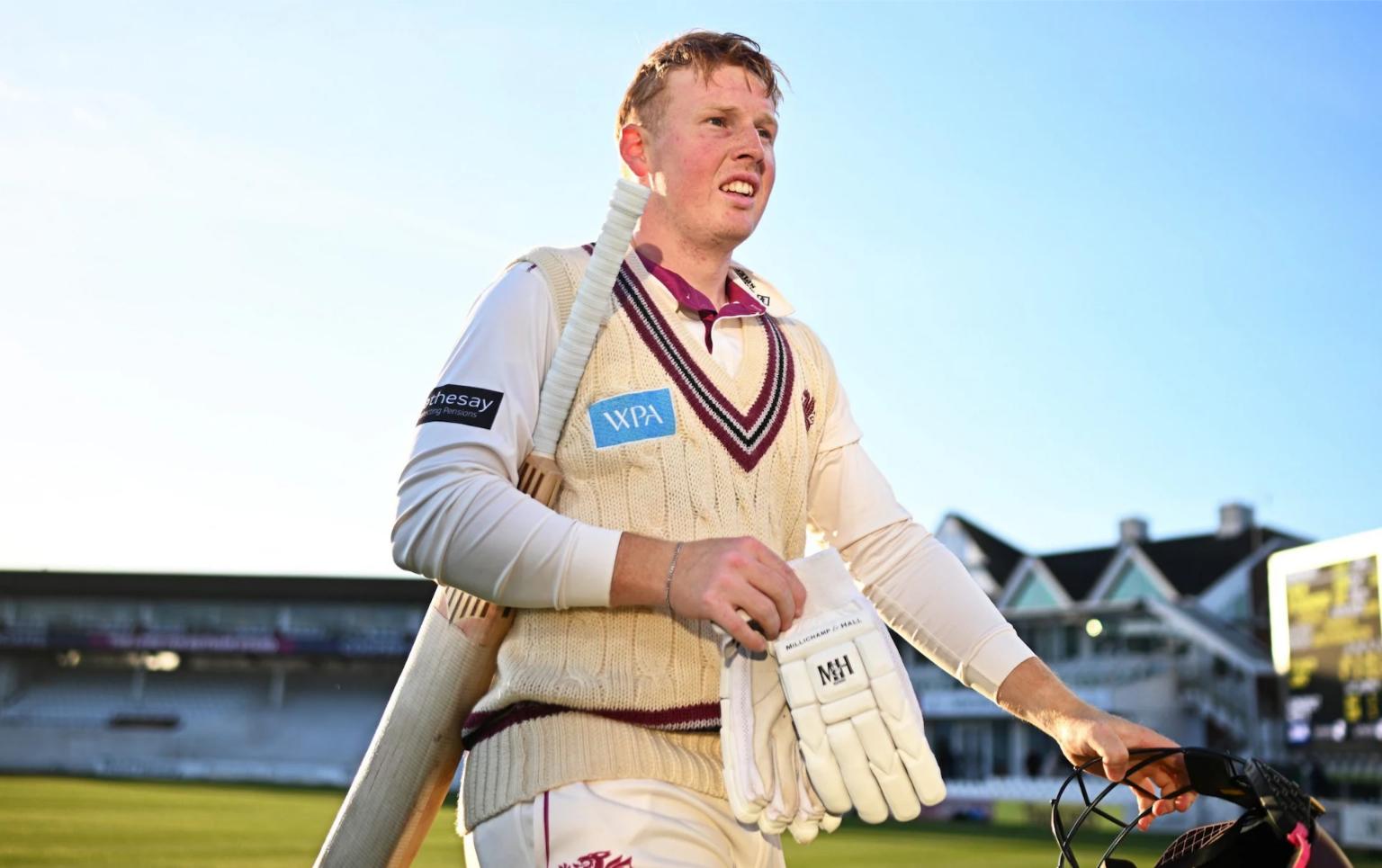
How to judge the 255 runs scored by Jamie Smith across two innings from No 3 against a Leicestershire attack that bears little resemblance to Australia’s? Or the 244 made by Ben McKinney against a Gloucestershire side raided by other counties over the winter?
The much-discussed disconnect between England and the counties has largely been framed as a one-way breakdown: that high-handed selectors have looked down on, and talked down to, the counties when picking their squads. That there is some truth in this is undeniable.
Even if previous national selector Luke Wright’s replacement has not yet been found, there is a network of scouts and managing director Rob Key has been spotted at Northampton, Hove, Chelmsford and the Oval so far this season, a suggestion that he is at least trying to back up his words about improving the relationship. County cricket may not be perfect, but it is the only cradle England have.
But connection is a two-way street, and there are times when England must wish players did the same job for their counties that they are auditioning for in the Test team. It is obvious to anyone who watched the Ashes this winter that there are a few spots up for debate in the England side: opener, spinner, seamers, wicketkeeper. The middle order is locked down.
Let’s take the opening situation. A number of England candidates, such as Emilio Gay and James Rew, do not open for their counties. This week, the current incumbent Ben Duckett went back to his county side but Nottinghamshire refused to break up their established pairing of Haseeb Hameed and Ben Slater for the England man, who still averages 41 opening in Test cricket and needs the runs. Hameed’s struggles, with a quirky technique, meant that Duckett was in – and out – early in both innings, but he could do with walking out first to set the tone and really establish his place.
The case of Somerset’s Rew will be fascinating. He scored a century from No 3 against Nottinghamshire, but when Tom Kohler-Cadmore went down injured against Essex, Somerset chose to promote Jack Leach to open, rather than Rew. Surely given his own prolific run-scoring, Smith’s improved form and Zak Crawley’s struggles, Rew should be pleading to prove himself at the top of the order. With Kohler-Cadmore out of this week’s match, hopefully Somerset allow Rew to open. Crawley is clearly under huge pressure and England are understood to have floated to Somerset the possibility of Rew moving up the order.
One of England’s favourite spinners, Rehan Ahmed, had to wait 61 overs for a bowl on the opening day of Leicestershire’s match at the Oval, despite Smith and Ollie Pope piling on runs. Leicestershire seem intent that Rehan is not a frontline spinner, having signed Keshav Maharaj and Ajaz Patel to do that job. Another England spinner, Shoaib Bashir, spent months searching for a county before finding Derbyshire, who already look a good fit because at least he will bowl plenty of overs there.
Smith is England’s incumbent wicketkeeper, but is unlikely to keep before the first Test because he shares a county (Surrey) with Ben Foakes, who he replaced in the England team on account of his more dynamic batting. A more aligned national/domestic system, like Australia’s, might have Smith out on loan by now.
England have flagged to the counties that they would like to see seamers near the Test team bowl with the new ball, as they look to fill the void left by James Anderson, Stuart Broad and Chris Woakes.
Before he took the new ball for England, Gus Atkinson had never done the job for Surrey and it is not certain he will when he returns to the Championship on April 27. Josh Tongue says publicly he wants to open the bowling for England but he was the fourth bowler used in both innings as Nottinghamshire beat Glamorgan (in mitigation, he was on a managed workload).
This is a theme: because England bowlers tend to be a touch quicker, at county level they can be used as older-ball battering rams. Sonny Baker has had a promising start to the season for Hampshire, but is yet to take the new ball.
All this comes before we get to Ben Stokes’s pet peeve, counties giving Australians a pre-Ashes tune-up. Right now, Jhye Richardson, Jake Weatherald and Beau Webster are enjoying opportunities, while Nathan McSweeney and Fergus O’Neill are two more who could easily break into Australia’s squad for the tour next year.
It is a strength of the English system that we have a domestic red-ball competition that provides entertainment and draws decent crowds, like the 4,700 who watched Smith at the Oval on Friday.
It means that counties are well within their rights to do what is best for them and ignore England’s wishes, like having Foakes keep over Smith, or opening candidates batting lower down. But perhaps we cannot be surprised if, for all the talk of a reconnected system, England ask players to perform roles they do not do for their counties.