

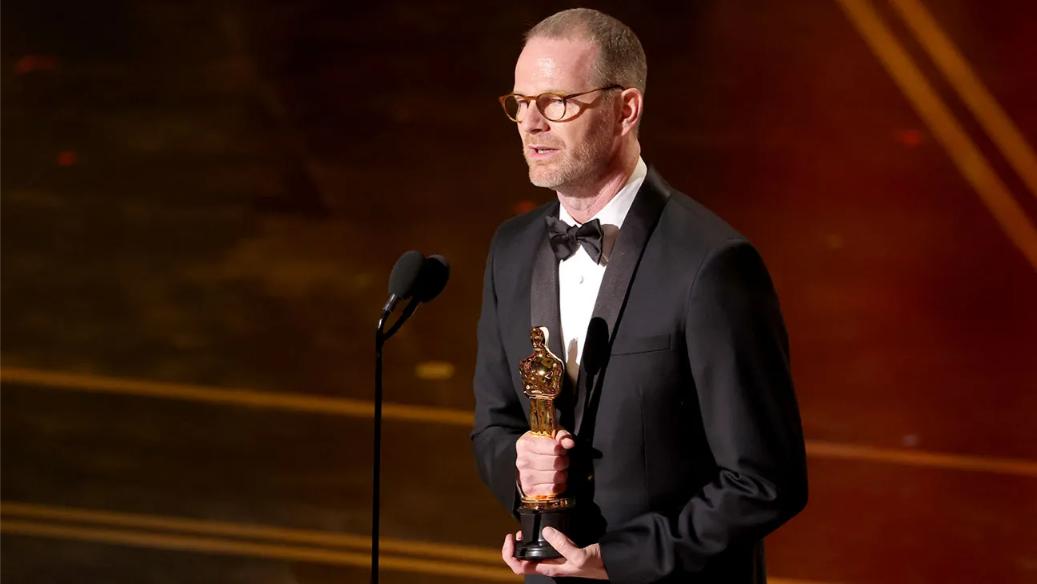
“I’m just a film nerd from Norway,” said Sentimental Value director Joachim Trier, in his typically self-effacing manner, as he accepted the Academy Award for best international feature on Sunday — Norway’s first-ever Oscar win.
For Norway’s film community, those watching from inside the Dolby Theatre — Norwegian Film Institute CEO Kjersti Mo and Norway’s Minister of Culture and Equality Lubna Jaffery attended the Oscar ceremony alongside the Sentimental Value team — and those cheering from Oslo, Trier’s triumph was a signal that the country has, at last, arrived.
“This is a historic moment for Norwegian cinema, and we are trying to make the most of it,” said Mo, speaking to The Hollywood Reporter. “We have long been the underdogs in Scandinavian cinema, compared to Sweden and Denmark, so this means the world to us.”
The Oscars weren’t just Trier’s triumph. Sentimental Value picked up nine Academy Award nominations, above and below the line, including best actress and best supporting actress nominations for Renate Reinsve and Inga Ibsdotter Lilleaas; an original screenplay nom for co-screenwriter Eskil Vogt; and a best editing nomination for Olivier Bugge Coutté. Other Norwegian talent on display at the Dolby Theatre Sunday night included Thomas Foldberg and Anne Cathrine Sauerberg, nominated for best makeup and hairstyling for their work on Emilie Blichfeldt’s The Ugly Stepsister, and Espen Nordahl of Oslo’s Storm Studios, part of the VFX team nominated for Sinners.
Norwegian cinema is going through a creative and commercial golden age, with a steady stream of internationally recognized talents and titles coming out of the tiny Nordic nation (pop. 5.6 million, roughly that of Minnesota). Halfdan Ullmann Tøndel’s Armand, starring Reinsve, made the international feature shortlist for the 2025 Oscars. Dag Johan Haugerud’s Dreams, the final entry in his much-praised Oslo Stories Trilogy, won the Golden Bear in Berlin last year. The Drama, A24’s hotly anticipated rom-com from Norwegian director Kristoffer Borgli (Sick of Myself, The Dream Scenario), starring Zendaya and Robert Pattinson, hits theaters worldwide next month.
While Norway’s Oscar victory might look sudden or accidental, it was anything but. In the last few decades, successive Norwegian governments have been funneling the country’s oil wealth into culture, slowly building a system designed to nurture both artistic ambition and commercial viability, creating a national film industry from the ground up.
“In Norway, we don’t have this same cinema history as they do in Sweden, with [the legacy] of Ingmar Bergman, or Denmark with Lars von Trier and the Dogme movement,” says Yngve Sæther, of Oslo-based Motlys, producer of the Oslo Stories Trilogy. Norway was always “the little brother” to the grown-up movie nations, says Sæther. “When I started, there wasn’t even a film school here. I had to go to Sweden to study.”
A series of reforms in the late 90s and early 2000s set the groundwork for a Norwegian film industry. The Norwegian Film School was opened in Lillehammer in 1997 by an act of parliament. (Tuition, as is the case for all public universities in Norway, is free.) The government also centralized its film funding and support structures within the Norwegian Film Institute (NFI), boosting funding for home-grown films. Last year, Norway invested around $70 million in a series of programs, from direct production subsidies to tax rebates to co-production support.
“The international success we are seeing now is largely the result of long-term public investment in the film industry,” notes Mo.