

2025 was a year defined by contradiction in the world of cinema. It was marked by the loss of several influential figures in the entertainment industry, moments that cast a long shadow over the year and reminded us how fragile even the most celebrated creative legacies can be.
At the same time, it was a year overflowing with ambition, experimentation and artistic risk — one that produced an unusually rich slate of films and television series determined to grapple with the moment we’re living in.
This was the year James Cameron returned with Avatar: Fire And Ash, extending his vast fantasy universe while once again testing the limits of scale and spectacle. It was also the year Alien: Earth premiered, an epic first season of a science-fiction series shot entirely in Thailand, daring to bring one of cinema’s most iconic monsters out of deep space and into familiar territory.
More striking, however, was the thematic convergence across many of the year’s most talked-about films.
A number of directors turned their attention to the growing absurdity, anxiety and moral instability of modern life. Works like Ari Aster’s Eddington, Zach Cregger’s Weapons and Yorgos Lanthimos’ Bugonia weren’t merely genre exercises or provocative curiosities. They functioned as distorted reflections of a society wrestling with paranoia, ideological extremism and economic pressure.
As the year comes to a close and awards season begins to take shape, the conversation around cinema inevitably narrows. Yet 2025 delivered far more compelling work than any shortlist can reflect. With so many films and series released, even regular viewers may have missed something truly worthwhile.
This list is not exhaustive, but these are some of the standout films and series Life has seen in 2025 — works of craft, ambition, and lasting impact that deserve to be seen.
Bugonia By Yorgos Lanthimos
Poor Things (2023) may have been the film that delivered Oscar recognition, but Bugonia feels like the moment when Yorgos Lanthimos’ cinematic language fully coheres. From its opening seconds to its final, pulverising image, this is a film of absolute control — bracing, vicious and darkly exhilarating.
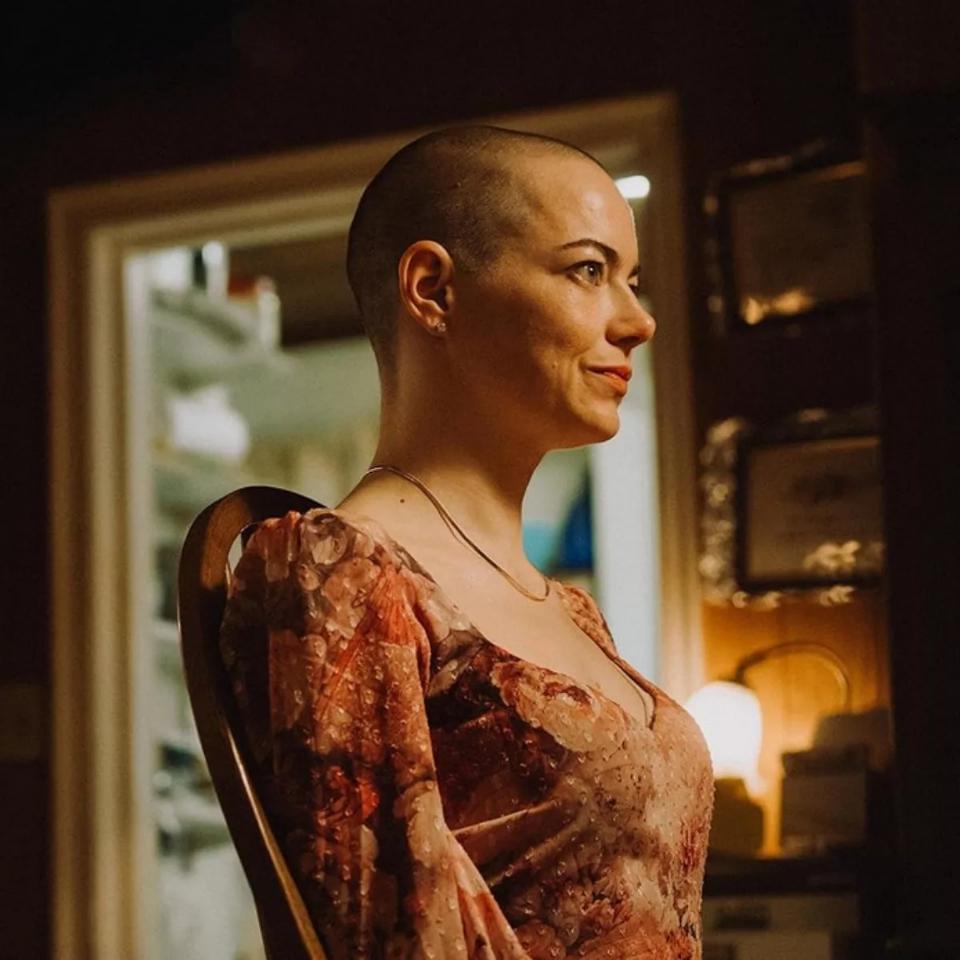
At its surface, Bugonia plays like a feral kidnap thriller. Emma Stone portrays a pharmaceutical CEO who embodies the polished cruelty of modern corporate benevolence, while Jesse Plemons delivers a grotesquely compelling turn as a conspiracy-addled, hyper-progressive incel determined to torture the truth out of her. What truth? About his mother’s death, about corporate malfeasance, and about the systems that quietly govern all of us.
For much of its runtime, the film resembles Misery (1990) reimagined as a culture-war standoff, each character convinced of their own moral superiority. Yet Lanthimos slowly tightens the screws, revealing something more disturbing beneath the provocation. The film’s final turn lands with astonishing force — recontextualising everything that came before it and delivering a gut punch that feels more honest than a dozen dystopian allegories. Bugonia is brutal, funny and deeply unsettling — a career-high for a director already known for refusing comfort.
No Other Choice By Park Chan-wook
After being laid off following 25 years of loyal service, Yoo Man-su (Lee Byung-hun) vows to find another job within three months. When that deadline passes, then stretches into more than a year, desperation begins to mutate into something darker. Faced with dwindling options, Man-su devises a plan to eliminate his competition — literally.
Though comparisons to Bong Joon-ho’s Parasite (2019) are inevitable, No Other Choice operates on a fundamentally different wavelength. This is not a story about poverty or survival. Man-su and his family once lived comfortably, firmly ensconced in upper-middle-class security. Their crisis is not hunger or homelessness, but the erosion of status: cancelled subscriptions, downsized lifestyles, the humiliation of selling off property.
Park Chan-wook uses this distinction to devastating effect. The film becomes a scathing critique of entitlement, inflexibility and the psychological violence of downward mobility. Man-su’s refusal to adapt reveals how deeply his identity is tethered to comfort — and how far he’s willing to go to preserve it. The result is an exhilarating dark comedy about capitalism, moral rot, and the terrifying ease with which dehumanisation becomes acceptable when framed as necessity.
Sentimental Value By Joachim Trier
Joachim Trier has long excelled at observing flawed humanity with empathy and restraint, and Sentimental Value stands as one of his most emotionally assured works. It is a film that feels simultaneously intimate and expansive, convincing you — by its quiet confidence — that you are witnessing something deeply authentic. It stars Renate Reinsve, Stellan Skarsgård, Inga Ibsdotter Lilleaas and Elle Fanning.
The story follows Gustav Borg (Skarsgård), a filmmaker attempting to reconnect with his estranged daughters. His chosen method is fraught from the start: a film based on their shared past, one he hopes his daughter, now a theatre actress, will star in. What unfolds is a complex, often gently funny examination of family dynamics, artistic ego and the unspoken resentments that accumulate over time.
Formally, the film is a fascinating mosaic, blending tones and techniques in service of emotional truth rather than stylistic flourish. Trier never forces sentiment; instead, moments of grace emerge organically. Sentimental Value understands how love, disappointment and longing co-exist within families — and how art can both bridge and widen those emotional gaps.
Weapons By Ryan Cregger
If Barbarian (2022) announced Ryan Cregger as a director to watch, Weapons confirms him as a major voice in contemporary genre filmmaking. This small-town horror mystery unfolds through a fractured, multi-perspective structure reminiscent of Pulp Fiction (1994), allowing its themes to emerge gradually and with mounting dread.
Julia Garner stars as a harried schoolteacher blamed when 17 of her students vanish on the same night. Josh Brolin plays an enraged father desperate for answers, but the deeper the mystery goes, the clearer it becomes that this town’s fractures run far deeper than any single tragedy. Cregger weaves social commentary — on policing, addiction and community breakdown — into genuinely nerve-shredding horror.
The film’s final act is audacious, chaotic and strangely cathartic, pulling its disparate threads together in a way that feels both surprising and inevitable. Weapons is proof that horror remains one of the most potent tools for interrogating collective fear.
One Battle After Another By Paul Thomas Anderson
From its extended prologue to its thunderous finale, One Battle After Another showcases Paul Thomas Anderson at the height of his powers. Whether it’s the tragic downfall of the French 75, the exhilarating Battle of Baktan Cross or the now-iconic closing car chase, the film demonstrates total command of rhythm, tone and visual composition.
Every frame feels meticulously considered, yet never sterile. Beneath the technical virtuosity lies a story deeply engaged with questions of power, legacy, and generational responsibility. Anderson examines how societies inherit violence, how parents pass down both ideals and failures, and how history refuses to remain buried.
It is a film that feels urgently contemporary while grappling with eternal concerns. Funny, gripping, and emotionally resonant, One Battle After Another stands as one of the year’s most confident examples of large-scale adult filmmaking.
Series Task (HBO Max)
Brad Ingelsby once again proves his ability to blend gripping entertainment with novelistic depth. Task centres on a tense psychological duel between Mark Ruffalo’s FBI agent Tom Brandis and Tom Pelphrey’s Robbie Prendergrast, a suspect in a string of robberies who quickly proves far more complex than expected.
What unfolds is not merely a crime story, but a deeply felt meditation on family, unrealised ambition, fatherhood and forgiveness. Ruffalo delivers one of the finest performances of his career, culminating in a season finale that is as emotionally devastating as it is perfectly calibrated. Awards recognition feels inevitable — and deserved.
Severance Season 2 (Apple TV+)
Following an audacious first season, Severance faced enormous pressure to deliver — and it largely succeeds. Season 2 expands its exploration of work, identity and grief while maintaining the show’s immaculate aesthetic and unnerving tone.
The ensemble cast remains exceptional, particularly when the fractured group dynamic takes centre stage. Most impressively, the season answers major questions without diluting tension, managing the rare feat of satisfying longtime fans while preserving mystery.