

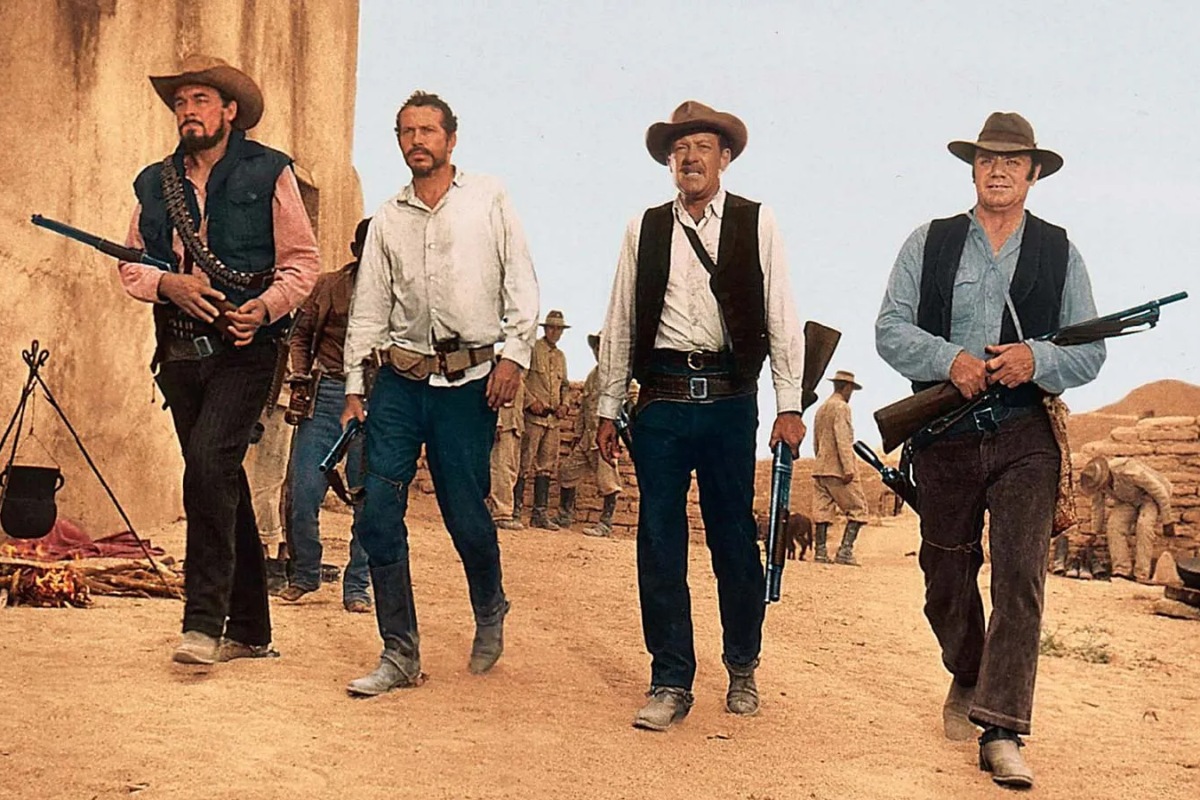
Quentin Tarantino once raved that Sam Peckinpah’s 1969 Western The Wild Bunch was perfection, then told Jimmy Kimmel Live! its rough edges are the point. Its unblinking brutality and balletic slow motion shaped Django Unchained, even as they split audiences and critics. Roger Ebert marked its polarizing pull, while John Wayne bristled at what he saw as a betrayal of the old code. The dust it kicked up still lingers over the genre
Tarantino reflects on The Wild Bunch: admiration with caveats
Quentin Tarantino has never been shy about his strong opinions on cinema, and his views on Sam Peckinpah’s Western The Wild Bunch are no exception. He once called it “perfect,” then later reframed that judgment, saying its flaws are exactly what elevate it. For him, the film’s roughness reveals cinema’s capacity for danger and beauty in equal measure, a paradox he considers part of its greatness.
The raw and revolutionary The Wild Bunch
Released in 1969, The Wild Bunch jolted the Western genre with an unflinching, graphic depiction of violence that was radical for its time. Peckinpah staged a collision of morality, aging, and redemption with a bracing realism that split audiences. Some hailed it as revolutionary, while others decried it as needless brutality. John Wayne, emblem of the classic Western, felt it betrayed the spirit of the genre, a backlash that only deepened the film’s aura.
What Tarantino shared on late-night TV
During a 2022 appearance on Jimmy Kimmel Live!, Tarantino placed The Wild Bunch alongside transformative landmarks like Jaws and The Exorcist. He emphasized that “its imperfections are part of its glory,” framing its jagged edges and visceral storytelling as proof of what cinema can achieve. He has openly acknowledged how its orchestrated chaos informed his own sensibility.
Peckinpah’s influence on Tarantino’s craft
The Wild Bunch left a durable imprint on modern filmmaking, and Tarantino credits its use of slow motion as a direct influence, which he adapted for his own narratives, notably in Django Unchained. Beyond technique, the film’s emotional heft and refusal to sanitize violence shaped his dramatic approach, showing how precision and volatility can coexist within a single vision.
A legacy tangled in controversy
At its premiere, reactions were sharply divided. Roger Ebert recognized both its mastery and its capacity to disturb, noting how the gritty realism alienated some viewers. Peckinpah seemed to lean into the uproar, stripping violence of glamour and rejecting the rosy heroics that dominated earlier Westerns. The film remains a crossroads of admiration and critique, both foundational and fiercely debated.
For Tarantino, it is precisely this duality, the glory and the grit, that defines The Wild Bunch. Its imperfections do not diminish its stature; they are the qualities that make it unforgettable.