

Mumbai, India —
The ritual begins, as it always does, with a pilgrimage.
People pour in from the dense warrens of India’s financial capital and from dusty villages thousands of kilometers away, all flowing towards the fortified, sea-facing Mumbai home of actor Shah Rukh Khan.
The crowd is a mix of teenagers angling for a glimpse of the icon inside; middle-aged women for whom he was a first love; grown men who see their own aspirations mirrored in his trajectory.
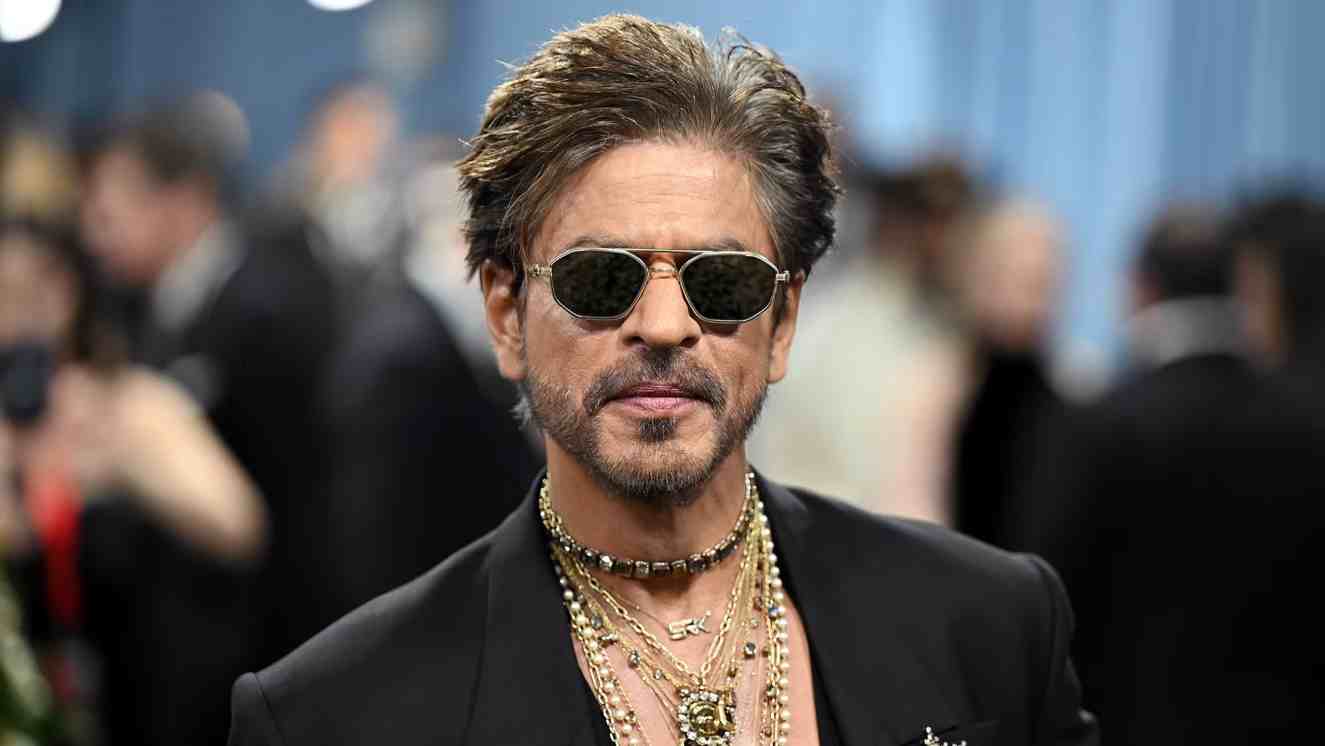
Known as “SRK” by millions, and “King Khan” to his fans, he turned 60 last week, and the chaotic display of devotion outside his home is a testament to a level of stardom rarely seen elsewhere.
The air is thick with chants celebrating his milestone. Some have waited overnight. They don masks or T-shirts with his face on, or clutch posters of his movies. All are here for the same sacrament: to get a glimpse of the superstar and be included in the sweep of his signature open-armed embrace.
“I have loved him for a long time so I have come here to wish him happy birthday,” one fan told a local news agency. “Happy, happy birthday Shah Rukh brother. Happy birthday to you.”
Another said he comes here every year. “I’ve been a fan of him since I was born… I have watched all his films,” they said.
This bond was forged in a bygone era. As India opened its economy to the world in the 1990s, Khan opened its heart. He was an outsider who stormed the dynastic gates of Bollywood with little more than wit, ambition, and dimples that could disarm a subcontinent.
And while the adoring thousands gather outside his home to worship a film deity, they may also be witnessing the twilight of India’s cinematic gods.
“As stars become more relatable and fandom less devotional, the star-fan contract is less sacrosanct today,” said a recent IMDb report analyzing the last 25 years of Indian cinema.
In today’s fractured attention economy of streaming, the barbed wire of polarizing politics, and the cacophony of social media, winning adoration on this scale isn’t just difficult; it might be impossible.
As the IMDb report put it: “It’s time to stop searching for the next Shah Rukh Khan.”
The spectacle outside Khan’s home, Mannat, is an echo of a moment that began three decades ago, when India itself was being reborn. The name itself is a powerful metaphor: Mannat means a prayer answered, and the crowd gathered here treat Khan’s home like a shrine.
In 1991, the government dismantled the protectionist economic policies of its socialist past, cracking open the nation to the world. It was a policy shift that ignited a period of economic growth and industrial expansion that essentially reshaped the country. Satellite television brought a plethora of choice into the living room, Western brands began to appear in shops and, for a burgeoning middle class, the definition of success was suddenly rewritten.
An exhilarating mantra became mainstream: Anyone can make it.
Into this moment stepped Khan.
A Muslim boy from a middle-class Delhi neighborhood, Khan says he was shaped by a household rich in intellect but often short on cash.
His father, Meer Taj Mohammed Khan, was a lawyer and Indian independence activist from Peshawar, in modern-day Pakistan, who ran a series of failed businesses. His mother, Lateef Fatima, was the family’s anchor, according to the younger Khan.
“I come from a very normal lower-middle-class family. I saw a lot of failure,” he said during a 2012 speech at Yale University. “My father was a beautiful man and the most successful failure in the world… We were quite poor actually and let me tell you… poverty entails fear and stress and sometimes depression.”
He began acting in school plays. By the age of 23, he was already on television in the successful series “Fauji” (Soldier). But just as his career was taking flight, his personal world fell apart.
The death of his mother, years after he lost his father, prompted a move to Mumbai, the heart of India’s film industry.
“I was sad in Delhi,” Khan told CNN in a 2008 interview. “I said to myself: OK, come (to Mumbai) for a change of scene. Maybe I’ll enjoy myself for a year and get over my depression of my parents’ death. But I just I couldn’t go back… I was never trying to be a movie star, I became one by chance.”
Khan made his big-screen debut in the 1992 romantic drama “Deewana” (Obsessed) and soon became known for playing villainous, menacing characters in films like “Darr” (Fear) and “Baazigar” (Gambler). But it was his pivot to the romantic hero in the 1995 cult hit “Dilwale Dulhania Le Jayenge” (The Brave Hearted Will Take the Bride, widely known as DDLJ) that catapulted him to superstardom.
His character, Raj, presented a new model of masculinity that wasn’t the angry young man of the previous generation. He was the empathetic partner for the new one, offering a vision of modern love that felt safe and aspirational.
Bollywood certainly has other megastars, like Deepika Padukone, who is among India’s most celebrated women actors; Aamir Khan, known for his versatility; and Salman Khan. Yet, their followings are distinct from the quasi-religious fervor thar surrounds Khan.