

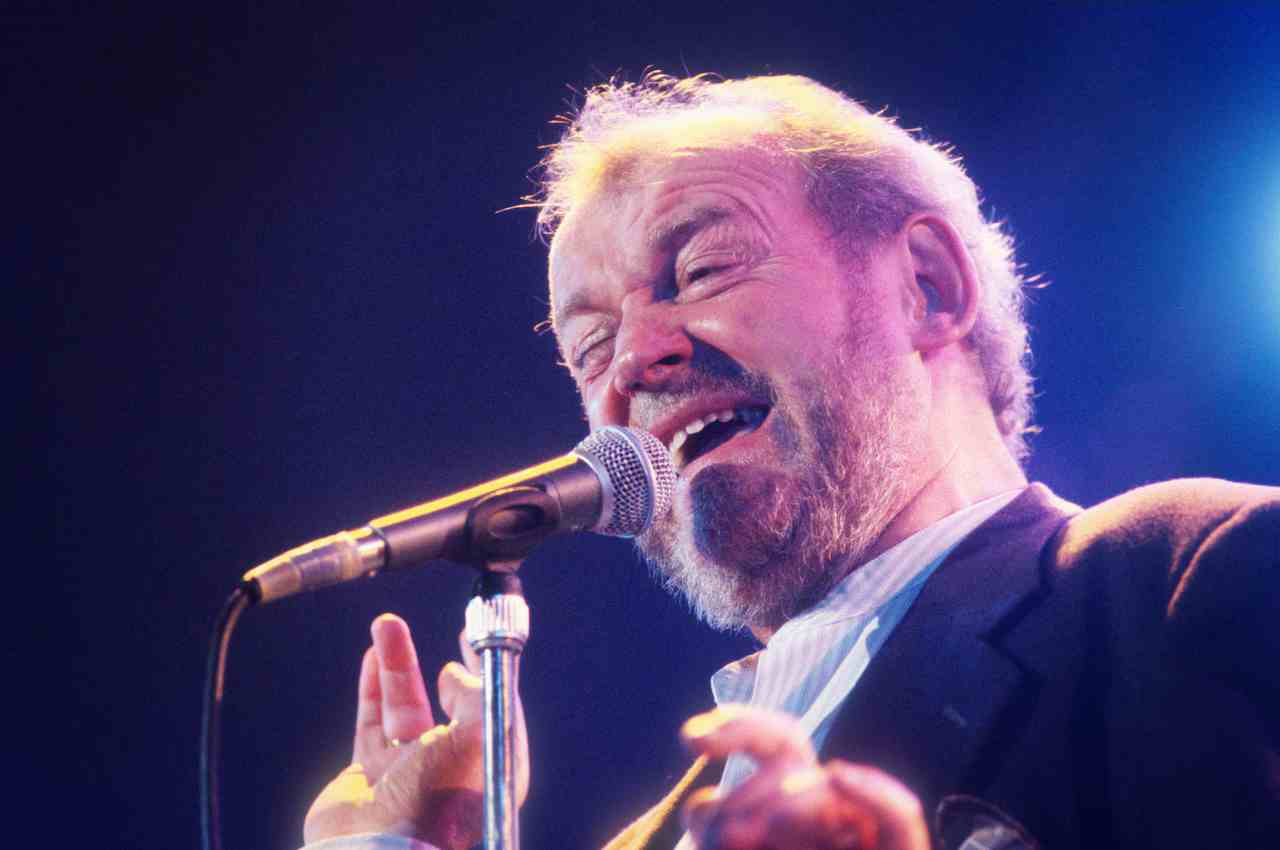
It’s safe to say that a little help from his friends helped the late John Robert “Joe” Cocker finally get into the Rock & Roll Hall of Fame.
The British singer — whose slowed-down, aching rendition of the Beatles’ “With a Little Help From My Friends” was a No. 1 hit in his homeland in 1968 and a highlight of the first Woodstock festival the following year — has been eligible since 1994 and long considered one of the Rock Hall’s great slights. His candidacy was pushed by longtime fan Billy Joel and supported with a public letter by Paul McCartney, who also helped campaign for Foreigner’s induction last year.
It all worked. Cocker — who died in 2014 of lung cancer at age 70 — will be one of seven performers inducted into the Rock Hall on Nov. 8 in Los Angeles. He also finished fifth on the fan ballot, with more than 232,000 votes.
“He did want it, but he wasn’t obsessed with it,” his widow Pam Cocker says. “The awards and accomplishments and all of that kind of stuff were not his thing. He didn’t prioritize it. He was always surprised by what other people were not in (the Rock Hall) more than himself.
“That’s not to say he wouldn’t be very pleased — as I am, just thrilled. But you just didn’t think about it.”
Cocker’s older brother Vic, who still resides in Norfolk, England, feels the same way.
“We’re quite thrilled,” he says. “It’s an important piece of recognition for Joe, I think. I think he would have been really delighted about it, so I’m really pleased. And of course he grew up in that age where the first generation of members of the Hall of Fame were his heroes; he was part of the second wave, so to be recognized there with his heroes and those of the second wave — like the Beatles, who he knew, and so on — would’ve delighted him.”
Vic Cocker was, of course, there for the beginning of his brother’s career in Sheffield, England.
“We had a little skiffle group — this was when Joe was only around 12 or 13 and I was a teenager,” he remembers. “(Joe) used to love and come and listen, and once or twice he sang. It just made him so excited, really — the idea of performing. He had a very natural talent. He always had a powerful voice, and a really soulful voice”
The younger Cocker was particularly influenced by American R&B great Ray Charles — “that was the big thing for him,” Vic says — and British skiffle hero Lonnie Donegan. After first singing with his brother’s band at age 12, Cocker formed his own skiffle group in 1960 and then another, the Cavaliers, to play youth clubs. He signed a recording contract in 1964 and covered another Beatles song, “I’ll Cry Instead,” as his first single — with future two-time Rock Hall inductee Jimmy Page on guitar for the session.
That began a 46-year recording career that included a tenure in the Grease Band before producer Denny Cordell put Cocker back out front with the album “With a Little Help From My Friends.” Cocker would go on to record 22 albums and enjoy hits more hits such as “Delta Lady,” “You Are So Beautiful” and “Up Where We Belong, a Grammy Award-winning duet with Jennifer Warnes from the film “An Officer and a Gentleman.” In spring 1970, he fronted the legendary Mad Dogs & Englishmen tour of North America, with music director Leon Russell leading a 19-member ensemble. The endeavor was chronicled on a chart-topping live album and a documentary film.
Cocker was also known for his spasmodic physical performances, which he likened to playing something akin to air guitar.
“That was something that developed…and became a little more extreme, yeah,” his brother says. “Nobody ever really commented on it. What he did was up to him, really.”
So were substance addictions that hampered — and at times threatened to derail — Cocker’s career, although Vic gives the singer credit for ultimately kicking those.
“He did most of that himself,” Vic says. “He just had a quiet time at home. I remember he went to Scotland and did some fishing. I challenged him as to whether he was on heroin, because I’d heard rumors he was, and he told me he wasn’t and showed me his arms were clean. Afterward he admitted he was taking it another way…but he got himself off that on his own.
“He had a fantastic constitution, which in some ways was his savior — but it was also his downfall, in that he could abuse it.”
In addition to the Rock Hall induction, Cocker was nominated for four other Grammys as well as a Brit Award. He received an honorary doctorate from Sheffield Hallam University in 1995, and in 2007 he was named to the Order of the British Empire (OBE). His last album, “Fire It Up,” came out in 2012.
“I used to get so wound up when I’d go to see him,” Vic Cocker recalls. “I just wanted him to succeed, really. It was such a thrill seeking him go and get better and better and more and more famous.”
In his letter, McCartney summed up Cocker’s credentials, praising him as “a great man and a fine singer whose unique style made for some fantastic performances” before concluding: “Whilst he may not have ever lobbied to be in the Hall of Fame, I know he would be extremely happy and grateful to find himself where he deserves to be amongst such illustrious company.”