

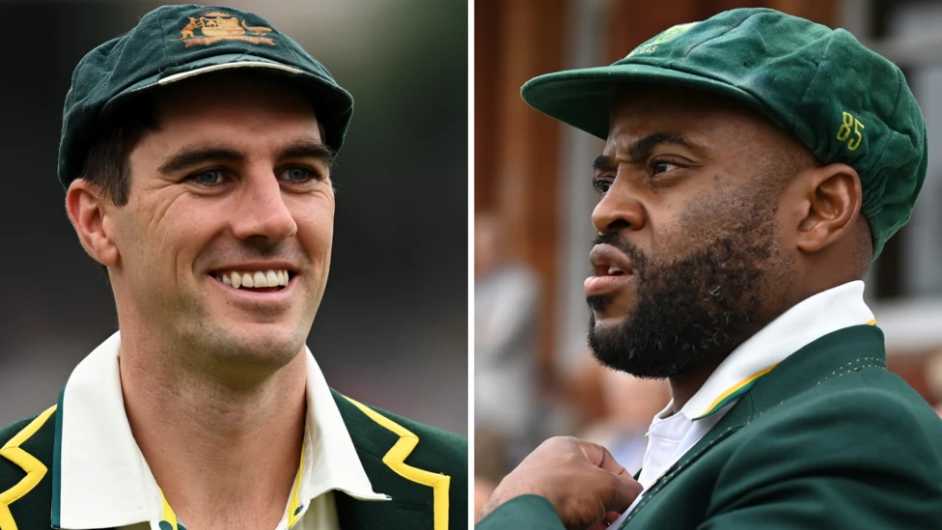
This week’s World Test Championship final between Australia and South Africa at Lord’s is the longer format’s showpiece.
The fixture also represents an opportunity to celebrate international cricket’s historic, and most romanticised, form of the game.
For the majority of its 148-year life, Test cricket has been treasured as the pinnacle of the sport, but over the past two decades its popularity has diminished in some countries.
The growth of shorter formats, and especially T20, has played a part and for some national boards Test cricket is seen as a financial millstone amid poor attendances and declining interest.
BBC Sport has spoken to some of the game’s senior figures to consider the key fiscal challengers which face Test cricket – and whether it’s possible to solve them.
What is the World Test Championship – and has it worked?
The World Test Championship (WTC) was conceived during Greg Barclay’s chairmanship of the International Cricket Council (ICC).
Barclay, who stepped down last December after four years in the role, said it was a necessary step to ensure Test cricket appealed to modern fans.
Each WTC cycle runs for two years. Teams play six series in that time – three at home and three away – with 12 points awarded for winning a match, six for a tie and four for a draw.
However, as teams play a different number of Tests across their six series, the table is ranked by percentage of points won.
“The format of the WTC has got its critics and justifiably so, but we had to do something,” Barclay told BBC Sport.
“I think it’s driven a lot of interest in Test cricket. Conceptually it’s been a real positive addition to the cricketing calendar.
“If you have context, relevance and a bit of jeopardy the fans get far more involved in it.”
While the WTC is only in its third iteration, there is much work to be done to ensure it has the “sporting integrity” to help aid Test cricket’s finances, according to former West Indies chief executive Johnny Grave.
“It’s not ‘pure’ in the sense that every team plays equal games, that there’s genuine jeopardy in terms of who might win, central marketing, revenue sharing and collective selling,” Grave explained.
“All these things, in terms of the theory behind how and why a sports league works, don’t exist within the WTC.
“We have a WTC where if you’re being really honest, the most valuable fixture – India versus Pakistan – within that league never happens. It’s like having La Liga but Barcelona and Real Madrid not playing each other.”
Three countries – Zimbabwe, Ireland and Afghanistan – play Test cricket but are not in the WTC.
Cricket Ireland chief executive Warren Deutrom said he had a “very open mind” about the Irish joining the WTC in future, even though they currently only play Test cricket sporadically at the moment.
But Deutrom acknowledged there would need to be more ICC funding – Ireland currently receive about $18.0m (£13.3m) a year – for that to be a reality.
“To be very blunt about it, if there was a change in the funding structure then it is something which we would give serious consideration,” he added.